Escape Into Books
Your home for book news, reviews, and bookish fun. Follow along on Facebook.
Escape Into Books
Your home for book news, reviews, and bookish fun. Follow along on Facebook.


Discover five film adaptations that surpassed their source novels, offering insights into creative storytelling techniques.
We have all heard the familiar refrain from fellow readers insisting that the original novel is always superior to its screen counterpart. Yet, finding adaptations better than the book is far from an impossible quest when a talented director and screenwriter know precisely what to prune, polish, and overhaul. This guide is for film lovers and dedicated bibliophiles alike who want to explore those rare, brilliant instances where a screen version takes written source material and genuinely improves upon it.
I spent years doggedly arguing that cinema could never truly top a well-crafted book, but rewatching a few brilliant films alongside their original prose completely changed my mind. A great adaptation rarely relies on strict, page-by-page fidelity to achieve greatness. Instead, filmmakers often improve a narrative by taking bold structural risks, trimming bloated subplots, sharpening sluggish pacing, and elevating underlying thematic elements that were only half-baked on the page.
Major critical and commercial successes like The Godfather and Jaws frequently top discussions of films that surpassed their source novels. Across five key examples, we examine the structural choices, casting triumphs, and narrative cuts that allowed these screen versions to eclipse their original texts.
The phrase “the book was better” has become the default reaction to most literary screen treatments, but it is far from an absolute rule. Novels have the luxury of endless page counts, allowing authors to meander through extensive side quests, elaborate backstory, and secondary character arcs that do not always serve the main narrative engine. When a film or television show sets out to translate that same story, strict runtime constraints kick in. This forces filmmakers to make ruthless editorial choices, stripping away extraneous subplots and focusing on the central conflict. The result is often a story with much sharper momentum and tighter overall pacing than the book that inspired it.
Visual storytelling also solves one of prose fiction’s trickiest hurdles: internal monologues and high-concept themes. A novelist might spend dozens of pages attempting to explain a character’s creeping existential dread, complex guilt, or psychological fracture. On screen, those same interior states can be mapped instantly onto a performer’s face, a deliberate camera movement, or a subtle shift in lighting and sound design. By translating dense internal prose into concrete imagery and acted emotion, directors can clarify thematic ideas that felt muddy or overly abstract on the page.
Crucially, high quality in an adaptation is rarely a matter of absolute fidelity. Readers often assume that sticking as close as possible to the source text is the gold standard, but a scene-for-scene translation frequently results in flat, awkward cinema. What works brilliantly across four hundred pages of narrative prose can easily falter when filmed directly. The screen treatments that manage to outshine their source material are usually the ones brave enough to break away from it, making bold structural changes and rewriting whole sequences to suit the visual medium.
| Book | Author | First published | Best for |
|---|---|---|---|
| The Godfather | Mario Puzo | 1969 | Cinematic crime saga narrative focus |
| Jaws | Peter Benchley | 1974 | High-tension survival storytelling |
| The Orchid Thief | Susan Orlean | 1998 | Meta-textual creative adaptation |
| The Mist | Stephen King | 1980 | Devastating narrative climax |
| Rita Hayworth and Shawshank Redemption | Stephen King | 1982 | Emotional depth and pacing |
First published 1969Length 450 pagesReaders 4.24/5 from 45 Open Library ratings
Borrow or find an edition on Open Library
When readers discuss masterclass crime fiction, Mario Puzo’s 1969 novel The Godfather naturally enters the conversation. Spanning about 450 pages, the book holds a 4.24 out of 5 from 45 ratings on Open Library and occupies a major place in the cinematic crime saga narrative focus. When I sat down to read the book after knowing the film by heart, I was genuinely baffled by the sheer amount of page space dedicated to Lucy Mancini’s gynaecological surgery and Johnny Fontane’s washed-up career struggles.

While Puzo built a captivating world, Mario Puzo’s original 1969 novel contained subplots that distracted from the core Corleone family dynamic. The prose frequently detours into soapy side stories that interrupt the pacing and dilute the atmosphere. That is precisely where Francis Ford Coppola stepped in. The film adaptation did not just translate the text; it pared away the narrative dead weight to elevate the material into something vastly superior.
Francis Ford Coppola’s film adaptation streamlined the narrative to focus tightly on Michael Corleone’s tragic moral descent from idealist war hero to ruthless mob boss. By sacrificing the book’s lurid diversions, the movie highlighted the haunting themes of power, family loyalty and systemic corruption. The screen version is widely cited across community discussions and editorial lists as a prime example of a film surpassing its source, demonstrating that an adaptation can improve a story by knowing exactly what to leave behind.
First published 1974Length 309 pages
Borrow or find an edition on Open Library
When Peter Benchley published Jaws in 1974, the 309-page novel was a commercial success, pitching a small resort community against a man-eating Great White shark. Yet as a piece of high-tension survival storytelling, the book carried a surprising amount of narrative clutter. Benchley weighed down his horror with sordid romantic affairs, petty local rivalries, and an involved mafia debt subplot that consistently slowed down the central tension. Rather than leaning entirely into the dread of the open water, the prose frequently retreated into melodramatic town politics that distracted from the sheer terror offshore.
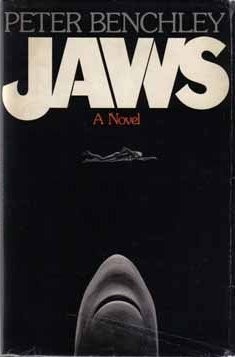
When Steven Spielberg tackled the screen adaptation, he recognised that the shark was the true engine of the narrative and cut away almost all of that extraneous character drama. Gone was the illicit romance between Ellen Brody and Matt Hooper, along with the mob blackmail elements threatening Mayor Vaughn. Spielberg reshaped Chief Brody, Hooper, and Quint into a brilliant, uneasy trio, crafting a lean and focused thriller centred entirely on the shark threat. It was a masterclass in how trimming literary fat can sharpen screen pacing.
Today, the comparison between Benchley’s book and Spielberg’s film remains one of the most frequently referenced examples in debates over movies improving on books. While the original novel is worth picking up for horror fans keen to see where the summer blockbuster was born, it serves primarily as a reminder that ruthless editing is often what turns a decent story into an absolute classic.
First published 1998Length 300 pages
Borrow or find an edition on Open Library
Susan Orlean’s non-fiction work The Orchid Thief, published in 1998, is a deeply atmospheric, meticulous exploration of passion, obsession, and orchid poaching in the Florida Everglades. Running at around 300 pages, the book spins out from the trial of John Laroche, an eccentric plant collector, into a broader, contemplative reflection on what drives human beings to devote their lives to singular, near-manic pursuits. It is an extraordinary piece of journalism, rich in subculture detail and quiet curiosity. Yet on paper, it completely lacks the traditional dramatic arcs, villainous turns, or neat three-act structures usually required for a mainstream motion picture.

When screenwriter Charlie Kaufman was tasked with bringing the book to the big screen for the 2002 film Adaptation, he famously suffered from agonising writer’s block while trying to construct a standard narrative out of journalistic essays. Rather than abandoning the project or flattening the source text into a generic drama, Kaufman elevated the original material by turning the writing process itself into the story. The resulting film becomes a brilliant meta-narrative masterpiece, inserting a fictionalised version of Kaufman as he struggles to adapt Orlean’s work alongside a fictional twin brother who writes mindless Hollywood schlock. Through this bizarre framework, the movie mirrors, parodies, and ultimately honours the very themes of devotion and desire that Orlean documented in the field.
Literary Hub highlights the film as a unique adaptation that enhances the book’s core themes through meta-narrative storytelling. Instead of simply mirroring events on the page, the screen version uses its reflexive structure to interrogate what it truly means to care about something deeply. It stands as an ideal pick for readers who appreciate bold creative risks and want to see how complex non-fiction can be completely reimagined for cinema. For anyone interested in how studios continue to tackle complex books, following modern casting announcements like Daisy Edgar-Jones to Lead Tomorrow and Tomorrow Film shows that the dialogue between literary originals and their visual reinventions is as lively as ever.
First published 1980Length 272 pages
Borrow or find an edition on Open Library
Stephen King published The Mist in 1980 as a novella, telling the tense story of a small Maine town suddenly enveloped by an unnatural fog packed with monstrous, otherworldly creatures. At roughly 272 pages in typical collections, the narrative builds a brilliant sense of claustrophobia as a group of local residents barricade themselves inside a supermarket to survive the horrific assault outside. While King excels at crafting dread in the mundane setting of commercial aisles and broken glass, his original text leaves the narrative climax intentionally open-ended. The novella ends on an ambiguous, quiet note regarding the ultimate fate of the survivors, leaving David Drayton and his small group driving blindly into the fog while listening to faint radio static for any tiny sign of safety.

When director Frank Darabont adapted the story for his 2007 feature film, he made a bold structural departure that completely transformed the narrative’s lasting impact. Rather than maintaining the quiet, open ambiguity of King’s original prose, Darabont crafted a definitive, heart-wrenching new ending for the screen version. The altered climax delivers an absolute gut-punch of tragedy that elevates the creature feature into a devastating narrative climax, forcing the audience to reframe every single choice the survivors made along their journey.
What makes this adaptation so remarkable in discussions of screen versions that outshine their source material is the author’s own reaction to the alteration. King himself publicly praised the film’s altered ending as superior to his original book resolution, acknowledging that Darabont’s pitch-black conclusion was so effective and terrifying that he wished he had thought of it himself when writing the novella. For anyone interested in how a director can take a strong concept and sharpen its emotional ending through a fearless rewrite, this remains a benchmark case study.
First published 1982Length 181 pages
Borrow or find an edition on Open Library
Stephen King built his massive career on supernatural terror, but one of his finest pieces of writing is entirely grounded in the real world. Rita Hayworth and Shawshank Redemption first appeared as a roughly 181-page novella inside his 1982 collection Different Seasons. The novella is a brilliant, quiet study of hope, resilience, and long-term friendship inside the walls of Shawshank State Penitentiary, told through the warm, observational narration of fellow inmate Red.

When I reread the novella after watching the movie, I was struck by how much leaner the prose feels compared to the soaring emotion of the film. Frank Darabont’s 1994 film adaptation took King’s tight framework and gave it room to breathe, expanding key character arcs and sharpening the narrative focus. Where the original text rotated through a sequence of different prison wardens over Andy Dufresne’s decades of incarceration, the film combined those minor figures into a single cohesive antagonist in Warden Norton. That structural change drastically raised the dramatic stakes and gave Andy’s quiet battle against corrupt authority a sharp, central focal point.
The screen version also deepened the emotional resonance of the supporting cast, giving characters like Brooks Hatlen a far more devastating impact on the audience than their brief page presence provided. Critics and audiences consistently rank the film among the greatest book-to-movie adaptations ever produced, making it a stellar example of an adaptation improving its source material by tightening emotional depth and pacing. For anyone wanting to explore the origin of a cinematic classic, reading the novella offers a fascinating, quick look at the raw bones of a masterpiece.
A common misconception among readers and filmgoers alike is that a better adaptation must be a more faithful adaptation. It is easy to assume that the ultimate goal of any screen transfer is to copy the source text as closely as possible, preserving every sub-plot, internal monologue, and line of dialogue. Yet literal accuracy rarely translates into captivating cinema or television. Visual media operate on vastly different rules, and what enthrals a reader on the printed page can easily feel bloated, repetitive, or dramatically flat when projected onto a screen.
In practice, many of the most celebrated film versions make radical alterations to characters, endings, and tone. Directors and screenwriters frequently compress sprawling timelines, consolidate secondary figures, or completely rewrite a climax to deliver the emotional punch that cinema demands. Pacing, visual imagery, and dramatic momentum take precedence over page-by-page fidelity. A film may excise entire chapters or alter a protagonist’s core motivations, yet still capture the essential spirit of the narrative far more effectively than a cautious, literal translation ever could. Screenwriters often refine structural flaws or sharpen themes that were understated in the source novel, improving pacing and clarifying the story’s core focus.
Ultimately, evaluating an adaptation requires judging it as a standalone work of cinema rather than treating the original book as a rigid master blueprint. A film must function on its own artistic terms, establishing its own rhythm, visual language, and thematic coherence for an audience that may never read the book. When filmmakers make bold creative changes, including structural adjustments or even instances where HBO’s Knight of the Seven Kingdoms gets a key title shift, they are responding to the practical demands of a visual format. The truest test of an adaptation is not how faithfully it mimics every sentence, but whether it succeeds in creating a compelling narrative in its own right.
Famous examples often cited by critics and audiences include The Godfather, Jaws, and Adaptation. These films are widely regarded as improvements because they tighten clunky pacing, strip away extraneous subplots, and sharpen character motivations. While taste remains entirely subjective, directors frequently elevate pulpier or unwieldy source material into cinematic classics through precise editing, iconic visual staging, and standout performances that outshine the original prose.
Filmmakers change details from novels because prose and film rely on entirely different storytelling mechanics. Novels can linger on internal monologues and intricate backstories, whereas movies require visual momentum, clear narrative structure, and strict runtime limits. Scriptwriters often condense sprawling timelines, merge minor characters, or alter subplots to ensure the narrative flows dynamically on screen without bogging down the film’s visual pacing.
 Best Sci Fi Books: September 2026 and Where to Start

 Game of Thrones Books in Order, and Where Winds of Winter Stands

 Every Stephen King Book in Chronological Order
This page is maintained by Margo Vance, who covers book-to-screen adaptations for Escape Into Books.
Covers, author credits and reader ratings come from Open Library, which is free and openly licensed. A rating is only shown once enough people have left one.
Nothing here is generated from a book we could not verify. Where a title could not be confidently matched, we leave the space empty rather than guess.
We re-check this page every 90 days. The review date moves only when the content actually changes, because a fresh date on unchanged text helps nobody.
Last reviewed


