Escape Into Books
Your home for book news, reviews, and bookish fun. Follow along on Facebook.
Escape Into Books
Your home for book news, reviews, and bookish fun. Follow along on Facebook.


Arrival's return to streaming coincides with growing excitement for Dune: Part Three, underscoring Villeneuve's masterful storytelling.
If you are trying to pass the time while waiting for Denis Villeneuve to complete his sci-fi cinema reign this December, you are not alone. A decade after its theatrical debut, Villeneuve’s 2016 film Arrival has surged back into the streaming charts, securing a spot among Apple TV’s top ten most-watched movies in the US shortly after arriving on the platform.
The sudden streaming resurgence coincides with escalating anticipation for Dune: Part Three, which Warner Bros. Pictures has slated for theatrical release on 18 December 2026. For those looking to re-examine how Villeneuve handles complex page-to-screen translations, revisiting Arrival is about the best warm-up act available.
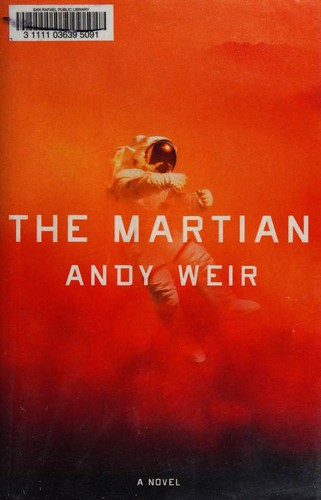
Added to Apple TV alongside a batch of catalogue titles, Arrival quickly climbed into the upper tier of the platform’s US movie rankings, coming in as high as the fourth most-watched film on the service. It sits on the charts alongside high-profile genre entries including The Martian, Looper, and The Gorge.
I think this one works so well on a rewatch because it relies entirely on atmosphere, pacing, and emotional payoff rather than empty spectacle. Upon its initial release in November 2016, the film grossed $100.5 million domestically in North America and $203.4 million worldwide against a modest reported budget of $47 million. It earned eight Academy Award nominations, including Best Picture, Best Director, and Best Adapted Screenplay for Eric Heisserer, ultimately taking home the Oscar for Best Sound Editing for Sylvain Bellemare.
Starring Amy Adams as linguist Louise Banks alongside Jeremy Renner and Forest Whitaker, the film follows a team tasked with deciphering an alien language after twelve enigmatic spacecraft land across the globe. Rather than treating first contact as an immediate military action, the story focuses on communication, perception, and time.
For book lovers, Arrival holds a special place in the modern sci-fi pantheon. Adapting speculative fiction that hinges on linguistic theory and non-linear time is notoriously tricky, yet Heisserer and Villeneuve turned the source material into a film that frequently enters debates about adaptations that elevate their source material.
What makes Villeneuve’s approach so distinct is his commitment to visual clarity without stripping away the cerebral core of the story. Adams delivers a remarkably grounded performance that anchors every abstract concept. If you are watching it again now, it serves as a subtle reminder of Villeneuve’s ability to make intellectual sci-fi feel profoundly personal.
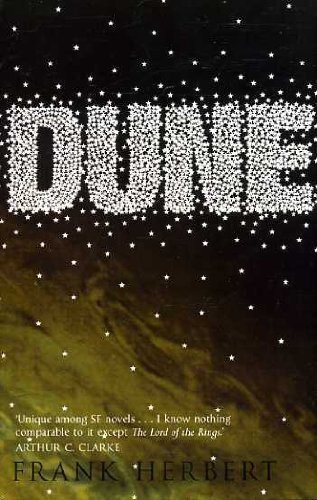
The renewed focus on Villeneuve’s back catalogue comes at a crucial moment for the director. With four months to go before Dune: Part Three hits cinemas, fans are hungry for anything connected to the filmmaker. Demand for the third chapter, which adapts Frank Herbert’s 1969 novel Dune Messiah, has already seen 70mm IMAX screenings sell out in major locations like Los Angeles and New York following initial ticket drops.
Recent attention around early footage and Dune 3 teaser discussions has only heightened the appetite for grounded, high-concept cinema. While Dune operates on a massive planetary scale, Arrival proves that Villeneuve is just as comfortable crafting an intimate, quiet masterpiece. If you have not streamed it in a while, it remains one of the finest sci-fi films of the 2010s.


