Escape Into Books
Your home for book news, reviews, and bookish fun. Follow along on Facebook.
Escape Into Books
Your home for book news, reviews, and bookish fun. Follow along on Facebook.


Explore the top fantasy books for September 2026, featuring timeless classics and exciting new releases.
Finding your next great read in a genre this vast can feel like a full-time job, but our guide to the best fantasy books simplifies the choice by focusing strictly on the stories that deliver. Whether you want sprawling secondary worlds, gritty grimdark, tightly plotted magic systems, or deeply character-driven sagas, this selection balances foundational classics with the finest modern masterpieces.
I still remember pulling my battered paperback copy of A Game of Thrones off a secondhand shop shelf years before the television adaptation existed, totally unprepared for how completely it would redefine my expectations of what high fantasy could do. We take that same long-term perspective here, evaluating books on the strength of their worldbuilding, character work, and lasting influence rather than short-lived social media chatter.
To keep things genuinely useful, this guide is updated bi-monthly to reflect both the enduring canon and current readership trends. Across sixteen detailed selections, we cover the essential entries that every fantasy reader should know, helping you navigate everything from genre-defining literary works to the newest releases dominating the scene right now.
| Book | Author | First published |
|---|---|---|
| A Trade of Blood | Robert Jackson Bennett | 2026 |
| The Infinite State | Richard Swan | 2026 |
| The Dungeon Book | Gareth Hanrahan | 2026 |
| The Inevitable Undoing of Zahara Douglass | Leslye Penelope | 2026 |
| The Queen’s Bodyguard | Lauren Blackwood | 2026 |
| I Punched an Alien and Now We’re in Couples Therapy | Kimberly Lemming | 2026 |
| The Salt King | Natasha Pulley | 2026 |
| The Demon Overlord’s Retirement Plan | M. H. Foster | 2026 |
| A Court of Thorns and Roses | Sarah J. Maas | 2015 |
| A Court of Mist and Fury | Sarah J. Maas | 2016 |
| The Name of the Wind | Patrick Rothfuss | 2007 |
| A Game of Thrones | George R. R. Martin | 1996 |
| The Fellowship of the Ring | J.R.R. Tolkien | 1954 |
| Assassin’s Apprentice | Robin Hobb | 1995 |
| Mistborn: The Final Empire | Brandon Sanderson | 2006 |
| The Fifth Season | N. K. Jemisin | 2015 |
Here are the notable new fantasy releases landing in September 2026. This selection highlights the freshest arrivals worth your attention right now, spanning major new hardbacks, quiet dark horses, and long-awaited returns from established authors across the genre. Because publishing moves so quickly, this section changes as new books land, ensuring you always have an up-to-date view of what is arriving on shelves.
First published 2026
Borrow or find an edition on Open Library
Published on 4 August 2026, A Trade of Blood sees Robert Jackson Bennett doing what he does best: blending intricate fantasy world-building with the tight mechanics of a classical murder mystery. The narrative centres on an heir who finds themselves framed for a high-profile murder, facing a swift walk to the gallows unless someone can unravel the conspiracy behind the crime. Enter a great detective whose task is not merely to find the killer, but to save the accused noble from the noose before time runs out.

I found myself staying up far past midnight trying to piece together the alibis before the investigator laid out the bloody truth in the final act. Bennett has always excelled at creating settings where magic and society grind together with tangible weight, and here the procedural structure gives his political manoeuvring an extra layer of tension. For readers who enjoy their fantasy with a sharp investigative edge and a ticking clock, it balances the cerebral satisfaction of a whodunit with the expansive dread of a dark fantasy landscape.
If you are coming to this expecting a classic tavern-crawling quest, you might want to adjust your expectations. This is very much a story anchored by sharp intellects, moral grey areas, and corrupt institutions, where every clue uncovers another layer of rot within high society. It sits comfortably alongside the best modern fantasy procedurals, offering a compelling ride for anyone who likes high-stakes political drama served alongside a meticulous criminal investigation.
First published 2026Length 384 pages
Borrow or find an edition on Open Library
Published on 6 August 2026, The Infinite State by Richard Swan stands out as one of the year’s most intriguing new fantasy releases. Running at a comfortable typical length of about 384 pages, the narrative revolves around a widow who formulates an audacious plan to buy an entirely new world. Her attempts to execute this unprecedented purchase immediately spark fierce resistance, putting her in direct conflict with an Empire that refuses to let such power and territory slip beyond its central control.

The strength of the story lies in how Swan balances quiet personal motivation against colossal geopolitical forces. The friction between a single widow attempting a realm-scale acquisition and an institutional Empire determined to oppose her creates constant narrative tension. Instead of relying purely on conventional martial quests, the narrative leanly focuses on political manoeuvring, legal authority, and the sheer audacity required to claim independent sovereignty under the watchful eye of an imperial machine.
This novel is particularly well suited to readers who enjoy sharp political friction, high stakes, and worldbuilding that feels vast yet focused within a contained scope. Before diving in, readers should know that at roughly 384 pages, it moves swiftly through its central confrontation without bogging down in unnecessary filler. For anyone keeping up with 2026 fantasy releases, it delivers a deeply engaging conflict between imperial overreach and individual determination.
First published 2026
Gareth Hanrahan has built a distinct reputation among fantasy readers for delivering subverted tropes and deeply inventive subterranean settings, and The Dungeon Book continues that trajectory. Published on 11 August 2026, this fantasy novel focuses on a young girl who finds herself trapped in a bleak, formidable subterranean complex. Rather than cowering in the dark or plotting a standard escape through brute force, she does something far more unusual: she gradually befriends the very monsters and terrifying things that keep everyone else immobilised with fear.

The strength of the narrative lies in how Hanrahan handles atmospheric dread alongside quiet emotional beats. What could easily have turned into a simple dark fairy tale becomes a compelling study of isolation, perspective, and unexpected alliances. The creatures lurking in the lower depths are genuinely intimidating at first, yet the storytelling carefully reframes how both the protagonist and the reader perceive them. Instead of treating the surrounding maze purely as an obstacle course to be conquered, the narrative treats the environment and its strange inhabitants as the true heart of the story.
For readers who enjoy subterranean fantasy with a clever twist on traditional monster tropes, The Dungeon Book offers a refined and refreshing read. It particularly suits those looking for a narrative that trades grand political intrigue for a localised, highly focused survival story where empathy serves as the main weapon. Anyone picking it up should expect a book that balances oppressive tension with surprising warmth, proving once again that conventional dungeon settings still have plenty of room for innovation.
First published 2026
Leslye Penelope’s The Inevitable Undoing of Zahara Douglass, published on 11 August 2026, blends historical turn-of-the-millennium tension with supernatural mystery. Set during the anxious final months of 1999, the narrative follows a young woman who embarks on a desperate search for her missing twin sister. As the world counts down toward Y2K and the unknown digital and cultural anxieties of a new millennium, Zahara finds herself navigating a hidden layer of reality where personal secrets and speculative elements intertw.
What makes Penelope’s approach so compelling is how she anchors speculative elements in a specific, recent historical moment. The late 1990s setting is not merely decorative nostalgia; the impending flip of the calendar to the year 2000 mirrors the protagonist’s internal fracturing and the collapse of the world she thought she understood. The search for a missing sibling provides a sharp narrative drive, but the story expands into a broader exploration of identity, family bonds, and the quiet horror of realising that someone identical to you might have been living an entirely separate, secret life. Penelope builds tension steadily, balancing real-world investigation with uncanny, genre-bending developments.
This novel is particularly suited to readers who enjoy contemporary or urban fantasy grounded in real historical settings rather than entirely secondary worlds. If you appreciate character-focused mysteries where family dynamics carry as much weight as the magic or speculative mechanics, this will resonate strongly. It serves as a sharp reminder of how effectively low-fantasy settings can turn ordinary periods of cultural transition into rich terrain for the uncanny. Anyone diving into the book should be prepared for an atmospheric, slow-burn mystery that relies heavily on mood, emotional stakes, and the unique anxieties of a world standing on the absolute brink of a new era.
First published 2026
Fresh off the press on 18 August 2026, The Queen’s Bodyguard by Lauren Blackwood takes two of fantasy’s most reliable tropes and marries them off. The premise is delightfully direct: a reigning monarch finds herself in urgent need of protection, hires a formidable warrior to guard her life, and immediately discovers that the safest cover story requires them to pretend to be husband and wife. It is an arrangement built on tension, high stakes, and the immediate, agonising friction of two capable individuals forced into close quarters while navigating deadly political waters.
When I sat down with an early copy on a rainy Sunday, I spent the first three chapters purely appreciating how Blackwood paces the shift from professional distance to forced domestic intimacy. What makes the book work so well is that it does not treat the bodyguard dynamic as mere decoration. The tactical awareness, the constant assessment of threats, and the physical demands of the role are baked directly into the narrative tension. Every public appearance requires a double performance: convincing hostile courtiers that they are genuinely devoted spouses while remaining sharp enough to spot a hidden blade in a crowded hall.
It suits readers who love character-driven fantasy where romantic subplots carry actual narrative weight rather than feeling slapped on between battle sequences. If you enjoy royal court intrigue, high-stakes deception, and the slow, deliberate burn of two guards dropping their armour in private, this is a brilliant addition to your late-summer reading list. Just ensure you clear an evening before you dive in, as the political twists in the final third make it exceedingly difficult to put down.
First published 2026
Borrow or find an edition on Open Library
Kimberly Lemming returned on 18 August 2026 with I Punched an Alien and Now We’re in Couples Therapy, a brisk entry into comedic sci-fi romance that leans unapologetically into cosy fantasy and banter-filled space opera tropes. The story follows Blair, an ordinary human who finds her life upended when she is abruptly kidnapped by extra-terrestrials. Her situation grows even more baffling upon arrival at the alien vessel, where she discovers she has not been taken for scientific study, but is instead expected to mate with the alien king.
Unwilling to accept her proposed fate as galactic royalty, Blair reacts in the most direct way possible, striking the king and setting off a chaotic chain of events across the ship. Rather than executing her or immediately jettisoning her into the void, the alien monarch and his court decide that the best path forward to salvage the royal pairing is mandatory relationship therapy. Lemming uses this absurd setup to explore interspecies communication, personal boundaries, and reluctant romance, wrapping a genuine story about navigating difficult dynamics inside a shell of laugh-out-loud comedy.
What makes the book stand out is Lemming’s consistent ability to combine fast-paced action with witty dialogue that never takes itself too seriously. It is an ideal pick for readers looking for a palette cleanser between heavy epic fantasy series, offering plenty of humour alongside its speculative romantic elements. Anyone jumping into this release should expect a light-hearted, subverted take on alien abduction stories that prioritises character chemistry and sharp comic timing above grim cosmic politics.
First published 2026
Natasha Pulley has built a strong reputation for stories that blend meticulously researched historical settings with quietly unsettling magic. Published on 18 August 2026, The Salt King continues that trajectory with a premise that leans heavily into atmospheric mystery. The narrative centres on a doctor and a priest who find themselves thrown together to investigate a newly discovered salt cure. The substance is undeniably potent, capable of remarkable healing, but its restorative properties are shadowed by a lethal drawback: the very cure that saves lives is also inherently deadly.

The core of the novel relies on the friction between its two lead investigators. By pairing a medical practitioner focused on biological reality with a priest accustomed to spiritual interpretation, the story approaches its central anomaly from two completely different angles. Pulley uses this double perspective to interrogate how societies handle miraculous yet dangerous phenomena, turning what could have been a standard procedural into a thoughtful exploration of ethics, faith, and survival.
For readers deciding whether to pick it up, it is worth noting that the story favours deliberate pacing and character development over rapid-fire action sequences. The tension comes from the slow unravelling of the salt cure’s origins and consequences rather than grand battle scenes. If you enjoy speculative fiction that takes its time, treats its world-building with scientific and philosophical curiosity, and trusts the reader to sit with unanswered moral questions, this is a particularly rewarding mid-year addition to the genre.
First published 2026
Published on 25 August 2026, The Demon Overlord’s Retirement Plan by M. H. Foster takes one of epic fantasy’s most reliable tropes, the terrifying supreme evil, and immediately strips it of its throne. The narrative follows a former arch-demon who decides that centuries of orchestrating infernal chaos and commanding legions of darkness are more than enough for one lifetime. Seeking total obscurity and quiet solitude, the retired overlord settles down on a modest turnip farm. However, swapping terrifying dark magic for agriculture proves far less peaceful than expected, as the quiet routine of rural life is continually disrupted by unexpected practical challenges and unwanted remnants of a former career.
What makes the novel work so well is the contrast between supreme, otherworldly power and mundane domesticity. Foster delivers a clever spin on cosy fantasy by keeping the protagonist’s monstrous history intact while placing them in absurdly low-stakes situations. Tending to stubborn root vegetables, managing local soil conditions, and dealing with inquisitive neighbours become monumental hurdles for a character who used to shatter armies. The comedy springs naturally from this tension, leaning into sharp dialogue and ironic situations rather than relying purely on slapstick.
For readers who appreciate lighter subversions of high fantasy conventions, this is an easy book to recommend. It sits comfortably alongside modern cosy reads that prioritise charm, character interactions, and dry humour over world-ending quests or bloody battles. Anyone stepping into it should expect a character-driven comedic fantasy that finds its best moments in the sheer frustration of a former tyrant who simply wants to harvest crops without infernal interference.
These are the titles dominating current conversations, driven to the top of sales charts by literary award nominations, fan buzz, and high-profile screen adaptations. I spent half the weekend dodging online spoilers just to catch up on the chatter surrounding these latest releases. If you want to know what fantasy readers are actively devouring and debating today, this is exactly where you start.
First published 2015Length 451 pagesReaders 3.90/5 from 144 Open Library ratingsChart #31 on Apple Books UK
Borrow or find an edition on Open Library
First published on 5 May 2015, A Court of Thorns and Roses by Sarah J. Maas quickly became a defining work in the crossover space between romantic fiction and high fantasy. Coming in at a typical length of about 451 pages, the novel acts as the entryway into a larger, intricate series that weaves together fairy tale reimagining, high-stakes magical politics, and romantic tension. It marked a key moment for the subgenre, demonstrating the massive reader appetite for fantasy narratives that place interpersonal relationships at the very heart of their world-building.
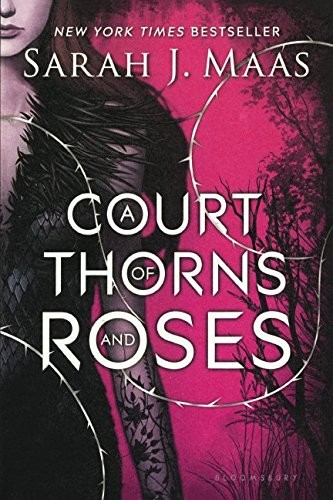
The staying power of the novel is well reflected in its ongoing performance on digital reading charts and cataloguing databases. It sits at number 31 on the Apple Books UK top-paid chart, maintaining a strong position across the Paranormal Romance, Books, and Romance categories. On Open Library, the book carries a reader rating of 3.9 out of 5 from 144 ratings. These metrics reflect a narrative that continues to attract new readers while retaining a dedicated core of returning fans years after its initial release.
What makes this particular volume work so effectively is its careful pacing and atmosphere. The narrative begins with a relatively focused, survival-driven tension before gradually widening its scope to introduce intricate court politics, ancient curses, and perilous magical realms. Readers approaching the novel for the first time should be aware that it functions as a deliberate springboard for the broader series. While it resolves its immediate story arc, it spends significant energy establishing the lore, character dynamics, and lingering threats that fuel the subsequent books.
First published 2016Chart #47 on Apple Books UK
Published on 3 May 2016, A Court of Mist and Fury by Sarah J. Maas is the second volume in the fantasy series that began with A Court of Thorns and Roses. It remains a central fixture in the crossover between epic fantasy and romance, currently holding the Number 47 spot on the Apple Books UK top-paid chart within the Paranormal Romance, Books, and Romance categories. While the opening novel established the basic fairy-tale foundations, this continuation broadens the landscape considerably, deepening the lore and introducing a far wider cast of characters across the magical realms.

What the novel manages effectively is a sharp shift in emotional tone. Rather than resting on the status quo established at the end of the previous book, the narrative focuses heavily on personal trauma, recovery, and the exercise of individual agency. Maas contrasts the rigid expectations of the Spring Court with the intricate, multi-layered politics of the Night Court, giving the world a much larger sense of scale. It is ideally suited to readers who enjoy character-focused fantasy where romantic dynamics and internal development take priority over rigid magic systems.
Before diving in, anyone considering the series should be aware that this volume cannot be read out of order. The central character arcs, political stakes, and personal transformations depend entirely on the events of the first book, so attempting to start here will undercut the narrative weight. For readers who found the initial entry intriguing but contained, this second book marks the point where the overarching saga truly opens up its boundaries.
Beyond the monthly churn of the bestseller charts sit the stories that simply do not fade. These are the books that weather changing trends, shifting subgenres, and passing online hype. Whatever month or year you happen to be browsing, these remain the foundational fantasy reads that consistently deliver, holding up to re-reads and setting the standard for everything that followed them.
First published 2007Length 736 pagesReaders 4.34/5 from 255 Open Library ratings
Borrow or find an edition on Open Library
Patrick Rothfuss’s The Name of the Wind, first published in 2007, remains a defining work of modern epic fantasy. The novel follows the story of Kvothe, a legendary musician and arcanist recounting his own life to a chronicler from the quiet obscurity of a rural inn. This immersive framing-device storytelling turns what might otherwise be a standard hero’s journey into a deeply layered, self-conscious memoir. I still remember sitting up until three in the morning just to reach the chapter where Kvothe first sets foot in the University courtyard, entirely caught up in the rhythm of the prose.

Running to roughly 736 pages, the book sits at the intersection of lyrical narrative and grand secondary-world building. Rothfuss is justly renowned for its intricate prose, giving equal weight to the precise mechanics of Sympathy magic, the economics of a struggling student, and the emotive power of lute playing. On Open Library, it holds a reader rating of 4.34 out of 5 from 255 ratings, reflecting its enduring pull among fantasy readers who value style as much as scope.
Years after publication, it remains one of the most influential and widely discussed modern fantasy novels in the genre. It is ideal for readers who prefer rich character work, immersive world-building, and high-calibre prose over non-stop battle sequences. Before diving in, it is worth knowing that the novel favours a slow-burn pace, allowing Kvothe’s youth and education to unfold with deliberate, atmospheric detail.
First published 1996Length 801 pagesReaders 4.22/5 from 759 Open Library ratings
Borrow or find an edition on Open Library
George R. R. Martin published A Game of Thrones in 1996, launching the landmark A Song of Ice and Fire series and permanently altering the landscape of political epic fantasy. Clocking in at about 801 pages, this grand opener shifted mainstream fantasy away from classic high-magic quests towards darker themes, moral grey areas, and tightly woven multi-perspective structures. The narrative focuses on competing noble houses vying for control of the Iron Throne, thrusting readers straight into a web of brutal realpolitik, personal betrayal, and systemic family rivalry.
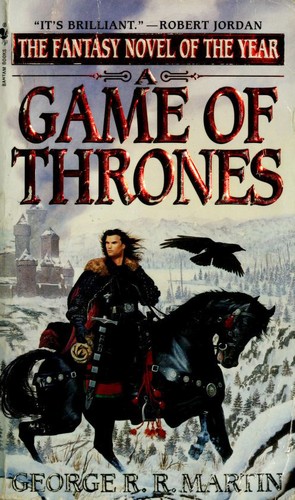
What makes the novel so enduringly effective is its ruthless commitment to cause and effect. Martin treats power dynamics with meticulous realism: honour is rarely rewarded without cost, tactical mistakes carry fatal consequences, and every point-of-view character operates with distinct, often conflicting motivations. Across its broad canvas, magic remains low-key and ominous on the periphery, allowing human ambition and historical grievances to drive the narrative. The book currently holds a reader rating of 4.22 out of 5 from 759 ratings on Open Library, underscoring its place as a cornerstone entry for readers who want intricate plotting over clear-cut moral fables.
For anyone tackling it today, it remains essential reading to understand how the broader genre evolved over the past thirty years. It suits those who prefer heavy character building, Court intrigue, and genuine tactical stakes over lightweight adventure. It set a benchmark for gritty, large-scale worldbuilding that modern authors continue to build upon across both prose and screen storytelling.
First published 1954Length 492 pagesReaders 4.34/5 from 401 Open Library ratings
Borrow or find an edition on Open Library
First published in 1954, The Fellowship of the Ring by J. R. R. Tolkien is the opening volume of The Lord of the Rings trilogy and the undisputed template for high fantasy. Running to approximately 492 pages, this book established the structural framework that thousands of authors have drawn upon since: a quiet home left behind, a perilous journey across an ancient landscape, and a disparate band of companions brought together to face a rising dark power.

What sets Tolkien’s work apart, even seven decades later, is the staggering depth of its worldbuilding. Starting in the comfortable, domestic surrounds of the Shire, the narrative steadily broadens its scope to reveal the vast lore of Middle-earth. Tolkien poured his linguistic expertise into the text, weaving fully realised languages, historical songs, and deep mythic tradition directly into the plot. At its heart lies the ultimate quest fantasy engine: the mandate to carry the One Ring toward its destruction before it can fall into the hands of its master.
For anyone exploring the history and evolution of the genre, this novel remains an indispensable cornerstone. On Open Library, the book holds a reader rating of 4.34 out of 5 from 401 ratings, reflecting its long-standing status among fantasy lovers. First-time readers should be aware that Tolkien favours a deliberate, immersive pace that prioritises landscape, tone, and historical weight, creating a rich reading experience that redefined modern fiction.
First published 1995Length 400 pagesReaders 3.92/5 from 61 Open Library ratings
Borrow or find an edition on Open Library
First published in 1995 and running to about 400 pages, Robin Hobb’s Assassin’s Apprentice is a classic character-driven novel that anchors the broader Realm of the Elderlings saga. The story introduces FitzChivalry Farseer, a royal bastard brought to the royal court and quietly trained to become a royal assassin. Rather than leaning on grand action sequences or easy heroics, Hobb grounds her work in deep character study and emotional depth. The book holds a reader rating of 3.92 out of 5 from 61 ratings on Open Library.

The strength of the novel lies in its remarkable psychological realism. Fitz grows up in the draughty halls of Buckkeep Castle, surrounded by courtly deceit, shifting political alliances, and adults who view him primarily as a political tool or a potential threat. Hobb focuses heavily on his internal conflict, showing how Fitz struggles to find a sense of identity while learning a deadly trade that isolates him from normal human connection.
Central to Fitz’s development is his connection to the Wit, a magical ability that allows him to bond telepathically with animals. Because the Wit is widely feared and despised by society, Fitz must conceal his gift, creating a deep layer of personal tension alongside his secret training. Readers who appreciate patient narrative pacing, rich character development, and quiet intrigue will find this entry essential, as it sets the foundation for one of the most admired sagas in modern fantasy.
First published 2006
First published in 2006, Brandon Sanderson’s Mistborn: The Final Empire stands as a widely recommended entry point for modern epic fantasy and magic-system enthusiasts. The narrative drops readers straight into Scadrial, an ash-choked, sun-dimmed world where an immortal tyrant known as the Lord Ruler has reigned supreme for a thousand years. Instead of presenting a traditional chosen-one quest to save the realm, Sanderson approaches the epic setup from an entirely different angle: what if the dark lord won a millennium ago, and now a crew of clever thieves has to pull off a daring revolution?
What elevates the novel beyond a standard rebellion tale is its sharp structural blending of subgenres. The narrative operates fundamentally like a high-stakes heist movie, assembling a ragtag crew of underworld specialists under the charismatic leadership of Kelsier to overthrow an empire from the shadows. I still remember the sheer thrill of tracking every iron pull and steel push during Kelsier’s midnight skirmishes across the rooftops of Luthadel. Alongside the crew dynamic, the story features Allomancy, a rigorously defined hard magic system based on swallowing and “burning” specific metals to gain distinct physical and sensory enhancements, from flaring pewter for raw physical power to pushing against iron sources to launch through the mist.
For readers who appreciate clear logical rules in their magic and fast-paced action that pays off like a carefully constructed mechanical puzzle, this opening volume is a ideal place to begin. While it lacks the quiet atmosphere found in softer subgenres, it remains an anchor on our list of the best fantasy books for anyone seeking clever plotting, inventive worldbuilding, and a deeply satisfying climax that reshaped modern epic fantasy.
First published 2015Length 512 pages
Borrow or find an edition on Open Library
When N. K. Jemisin released The Fifth Season in 2015, it fundamentally shifted what modern apocalyptic fantasy could look like. Set on a volatile, singular supercontinent named the Stillness, the story unfolds in a world constantly shattered by devastating seismic and volcanic events. These periodic cataclysms, known as “fifth seasons,” force humanity to rebuild from the ashes again and again. Society survives by strictly enforcing rigid castes and brutal social orders, particularly targeting orogenes, individuals who possess the innate power to manipulate thermal and kinetic energy to calm earthquakes, yet are deeply feared, exploited, and hated for it.
What makes The Fifth Season an incredible piece of storytelling is its structural ambition. Jemisin employs three distinct narrative threads, famously utilising a second-person perspective for one of her main characters. This choice pulls you directly into the visceral trauma and immediate danger of the world. Rather than leaning on familiar epic fantasy tropes, the novel subverts expectations at every turn, weaving a complex web of environmental grief, institutional oppression, and deep personal loss across its roughly 512 pages.
It is a dark, intense read that demands your full attention, but the reward is immense. The novel made history by winning the Hugo Award for Best Novel, a feat Jemisin repeated with the subsequent two instalments in the Broken Earth trilogy, making it the only series to win the award three years in a row. For readers looking for groundbreaking worldbuilding and complex, morally layered characters, this is an absolute high-water mark for the genre.
Finding the right book often starts with how magic operates within the setting. If you enjoy clear logic, strict constraints, and defined mechanics, hard magic systems offer a deeply satisfying puzzle where readers can anticipate how characters solve crises. Brandon Sanderson championed this approach in Mistborn: The Final Empire, where every magical ability carries a precise cost and physical rule. On the opposite side of the spectrum lies soft, atmospheric magic, championed by authors like Ursula K. Le Guin in A Wizard of Earthsea. In those worlds, magic remains deeply mystical, tied to ancient naming, balance, and cosmic order rather than a rigid set of instructions. Deciding whether you want a system to dissect or a mystery to admire will immediately narrow your options.
Next, consider the scale of the narrative and how closely you want to follow its cast. Some readers thrive on sweeping, multi-POV political sagas like George R. R. Martin’s A Game of Thrones, where continents collide, dynasties crumble, and no single character holds the entire picture. Others prefer an intimate, character-driven focus like Robin Hobb’s Assassin’s Apprentice, where the narrative stays locked to a single perspective, letting you experience years of personal growth, quiet loyalty, and heartbreak alongside one protagonist. Neither scope is inherently superior, but jumping into a massive ensemble epic when you actually want a deeply personal journey can quickly lead to reading fatigue.
Finally, think about tone and subgenre before committing to a multi-volume series, as the emotional landscape varies wildly across the shelf:
Matching your current reading mood to these distinct subgenres ensures you do not pick up a cynical anti-hero tale when what you actually wanted was an uplifting adventure across uncharted maps.
High or epic fantasy places its stories in entirely separate secondary worlds, framing the narrative around grand struggles, world-ending threats, and expansive geography. These books rely on deep historical lore, high stakes, and complex conflicts where the fate of an entire realm hangs in the balance. Foundational works like J. R. R. Tolkien’s The Fellowship of the Ring established the quest-driven tradition, while modern works like Brandon Sanderson’s Mistborn: The Final Empire rely on systematically defined magic systems to drive their plot. The sheer scope of these worlds is a major reason why news like Brandon Sanderson’s new Cosmere project generates such enormous interest among dedicated readers.
Grimdark fantasy takes those broad landscapes and strips away the moral certainty. Rather than clear battles between good and evil, grimdark prioritises gritty realism, moral ambiguity, and visceral violence over traditional heroism. Protagonists in these stories are rarely noble saviours; they are deeply flawed individuals navigating corrupt political systems and brutal warfare where ideal choices do not exist. George R. R. Martin’s A Game of Thrones reshaped mainstream fantasy by bringing this ruthless realism to the forefront, while Joe Abercrombie’s The Blade Itself stands as a cornerstone of modern grimdark, offering sharp character study alongside its violence.
Literary fantasy shifts the focus inward, emphasising thematic depth, unique prose styles, and character psychology over world-ending battles or intricate magic systems. In this subgenre, magical elements often act as metaphors for grief, identity, or human connection. Ursula K. Le Guin’s A Wizard of Earthsea pioneered this reflective approach by centring on personal balance and self-knowledge rather than raw power. More recently, N. K. Jemisin’s The Fifth Season proved how stylistic risk and deep psychological investigation can push the boundaries of modern speculative fiction.
Recognising these distinct traditions makes navigating recommendations far more straightforward. Whether your preference leans towards the character-driven intimacy of Robin Hobb’s Assassin’s Apprentice, the lyrical narration found in Patrick Rothfuss’s The Name of the Wind, or the grim realities of dark military fantasy, identifying the underlying subgenre ensures you land on a book that matches your exact mood.
The top ten fantasy books balance foundational classics with influential modern works, starting with J. R. R. Tolkien’s 1954 novel The Fellowship of the Ring and Ursula K. Le Guin’s 1968 classic A Wizard of Earthsea. A comprehensive list spans character-driven sagas such as Robin Hobb’s Assassin’s Apprentice (1995), epic universe builders like George R. R. Martin’s A Game of Thrones (1996), and system-driven fiction like Brandon Sanderson’s Mistborn: The Final Empire (2006). It also includes Joe Abercrombie’s grimdark entry The Blade Itself (2006), Patrick Rothfuss’s The Name of the Wind (2007), N. K. Jemisin’s The Fifth Season (2015), and romantic fantasy blockbusters like Sarah J. Maas’s A Court of Thorns and Roses (2015) and A Court of Mist and Fury (2016).
J. R. R. Tolkien’s 1954 novel The Fellowship of the Ring remains the most popular fantasy book globally, serving as the foundational text for modern quest narratives. While historical sales and translations keep Tolkien at the summit, contemporary reading habits highlight different titans depending on the category. George R. R. Martin’s 1996 epic A Game of Thrones redefined mainstream fantasy readership across screen and page, whereas Sarah J. Maas’s 2015 smash hit A Court of Thorns and Roses drives current community discussion. Whether tracking canonical shelf presence or active 2026 reading lists, popularity shifts between Tolkien’s subgenre-defining framework and modern romantic fantasy phenomena.
 Best Sci Fi Books: September 2026 and Where to Start
 Game of Thrones Books in Order, and Where Winds of Winter Stands

 Every Stephen King Book in Chronological Order

 The Most Banned Books in American Schools and Libraries
This page is maintained by Theo Marsh, who covers the big fantasy and science-fiction franchises for Escape Into Books.
Covers, author credits and reader ratings come from Open Library, which is free and openly licensed. A rating is only shown once enough people have left one.
Nothing here is generated from a book we could not verify. Where a title could not be confidently matched, we leave the space empty rather than guess.
We re-check this page every 14 days. The review date moves only when the content actually changes, because a fresh date on unchanged text helps nobody.
Last reviewed


