Escape Into Books
Your home for book news, reviews, and bookish fun. Follow along on Facebook.
Escape Into Books
Your home for book news, reviews, and bookish fun. Follow along on Facebook.


The 'Carrie' finale on Prime Video reveals a more complex portrayal of Margaret White, shifting the understanding of her character from the start.
If you watched the premiere of Mike Flanagan’s eight-episode adaptation of Carrie on Prime Video when it debuted on October 7, 2026, you likely thought you had a handle on Margaret White. Played with terrifying composure by Samantha Sloyan, Margaret entered the series appearing to be the rigid, sheltered religious zealot we have known since Stephen King published his debut novel back in 1974. But the season finale in Episode 8 quietly dismantles that assumption, pulling off a structural shift that reframes her every line of dialogue from the very start.
The turning point arrives via a late-stage flashback to Carrie’s early childhood. When Carrie (Summer H. Howell) was just five years old, she wandered over to a neighbor’s house. Furious, Margaret ordered her into the closet as punishment. What followed was not a simple tantrum, but a terrifying display of telekinesis that brought a rain of heavy rocks crashing down onto the White home. While Margaret’s husband brushed the event off, Margaret knew precisely what she had witnessed.
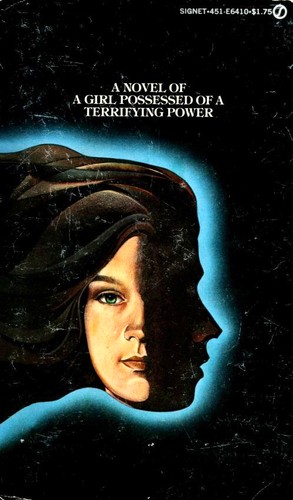
That single memory completely alters our understanding of Margaret’s entrance in Episode 1. When the police cross the threshold of the White household in the opening hour, Margaret’s extreme isolation of her daughter looks like the work of an ignorant, sheltered fanatic. The finale reveals the exact opposite: she was never blind to what was happening. She had spent more than a decade fully aware of the destruction Carrie could unleash, using her religion as a desperate, heavy-handed harness to keep those abilities locked away inside their walls.
In King’s original book, Margaret White is an unmitigated monster, a figure of pure religious hysteria who denies Carrie any semblance of humanity. Flanagan’s screen version, written alongside a talented writers’ room, reframes that domestic prison around maternal panic. It does not excuse her abuse, but it gives it an entirely different, deeply tragic engine.
Speaking about the pivotal rock-rain flashback, Sloyan explained how the moment locked in Margaret’s tragic logic for the rest of her life:
“She knows. She knows exactly what her daughter is capable of. And I think that that, in that moment with the rocks falling, was really Margaret making the choice that this child was not going to leave the house because, what does this world do to monsters? And I think she just was like, ‘No, they’re not getting her.’”
Sloyan also noted how she wanted to strike a delicate balance with the character’s dark warmth, explaining that because this version of Margaret led with genuine affection for her child, she had to ensure the character never felt overly kind. In her view, Carrie had to remain trapped between the horrors of modern high school and a home that offered no true sanctuary.
If you have followed Flanagan’s career across his previous streaming projects, this kind of structural remix won’t come as a total surprise. He has a habit of taking established horror texts, dissecting their thematic core, and rebuilding them around complex family grief. If you look at how he approaches King’s work elsewhere, such as Flanagan’s vision for Stephen King’s The Dark Tower Series, he consistently prioritizes character motivation over literal page-to-screen recreation.
The updated television version of Carrie also integrates modern social media dynamics into the high school torment inflicted by classmates played by Alison Thornton, Josie Totah, and Arthur Conti. Yet despite those 21st-century additions, the fundamental tragedy remains firmly rooted in the house on Chamberlain Street. Even as the show tracked toward its devastating conclusion, Margaret’s ultimate demise felt earned. She may have been acting out of a distorted impulse to shield her daughter from a cruel world, but in locking Carrie away for ten years, she ensured the eventual catastrophe herself.
It is one of the busiest years on record for Stephen King screen adaptations in 2026, but this subtle piece of character work stands out. By saving that childhood memory for Episode 8, Flanagan ensures that anyone rewatching from the beginning will see a very different, far more heartbreaking story playing out behind Margaret White’s eyes.


