Escape Into Books
Your home for book news, reviews, and bookish fun. Follow along on Facebook.
Escape Into Books
Your home for book news, reviews, and bookish fun. Follow along on Facebook.


Discover a list of cosy fantasy books that provide emotional warmth and gentle narratives for a relaxing reading experience.
Finding the best cosy fantasy books comes down to what you need from a story when the real world, or your usual reading stack, gets a bit too heavy. The subgenre gained widespread prominence in the early 2020s, offering a high-comfort, low-stakes alternative to the sprawling wars and grimdark violence that dominated speculative fiction for decades. Instead of broad-scale military campaigns or world-ending threats, these novels step inside quiet coffee shops, sleepy coastal towns, and overgrown cottage gardens where the focus turns entirely inward.
At its heart, cosy fantasy prioritises emotional warmth, found family, domestic settings, and personal healing over epic quests and apocalyptic dangers. Conflicts still exist, but they are local, personal, and thoroughly manageable, giving readers space to breathe. I remember picking up my first slice-of-life fantasy during a week when I simply could not stomach another tragic hero dying on a muddy battlefield, and the relief of that shift in tone was immediate.
This guide is for anyone seeking a restorative read, whether you are a longtime fantasy fan looking for a gentle change of pace or a newcomer drawn to warm, character-led fiction. Across nine established and currently available books that define the modern landscape, we look at the standout stories that best embody the subgenre.
At its heart, cosy fantasy prioritises emotional warmth, low external stakes, and local settings over epic battlefields, dark lords, or world-saving quests. Rather than asking a protagonist to rescue an empire from looming destruction, these stories narrow their scope to the quiet rhythm of daily life. The threat of total annihilation is replaced by the gentle tension of personal growth, community ties, and small-scale problem-solving.
The subgenre relies heavily on comforting tropes that evoke a sense of home and quiet satisfaction. Central themes often include found family, personal recovery arcs, and the restorative power of craft or routine. You will frequently find characters establishing coffee shops, tending bookshops, practising artisanal crafts, or gathering around a shared table. These settings serve as sanctuaries where worn-out adventurers or quiet misfits can heal from past hardships.
It is a common mistake to assume that cosy fantasy contains no conflict at all. Disagreements arise, finances prove tight, and personal setbacks occur, but the consequences remain strictly manageable. The narrative tension is kept at an accessible level, focusing on individual well-being and the strength of community relationships rather than existential doom, ensuring that the reader experiences a genuinely soothing narrative.
| Book | Author | First published | Best for |
|---|---|---|---|
| Legends & Lattes | Travis Baldree | 2022 | Best for high-comfort slice-of-life reads |
| The House in the Cerulean Sea | T. J. Klune | 2020 | Best for heartwarming found family |
| The Very Secret Society of Irregular Witches | Sangu Mandanna | 2022 | Best for warm magical romance |
| A Psalm for the Wild-Built | Becky Chambers | 2021 | Best for philosophical, quiet reflection |
| Emily Wilde’s Encyclopaedia of Faeries | Heather M. Fawcett | 2023 | Best for academic fairy tale charm |
| Howl’s Moving Castle | Diana Wynne Jones | 1986 | Best for classic whimsical magic |
| Half a Soul | Olivia Atwater | 2020 | Best for Regency fantasy romance |
| Under the Whispering Door | T. J. Klune | 2021 | Best for emotional healing and tea lovers |
| Bookshops & Bonedust | Travis Baldree | 2023 | Best for bookshop lovers |
First published 2022Length 316 pages
Borrow or find an edition on Open Library
If there is a single book that defines the modern boom of comfortable fiction, it is Travis Baldree’s 2022 debut, Legends & Lattes. Running at a nimble 316 pages, this novel stands as the quintessential flagship title of the modern cosy fantasy movement. The story follows Viv, a tired orc barbarian who decides she has taken her last blow in battle and hangs up her sword for good. Moving to the city of Thune, she sets herself an entirely different kind of challenge: opening the settlement’s very first coffee shop.

Instead of world-ending threats or grand political intrigue, the narrative delivers ultra-low stakes centred on baking pastries, installing espresso machines, and making friends with the locals. I remember reading the scene where Viv carefully tinkers with her newly arrived espresso machine late into the night, and realising that a fantasy novel about plumbing, carpentry, and steamed milk could be infinitely more compelling than another bloody dungeon crawl. It is a story built entirely around community, second chances, and the quiet satisfaction of building something lasting with your own hands.
Best suited for readers seeking high-comfort slice-of-life reads, Baldree’s novel proves that narrative tension does not need to threaten the realm to keep you turning pages. It requires zero prior lore knowledge to enjoy, making it an ideal starting point for anyone looking to explore the warmer side of the genre.
First published 2020Length 416 pages
Borrow or find an edition on Open Library
Published in 2020, TJ Klune’s The House in the Cerulean Sea stands as the best option for readers seeking a heartwarming story built around found family. Coming in at roughly 416 pages, the novel is widely credited as an early mainstream driver of modern comfort fantasy, helping to pave the way for the wave of soothing, emotionally resonant speculative fiction that followed.

The plot focuses on Linus Baker, a pathologically rigid caseworker for the Department in Charge of Magical Youth. Linus lives a dull, colourless life defined strictly by procedural manuals, until he is sent on a classified assignment to an island orphanage housing six unusual and potentially dangerous magical children. His task is to determine whether the establishment poses a threat to society. Instead, as he settles into life on Marsyas Island and meets the children alongside their devoted caretaker, Arthur Parnassus, his rigid worldview begins to unravel.
Rather than relying on sprawling battle sequences or world-ending threats, the book explores themes of acceptance, belonging, and the quiet courage required to break free from bureaucratic monotony. It is a delightful read for anyone who wants a gentle, compassionate story about finding your place in the world among people who accept you as you are.
First published 2022Length 290 pages
Borrow or find an edition on Open Library
Sangu Mandanna’s 2022 novel The Very Secret Society of Irregular Witches sits right at the sweet spot of warm magical romance and domestic comfort. The story centres on Mika Moon, a lonely witch who has lived her life obeying a strict set of rules designed to keep magic hidden from the world. Used to keeping her head down and hiding who she really is, her routine changes completely when she is unexpectedly hired to tutor three young, untamed witches at the mysterious Nowhere House.

What makes the book work so well is how Mandanna balances cosy household magic with a genuinely moving found-family narrative. Alongside the three chaotic young witches, Mika finds herself surrounded by an eccentric household of caretakers, including Jamie, the protective, grumpy librarian who guards the house. As Mika grows closer to the household, the story unfolds into a sweet, low-stress romance that complements the broader theme of finding belonging.
If you are looking for a comforting narrative about stepping out of isolation and building a community after years of hiding, this is an easy recommendation. It delivers a deeply reassuring read where the stakes remain wonderfully personal and the focus stays firmly on emotional warmth and human connection.
First published 2021Length 160 pages
Borrow or find an edition on Open Library
Becky Chambers delivers a deeply gentle, contemplative vision of the future in A Psalm for the Wild-Built. Running at a concise 160 pages, this novella tells the story of Sibling Dex, a tea monk travelling through a peaceful world who suddenly loses their sense of purpose. Seeking clarity away from human settlements, Dex wanders into the wilderness and encounters Mosscap, an inquisitive robot who has stepped out from the woods to check on humanity. Their meeting kicks off a quiet journey centred on simple conversation, freshly brewed tea, and mutual curiosity.
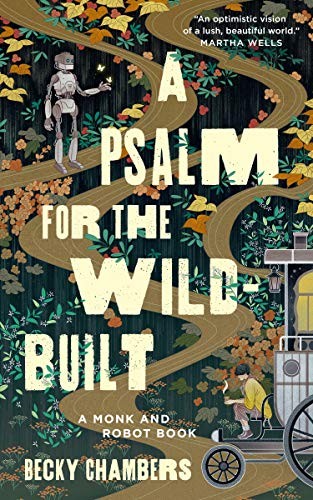
The book won the 2022 Hugo Award for Best Novella, earned largely for its gentle, restorative narrative that feels like a warm antidote to heavy, apocalyptic science fiction. Rather than relying on grand villains or galaxy-ending threats, the plot focuses entirely on human-scale questions about contentment, rest, and existence without existential dread. Chambers asks what it means to be satisfied in a world where basic needs are already met, making it the ideal choice for readers who want philosophical reflection wrapped in a profoundly comforting atmosphere.
First published 2023Length 325 pages
Borrow or find an edition on Open Library
If you prefer your comfort reads with a bit of academic rigour and a heavy dusting of snow, Heather Fawcett’s 2023 novel Emily Wilde’s Encyclopaedia of Faeries hits a very sweet spot. Running at about 325 pages, this book sits as the absolute best option for readers seeking academic fairy tale charm. The narrative follows Emily, a delightfully prickly Cambridge professor who travels to a remote, freezing Scandinavian village to conduct field research for the world’s first comprehensive encyclopaedia of fae folklore.

I found myself turning the pages faster just to see Emily meticulously log creature traits in her journal while steadfastly ignoring her own freezing toes. What makes the story work so well is how Fawcett blends classic, slightly dangerous faerie folklore with a warm, firelit aesthetic. The fae here retain their traditional, trickster edge, but the threat is softened by the comforting routine of wood stoves, hot tea, and village hospitality.
It seamlessly pairs scholarly research vibes and a crisp winter atmosphere with a subtle, low-intensity romance that never overshadows Emily’s primary obsession with her field work. It is an ideal pick for anyone who loves quiet, atmospheric stories about dedicated scholars, rustic winter landscapes, and old-world magic.
First published 1986Length 304 pagesReaders 4.45/5 from 106 Open Library ratings
Borrow or find an edition on Open Library
First published in 1986, Diana Wynne Jones’s Howl’s Moving Castle stands as a foundational precursor to modern cosy fantasy. Across roughly 304 pages, the story tells the tale of Sophie Hatter, who is cursed into an old woman’s body and takes up residence in a wizard’s walking castle. Holding a reader rating of 4.45 out of 5 from 106 ratings on Open Library, this classic novel is best for classic whimsical magic.

Long before the modern subgenre took off, this book established the core appeal of the mode through domestic charm and eccentric humour. Instead of driving towards a high-stakes war, the plot focuses on internal growth, domestic enchantment, and subverting standard fantasy tropes at every turn. Sophie’s transition from a dutiful eldest sister into a stubborn elder cleaning a chaotic magical household highlights how personal conflicts and hearthside dynamics can carry a fantasy story. It remains an essential choice for anyone wanting to see how gentle comfort and clever storytelling intersect. Readers who take to Sophie usually get on well with the other great comfort shelf of classic fantasy, and our guide to the Narnia books in order is the place to start on that one.
First published 2020Length 234 pages
Borrow or find an edition on Open Library
First published in 2020, Olivia Atwater’s Half a Soul sits as the best option for readers seeking Regency fantasy romance. Running to about 234 pages, it blends the decorum of Regency ballrooms and magical mishaps with gentle fairy-tale logic. It stands as a fine example of how historical settings and lighthearted romantic fantasy can combine to create a thoroughly comforting story.

The plot follows Dora, a young woman who is missing half her soul due to an unfortunate faerie deal made in her childhood. Because half her emotional capacity is gone, Dora is rendered remarkably immune to social awkwardness, embarrassment, and the rigid expectations of polite society. While her relatives worry about her marriage prospects, Dora moves through society with an unintended, quiet candidness that is both humorous and refreshing.
Rather than threatening its characters with apocalyptic danger, Atwater delivers low-stakes emotional resolution, framing the romance with warmth and restorative charm. It is an ideal pick for anyone who enjoys Regency-inflected fairy tales where magic is woven into everyday domestic life, offering a cosy, lighthearted escape from start to finish.
First published 2021Length 400 pages
Borrow or find an edition on Open Library
TJ Klune followed his 2020 breakout hit with Under the Whispering Door, a story that takes on the heaviest of subjects, death, grief, and what we leave behind, and treats them with remarkable softness. The narrative follows Wallace Price, a cold, self-absorbed lawyer who dies unexpectedly and finds himself attending his own sparsely attended funeral. Collected by a reaper, he is taken to Charon’s Crossing, a whimsical, multi-storey supernatural tea shop run by Hugo, a gentle ferryman whose job is to help souls accept their deaths and transition to whatever lies beyond. When Wallace is given just seven days before he must cross over, he is forced to reckon with the life he wasted and figure out how to genuinely care for others in the brief time he has left.
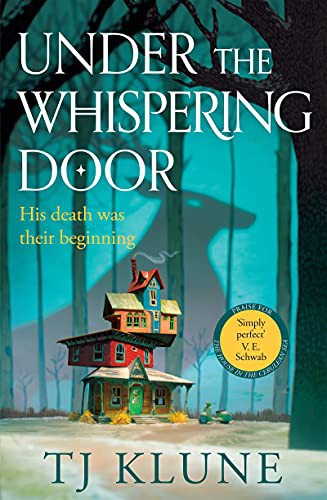
At roughly 400 pages, the novel uses the everyday routines of tea-making, baking, and quiet, honest conversations to anchor a story about mortality. It is best suited for readers seeking emotional healing or anyone who appreciates the soothing ritual of a hot drink alongside a thoughtful narrative. Rather than sweeping magic battles, the book focuses entirely on second chances, forgiveness, and personal redemption within a reassuring, compassionate environment. It deals directly with bereavement, but handles the topic with such care that the experience remains warm and comforting throughout.
First published 2023Length 352 pages
Borrow or find an edition on Open Library
Serving as a prequel to Legends & Lattes, Travis Baldree’s 2023 novel Bookshops & Bonedust steps back twenty years to follow a younger, far more impulsive Viv. After sustaining a serious leg injury during a mercenary campaign, the young orc is stranded to recuperate in Murk, a sleepy seaside town where very little happens. I spent a quiet weekend turning its 352 pages, charmed by how naturally Baldree shifted his focus from brewing coffee to saving a crumbling literary shop. Rather than sitting idle, Viv throws her restless energy into helping a weary proprietor restore a struggling, dust-laden bookshop to its former glory.
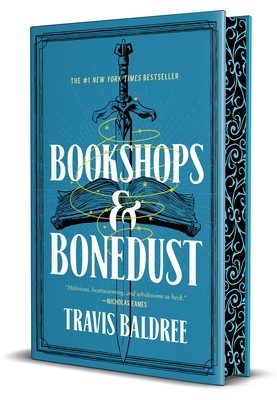
While there is a thread of mild, low-pressure adventure involving a lingering threat from her past, the true heart of the narrative lies in its domestic rhythms and small-town warmth. Viv builds genuine, comforting friendships with the local residents and finds room for a sweet, low-stakes romance along the way. Delivering plenty of cosy coastal vibes, it is tailor-made for bookshop lovers who want to see how Viv’s journey toward a peaceful life really began.
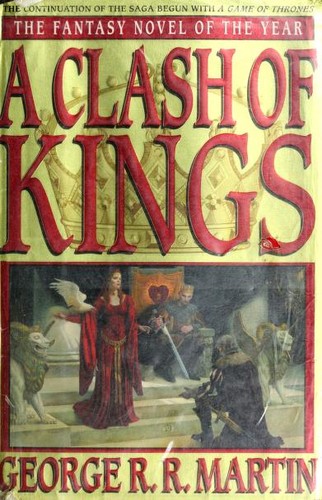
Navigating fantasy subgenres can quickly get confusing, especially when terms sound deceptively similar. Low fantasy is traditionally defined by its setting, where magic intrudes upon an otherwise mundane or realistic world. Cosy fantasy, by contrast, is defined by its emotional tone and low external stakes rather than where the story takes place. A cosy novel can easily unfold in an entirely secondary world populated by orcs and goblins, as seen in Travis Baldree’s Legends & Lattes, provided the narrative focuses on personal warmth, domesticity, and manageable local problems rather than grand, world-ending battles. The epic tradition is not going anywhere, and George R. R. Martin has written admiringly about the Tolkien legacy behind it, but cosy fantasy is deliberately pitched an octave lower.
The distinction is equally clear when comparing cosy fantasy with romantasy. Where romantasy centres high-stakes peril, grand political intrigue, and intense romantic tension as the primary engine driving the plot, cosy fantasy operates at a completely different volume. A cosy book might feature a gentle love story, as found in Sangu Mandanna’s The Very Secret Society of Irregular Witches, but romance is never a mandatory requirement for the genre. The plot can just as easily revolve around running a quiet business, researching local folklore, or supporting a magical household like the orphanage in TJ Klune’s The House in the Cerulean Sea.
Ultimately, subgenre boundaries here focus heavily on how reading the book makes you feel rather than the precise mechanics of specific magic systems or world-building rules. Whether a story features whimsical spells or subtle enchanted atmospheres, what binds cosy fantasy together is its atmospheric commitment to comfort, emotional safety, and restorative, human-scale resolutions.
While the distinct marketing term is relatively new, the roots of cosy fantasy run deep. Decades before the label existed, stories like Diana Wynne Jones’s 1986 classic Howl’s Moving Castle laid the foundational groundwork for the subgenre. By prioritising eccentric magic, domestic enchantment, and warm character dynamics over sweeping epic battles or world-ending stakes, these early works proved that readers loved stepping into fantastical settings simply to experience a sense of comfort and home. Tolkien had the same instinct in a minor key long before that, and his Father Christmas letters show a far cosier corner of Middle-earth than the legendarium he is remembered for.
However, the phrase ‘cosy fantasy’ only gained explosive popularity in the early 2020s as a defined industry category. The movement grew largely out of reader demand for comforting, escapist literature during stressful global events, when book lovers actively sought out restorative stories to unwind. Books like TJ Klune’s 2020 novel The House in the Cerulean Sea demonstrated a massive appetite for gentler narrative arcs focused on found family, belonging, and emotional warmth.
The defining tipping point came with self-published viral hits like Travis Baldree’s 2022 novel Legends & Lattes. By focusing on a retired orc opening a coffee shop in a fantasy city, the book proved that ultra-low stakes and quiet slice-of-life storytelling could command a huge, passionate audience. Traditional publishers quickly took notice, formalising the subgenre as a distinct publishing category that continues to shape bookshop displays today.
The primary difference lies in the narrative focus and conflict, as romantasy centres heavily on intense romantic tension and high-stakes relationships, whereas cosy fantasy prioritises emotional warmth, low external stakes, and quiet atmosphere. While a cosy fantasy story may include a romantic subplot, the romance is rarely the driving engine of the plot, which usually revolves around community, personal healing, domestic life, or opening a local business.
Yes, many cosy fantasy novels feature no romantic plots at all, focusing instead on found family, self-discovery, or friendship. Becky Chambers’s novella A Psalm for the Wild-Built is a prime example, centring entirely on a tea monk’s quiet journey to understand purpose alongside an ancient robot. Similarly, TJ Klune’s The House in the Cerulean Sea places its core emotional weight on guardianship, belonging, and protecting a magical home.
The stakes in a cosy fantasy novel are almost exclusively personal, local, and emotionally grounded rather than world-ending. Instead of defeating a dark lord or preventing an apocalyptic war, characters face challenges like keeping a small coffee shop solvent, learning a new trade, repairing fractured relationships, or finding a sense of belonging in a quiet town. Conflict still exists, but the potential consequences are manageable and human-scaled.
 Best Sci Fi Books: September 2026 and Where to Start

 Game of Thrones Books in Order, and Where Winds of Winter Stands

 Every Stephen King Book in Chronological Order
This page is maintained by Theo Marsh, who covers the big fantasy and science-fiction franchises for Escape Into Books.
Covers, author credits and reader ratings come from Open Library, which is free and openly licensed. A rating is only shown once enough people have left one.
Nothing here is generated from a book we could not verify. Where a title could not be confidently matched, we leave the space empty rather than guess.
We re-check this page every 90 days. The review date moves only when the content actually changes, because a fresh date on unchanged text helps nobody.
Last reviewed


