Escape Into Books
Your home for book news, reviews, and bookish fun. Follow along on Facebook.
Escape Into Books
Your home for book news, reviews, and bookish fun. Follow along on Facebook.


Discover why Alfonso Cuarón opted out of directing 'Goblet of Fire' due to exhaustion, as revealed by producer David Heyman.
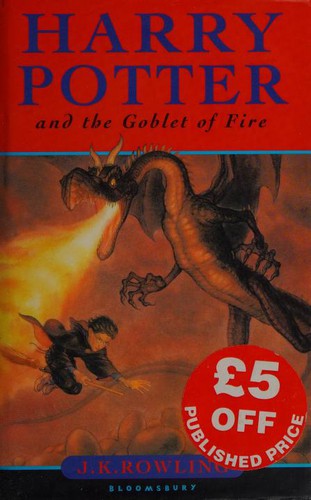
For two decades, fans of the Wizarding World have pondered what Harry Potter and the Goblet of Fire might have looked like had Alfonso Cuarón stayed in the director’s chair. Fresh off transforming the franchise with Harry Potter and the Prisoner of Azkaban, Cuarón opted not to return for the fourth instalment, leaving Mike Newell to take the helm. While rumours over the years suggested everything from creative friction to disagreements over the book’s massive length, producer David Heyman has set the record straight: the decision came down to pure physical and mental exhaustion.
Speaking on Harry Potter: The Official Film Podcast, Heyman recalled the exact moment he approached Cuarón about staying on for the fourth movie. The Mexican director’s response was characteristically blunt.
“We asked Alfonso if he wanted to do the fourth, and he said, ‘Cabrón,’” Heyman shared. “I think he was exhausted.”
Heyman, who counts Cuarón as one of his closest friends, noted that the sheer pace of bringing Prisoner of Azkaban to the screen had left the filmmaker completely drained. Seeing how worn out Cuarón was at the time, it quickly became clear that launching straight into another massive blockbuster was off the table.
To understand why Cuarón bowed out, you have to look at the punishing schedule Warner Bros. was maintaining in the early 2000s. Chris Columbus directed the first two films back-to-back, with Harry Potter and the Philosopher’s Stone arriving in November 2001 and Harry Potter and the Chamber of Secrets following just twelve months later in November 2002.

By the time Cuarón took over for Prisoner of Azkaban, the studio had granted a slight breather, pushing the release to June 2004. Even so, pre-production on Goblet of Fire had to begin while Cuarón was still deep in post-production, fine-tuning visual effects and editing the third film. For a director who works with Cuarón’s meticulous, shot-by-shot precision, overlapping production schedules on two gigantic fantasy films simply was not feasible.
It is easy to forget how much of a departure Prisoner of Azkaban was for the series. Cuarón insisted on letting the main trio wear everyday Muggle clothes, encouraged deep character work, and brought a moody, atmospheric visual style that fundamentally reshaped how Hogwarts looked on screen. Delivering that level of artistic reinvention within a studio pipeline takes a massive toll.
When Cuarón stepped back, the job fell to Mike Newell, who became the first British director to tackle the franchise. Newell inherited a formidable challenge: adapting J.K. Rowling’s fourth novel, which was more than double the length of her previous books and introduced complex set pieces like the Quidditch World Cup and the Triwizard Tournament.
Newell brought a distinct British boarding-school energy to Goblet of Fire, leaning heavily into the awkward teenage romance, formal dances, and adolescent angst that balance out the darker turn of Voldemort’s return. While fans often debate whether Cuarón’s darker, more poetic aesthetic would have suited the Triwizard Tasks, Newell’s theatrical pacing kept a huge narrative moving smoothly.
Production history reveals just how fragile these franchise pipelines can be behind the scenes. Whether it is directors stepping down due to burnout, cast members like Tom Felton reflecting on prosthetic makeup, or studio development shifts like the news that Warner Bros. shelved a Marauders prequel, the logistics behind keeping a multi-billion-pound story on track are endlessly complex.
Heyman’s recent comments offer a warm, human context to what was a major turning point in film history. Cuarón did not walk away because he had lost love for Hogwarts or the characters; he simply needed to catch his breath after giving the wizarding world one of its finest cinematic hours.


