Escape Into Books
Your home for book news, reviews, and bookish fun. Follow along on Facebook.
Escape Into Books
Your home for book news, reviews, and bookish fun. Follow along on Facebook.


Mike Flanagan reveals how The Dark Tower series will adapt the books chronologically, starting with The Gunslinger.
If you have spent any real time following the long, tangled journey of bringing Stephen King’s magnum opus to the small screen, you will know that how you tackle the narrative structure is half the battle. Mike Flanagan has provided a clear picture of how he intends to adapt The Dark Tower, confirming that his planned television series will begin directly with The Gunslinger and move sequentially through the books in strict chronological order.
Rather than jumping across the timeline or blending storylines from later volumes into the opening chapter, the proposed multi-season series will follow the structure King laid down on the page. For purists who were baffled by previous attempts to condense the vast lore into a single feature film, this faithful, volume-by-volume approach is precisely what the story demands.
The decision to start at the absolute beginning with 1982’s The Gunslinger means viewers will meet Roland of Gilead exactly where readers first encountered him: chasing the man in black across an endless desert. The core eight-book saga presents a massive world-building challenge, but following the natural progression allows the narrative to expand organically as Roland gathers his ka-tet in subsequent arcs like The Drawing of the Three and The Waste Lands.
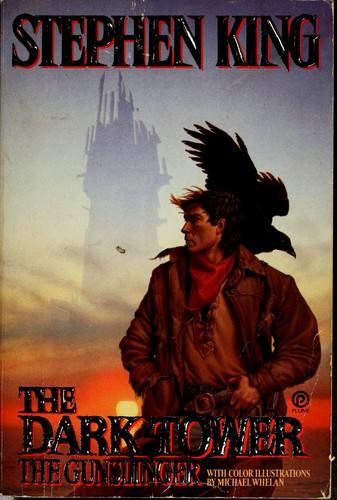
Flanagan has shared encouraging progress regarding the initial batch of teleplays, noting that the scripts for the first season are in fantastic shape and that King himself has given them his full endorsement. Having the author’s personal blessing is no small thing given how protective King can be over his core mythology, though fans tracking the broader landscape of Stephen King adaptations in 2026 know that turning beloved pages into greenlit television remains a complex process.
While the structural roadmap is now clear, Flanagan has been candid about the sheer logistical weight of getting a project of this magnitude off the ground, describing the undertaking as “like building an oil tanker.” It is a fitting analogy for an epic that spans parallel dimensions, crumbling worlds, and decades of publishing history.
Earlier discussions around the project floated ideas of a grand architecture involving a five-season television run capped by feature films. While the current focus centers firmly on a direct chronological book-by-book progression for the series, the project remains in active development rather than officially greenlit by a studio. Reports confirm the adaptation is very much on the table, but production timetables and official series orders are still unconfirmed.
This is not Flanagan’s first rodeo with King’s bibliography, of course. Between his work on feature films like Doctor Sleep and his television work, which includes exploring ideas for other King projects, he has earned a reputation as one of the few directors who truly understands the emotional beats underlying King’s prose.

It is impossible to talk about bringing Roland’s quest to the screen without acknowledging the 2017 feature film, which attempted to mash elements from several books into a ninety-minute action movie. That iteration remains entirely separate from this prospective television project. By taking a long-form television approach and refusing to remix the chronology, Flanagan is giving the narrative room to breathe.
If you are new to the series or have been following Flanagan’s vision for Stephen King’s The Dark Tower series from the start, this update offers a reassuring glimpse at the creative blueprint. There are still many wheels to turn before we see Mid-World brought to life, but knowing the compass is pointed firmly at the start of the road is the best news fans could hope for.


