Escape Into Books
Your home for book news, reviews, and bookish fun. Follow along on Facebook.
Escape Into Books
Your home for book news, reviews, and bookish fun. Follow along on Facebook.


Your essential guide to reading the Game of Thrones books in order.
If you are looking for the game of thrones books in order, the canonical journey through Westeros is best experienced by following the original publication dates of George R.R. Martin’s epic fantasy saga. The core main series currently consists of five published novels, beginning with 1996’s A Game of Thrones and running through to 2011’s A Dance with Dragons. I still remember the sheer shock of turning the final page of that fifth volume back in 2011, completely unaware I would still be waiting for the resolution fifteen years later. This guide is built for both total newcomers and returning readers who want a clear path through the entire written universe.
Beyond the primary narrative, the reading landscape is enriched by major prequels and historical companion works. Volumes such as A Knight of the Seven Kingdoms, which gathers three novellas following Dunk and Egg, and Fire & Blood, a detailed Targaryen history chronicle, expand the lore significantly. However, these titles remain distinct from the main five-book narrative arc and are generally best approached after grounding yourself in the central novels rather than forcing them into a strict chronological sequence.
The overarching saga is designed to run to seven primary books, though the final destination remains on the horizon. The sixth main-series novel, The Winds of Winter, and the planned seventh volume, A Dream of Spring, remain unreleased and unconfirmed for publication. Below, we break down how the released novels connect, how the companion works fit alongside them, and where the complete series stands today.
The core narrative of A Song of Ice and Fire currently comprises five published novels. The epic saga opened with A Game of Thrones in 1996 and continued through A Clash of Kings (1998), A Storm of Swords (2000), and A Feast for Crows (2005), before reaching its most recent entry, A Dance with Dragons, in 2011. While two final volumes, The Winds of Winter and A Dream of Spring, are planned to complete the central arc, these five published titles form the canonical main-series storyline.
Navigating Westeros can quickly become confusing because the broader published library includes several major companion titles that do not belong to the primary sequence. Works such as The World of Ice & Fire (2014), co-written with Elio M. García Jr. and Linda Antonsson, and Fire & Blood (2018) function as historical reference texts and chronicles written from the perspective of in-universe maesters, rather than traditional core novels following the main cast.
Similarly, shorter releases like Blood of the Dragon (1996) are frequently mistaken for standalone books. In truth, Blood of the Dragon is merely an excerpt collecting Daenerys Targaryen’s chapter perspectives directly from A Game of Thrones. While prequel narratives such as The Hedge Knight, later compiled alongside two other novellas in A Knight of the Seven Kingdoms (2015), offer fully realised standalone stories set decades prior, they remain distinct supplementary works rather than main-series entries.
| Book | Author | First published | Reader rating | Best for |
|---|---|---|---|---|
| A Game of Thrones | George R. R. Martin | 1996 | 4.22 / 5 | First novel in the main series |
| A Clash of Kings | George R. R. Martin | 1998 | 4.32 / 5 | Second novel in the main series |
| A Storm of Swords | George R. R. Martin | 2000 | 4.44 / 5 | Third novel in the main series |
| A Feast for Crows | George R. R. Martin | 2005 | 4.07 / 5 | Fourth novel in the main series |
| A Dance with Dragons | George R. R. Martin | 2011 | 4.35 / 5 | Fifth novel in the main series |
| A Knight of the Seven Kingdoms | George R. R. Martin | 2015 | — | Essential prequel novella collection |
| Fire & Blood | George R. R. Martin | 2018 | 4 / 5 | Targaryen history companion |
First published 1996Length 801 pagesReaders 4.22/5 from 759 Open Library ratings
Borrow or find an edition on Open Library
First published in 1996, A Game of Thrones by George R. R. Martin is the opening novel of the main A Song of Ice and Fire epic fantasy series, running to about 801 pages. It sits as the necessary starting point for any reader beginning the main storyline, introducing the low-magic, high-politics continent of Westeros alongside the freezing northern border of the Wall and the eastern lands of Essos. The novel holds a reader rating of 4.22 out of 5 from 759 ratings on Open Library, reflecting its position as one of modern fantasy’s most influential texts.
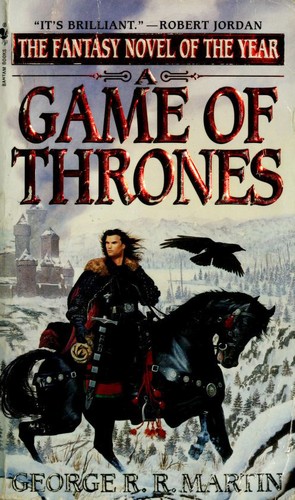
I still remember the sudden jolt of reading Bran’s early chapter on the window ledge and realising this was a far colder, sharper fantasy world than anything I had picked up before. That sense of immediate consequence comes through the core Westeros perspective characters, including Ned Stark, Catelyn Stark, Tyrion Lannister, and Daenerys Targaryen. Martin grounds the grand political conflict in intimate personal perspectives, early on even refining his world-building before publication, much like how George R.R. Martin nearly gave Targaryens psychic fire powers before settling on their bond with living dragons.
For anyone coming straight from screen adaptations, this first volume provides crucial internal monologues and historical context that television simply cannot replicate. It suits readers who enjoy tight plotting, morally complex figures, and intricate courtly manoeuvring, offering the foundational framework that every subsequent novel builds upon.
First published 1998Length 761 pagesReaders 4.32/5 from 191 Open Library ratings
Borrow or find an edition on Open Library
Published in 1998 as the second entry in the primary main-series sequence, A Clash of Kings picks up immediately after the seismic shifts at the end of the first novel. Running at approximately 761 pages, George R. R. Martin’s second instalment moves the narrative beyond individual betrayals and into full-scale continental warfare. It currently holds a rating of 4.32 out of 5 from 191 ratings on Open Library, reflecting its enduring standing among fantasy readers.
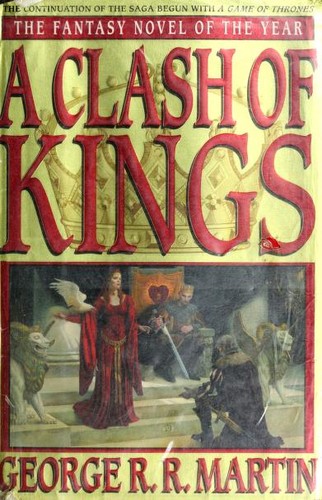
The core narrative tracks the War of the Five Kings, a brutal struggle for control of the Iron Throne following the death of King Robert and the execution of Eddard Stark. To capture the full magnitude of this conflict, Martin significantly expands the geographical scope of the series. Readers are taken for the first time to the bleak island fortress of Dragonstone to meet Robert’s unyielding brother Stannis Baratheon, accompanied by the mysterious red priestess Melisandre. Crucially, the introduction of Davos Seaworth as a viewpoint character gives the story an invaluable, grounded perspective on the political machinations of the highborn through the eyes of an honest former smuggler.
This entry suits readers who enjoyed the political tension of A Game of Thrones but want to see the canvas widen. Beyond the main military campaigns in the Riverlands and around King’s Landing, the book pushes far to the north Beyond the Wall with the Night’s Watch, while Daenerys Targaryen navigates the unforgiving Red Waste. It is the point in the saga where magic begins to return to the world in earnest, transforming the civil war into something far more dangerous.
First published 2000Length 992 pagesReaders 4.44/5 from 108 Open Library ratings
Borrow or find an edition on Open Library
Published in 2000 as the third instalment of the core series by George R. R. Martin, A Storm of Swords stands as the dramatic pivot of the original published trilogy arc. At roughly 992 pages, it is an extraordinarily dense piece of fantasy storytelling that brings the initial phase of the War of the Five Kings to a punishing crescendo. On Open Library, it holds a reader rating of 4.44 out of 5 from 108 ratings, underscoring its reputation as one of the most celebrated entries in modern speculative fiction.

This volume is defined by its sweeping consequences and relentless pacing. Rather than spending time building up new chess pieces, Martin delivers a sequence of major narrative climaxes that fundamentally alter the landscape of the Seven Kingdoms. It features the catastrophic betrayals of the Red Wedding alongside seismic political shifts in King’s Landing, ensuring that no major house emerges from its pages unscathed. Characters who seemed safe are abruptly cut down, while unlikely alliances begin to form in the aftermath of the violence.
For readers working their way through the series, A Storm of Swords is the volume where the narrative threads established in the first two books collide head-on. It marks the precise boundary between the tight, focused conflict of the early war and the broader, more scattered political aftermath that follows, making it a crucial bridge in the overarching story.
First published 2005Length 792 pagesReaders 4.07/5 from 153 Open Library ratings
Borrow or find an edition on Open Library
Published in 2005 as the fourth main-series book, A Feast for Crows arrived after a five-year gap following the frantic climax of A Storm of Swords. Clocking in at about 792 pages, the novel marks a deliberate shift in both scale and narrative rhythm for George R. R. Martin. Instead of attempting to push every single storyline across Westeros and Essos forward at once, Martin chose to split his massive cast of characters geographically, focusing deeply on the grim political aftermath of civil war in specific regions rather than rushing across the map.

This structural approach means that A Feast for Crows concentrates heavily on a dedicated set of point-of-view characters. Readers follow Cersei Lannister as she attempts to consolidate power in King’s Landing, Brienne of Tarth on a desperate quest through the ravaged riverlands, and fresh perspectives from the Iron Islands and Dorne. However, major figures such as Jon Snow, Tyrion Lannister, and Daenerys Targaryen do not appear in this volume at all.
What every reader needs to know before starting is that A Feast for Crows runs geographically parallel to and temporally overlaps with events in the fifth book, A Dance with Dragons. The two novels occur during roughly the same time frame, dividing the overarching story by location rather than by chronological progression. It currently holds a reader rating of 4.07 out of 5 from 153 ratings on Open Library, standing as a rich, character-driven examination of trauma, faith, and political ruin.
First published 2011Length 1040 pagesReaders 4.35/5 from 43 Open Library ratings
Borrow or find an edition on Open Library
Published in 2011 as the fifth and most recent main-series novel, A Dance with Dragons picks up the character threads that were left hanging six years prior. Spanning roughly 1,040 pages, George R. R. Martin turns his lens toward the North and across the Narrow Sea to Essos, bringing back major pov characters who were absent from the fourth entry, notably Jon Snow, Tyrion Lannister, and Daenerys Targaryen. On Open Library, the book holds a reader rating of 4.35 out of 5 from 43 ratings. I remember turning open this massive volume on release night, desperate to find out how Jon was managing as Lord Commander at the Wall after sitting out the previous instalment entirely.
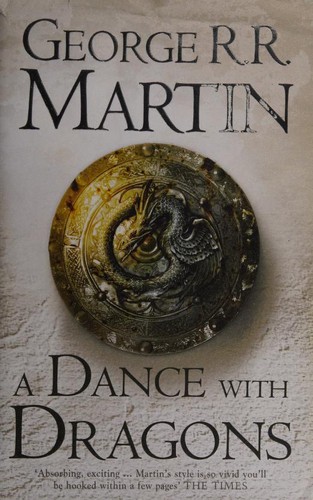
Structurally, A Dance with Dragons overlaps chronologically with A Feast for Crows rather than following it sequentially. Martin split his expanding narrative geographically rather than temporally, meaning the events in Essos and along the Wall occur at the exact same time as the southern political battles in Westeros, before the storyline finally converges and advances past the fourth book in its final act. Given that Martin famously refuses to outline his novels, managing these twin timelines across two massive books proved an intricate puzzle that delayed the manuscript for years.
For anyone working through the series, this is currently where the published main narrative halts. It suits readers who enjoy immersive world-building, high-stakes diplomacy, and slow-burn character studies across Meereen, the North, and the Free Cities. Anyone preparing to start should make sure they read A Feast for Crows beforehand, as jumping straight into this volume leaves critical gaps in the broader political landscape once the timelines join up.
First published 2015Length 357 pages
Borrow or find an edition on Open Library
Published in 2015 and coming in at roughly 357 pages, A Knight of the Seven Kingdoms brings together three prequel novellas originally published across more than a decade: The Hedge Knight (1998), The Sworn Sword (2003), and The Mystery Knight (2010). Rather than functioning as a massive main-series novel, this volume serves as an essential prequel collection that offers a very different vantage point on Westeros.

The stories are set roughly a century before the events of A Game of Thrones, during a period of relative stability under Targaryen rule. They follow Ser Duncan the Tall, an earnest and well-meaning hedge knight, alongside his young squire Egg, who is secretly Prince Aegon V Targaryen. Wandering from local tourneys to minor feudal disputes, the duo offers a grounded, street-level view of the Seven Kingdoms away from the immediate power struggles of the Great Houses.
What makes the collection stand out is its lighter, character-focused storytelling. It deepens Targaryen lore and historical context significantly without requiring readers to keep track of dozens of competing point-of-view characters or massive war maps. For anyone wanting an accessible entry into George R. R. Martin’s world, it works brilliantly either before starting the main novels or as a change of pace between the heavier volumes.
First published 2018Length 840 pagesReaders 4.00/5 from 48 Open Library ratings
Borrow or find an edition on Open Library
Published in 2018, Fire & Blood by George R. R. Martin is an extensive Targaryen history companion rather than a continuation of the core five-novel narrative. Running to around 840 pages, this volume covers the dragon-riding dynasty from Aegon the Conqueror’s initial subjugation of Westeros through to the tumultuous regency of Aegon III. It serves as an extra reference work for those wanting to dig into the backstory of the Seven Kingdoms, laying out decades of political intrigue, royal successions, and devastating civil conflicts.

What sets the book apart from the main series is its stylistic framing. Instead of relying on close, multi-perspective point-of-view chapters, the entire text is written from the in-universe perspective of Archmaester Gyldayn of the Citadel. This pseudohistorical approach gives the prose the weight of a medieval chronicle, complete with unreliable witnesses, competing historical accounts, and academic speculation. It suits readers who delight in world-building and historical detail, though those expecting traditional character-driven drama may find the academic tone a deliberate departure from the main novels.
Before picking it up, readers should know that it works best as a supplement after finishing the published main-series novels. Having a baseline familiarity with the noble houses and geography of Westeros makes Gyldayn’s dense record far easier to navigate. The title holds a reader rating of 4 out of 5 from 48 ratings on Open Library, reflecting its status as a rewarding deep dive for fans who want to understand the origins of the Iron Throne.
For anyone picking up the series for the first time, starting with publication order remains the standard recommended approach. Beginning with A Game of Thrones (1996) and moving through A Clash of Kings (1998) and A Storm of Swords (2000) lets the narrative unfold precisely as George R. R. Martin constructed it. The world-building expands naturally across these initial volumes, introducing complex political alliances and subtle foreshadowing without overwhelming the reader with historical background upfront.
The structural narrative changes significantly after the third book. Martin famously split his material geographically rather than chronologically, meaning that A Feast for Crows (2005) and A Dance with Dragons (2011) cover overlapping timelines across entirely different locations and character perspectives. Because these two works run side by side in time, some readers and fans prefer to follow combined reading orders that interleave chapters from both books into one massive, concurrent narrative. While a combined read offers an intriguing perspective on a re-read, first-time readers are generally better served by staying with publication order to preserve the pacing and character focus the author intended.
When it comes to companion works and prequels, placement is largely down to reader preference. Collections like A Knight of the Seven Kingdoms (2015), which gathers the three Dunk and Egg novellas, or historical chronicles like Fire & Blood (2018) can be read before the main series to establish world history, or tackled after finishing A Dance with Dragons. Experienced fantasy readers often prefer finishing the main five-book narrative first before turning to the prequels, but taking a chronological route starting with early history is a completely viable option.
The waiting game for the final acts of A Song of Ice and Fire has stretched into a secondary era of fantasy publishing. The Winds of Winter is the announced sixth main-series novel, but it remains unpublished despite years of eager speculation. For those following the epic from its early days, the gap between A Dance with Dragons in 2011 and today represents a massive hiatus, during which entire screen adaptations have risen and fallen. I still remember setting down A Dance with Dragons back in 2011, genuinely convinced we would be reading the next instalment before the decade was out.
Behind it lies A Dream of Spring, planned as the seventh and final main-series novel to bring the grand saga to its close. Crucially, no official release date or publication window currently exists for either remaining title. While fans routinely dissect every blog update and legal filing for subtle clues, the reality is that both books remain unconfirmed on the publisher’s release slate. Given Martin’s stance that his original vision will not simply mirror the television show’s ending, his book ending won’t match HBO’s Game of Thrones, leaving the literary fate of Westeros uniquely up in the air until the manuscripts are finished.
For anyone mapping out their read of the series, this means the canonical five-novel run is where the core prose story currently stops. Readers entering the world today must navigate the narrative knowing the main arc pauses at a crucial cliffhanger, with the final two volumes existing purely as planned, forthcoming titles.
The correct way to read the main series is in publication order: A Game of Thrones, A Clash of Kings, A Storm of Swords, A Feast for Crows, and A Dance with Dragons. Following this order ensures you experience the narrative arc as George R. R. Martin constructed it. Prequels and companions like A Knight of the Seven Kingdoms or Fire & Blood can be enjoyed alongside or after the core five novels, but publication order remains the canonical standard.
You should start with A Game of Thrones, which was published in 1996 as the first main novel in the epic fantasy series. This book introduces the core viewpoint characters, the political tensions of Westeros, and the overarching threats beyond the Wall. Starting anywhere else, such as with prequel history works like Fire & Blood or The World of Ice & Fire, will spoil broad historical twists and obscure the main storyline.
The canonical order of the main A Song of Ice and Fire series begins with A Game of Thrones (1996), followed by A Clash of Kings (1998), A Storm of Swords (2000), A Feast for Crows (2005), and A Dance with Dragons (2011). The planned sixth and seventh novels, The Winds of Winter and A Dream of Spring, remain unpublished. Companion works like A Knight of the Seven Kingdoms (2015) and Fire & Blood (2018) expand the lore.
 Best Sci Fi Books: September 2026 and Where to Start



 Every Stephen King Book in Chronological Order

 The Most Banned Books in American Schools and Libraries
This page is maintained by Theo Marsh, who covers the big fantasy and science-fiction franchises for Escape Into Books.
Covers, author credits and reader ratings come from Open Library, which is free and openly licensed. A rating is only shown once enough people have left one.
Nothing here is generated from a book we could not verify. Where a title could not be confidently matched, we leave the space empty rather than guess.
We re-check this page every 90 days. The review date moves only when the content actually changes, because a fresh date on unchanged text helps nobody.
Last reviewed


