Escape Into Books
Your home for book news, reviews, and bookish fun. Follow along on Facebook.
Escape Into Books
Your home for book news, reviews, and bookish fun. Follow along on Facebook.


The new stage play indicates Lyanna Stark was the Knight of the Laughing Tree, confirming a popular fan theory from Westeros lore.
If you have spent any real time sifting through Westeros lore over the years, you will know that the Tourney at Harrenhal is essentially the big bang of modern Song of Ice and Fire history. It is where everything went wrong, where key promises were made, and where the mystery of the Knight of the Laughing Tree first took root. Now, the stage play Game of Thrones: The Mad King has officially hit the stage, and it tackles that very mystery head-on by confirming a theory fans have held for decades: Lyanna Stark was indeed the mystery jouster.
The production, staged by the Royal Shakespeare Company, brings the pivotal prequel era to life for the first time in front of a live audience. Set roughly a generation before the events of the original series, the story focuses heavily on the infamous tournament where King Aerys II Targaryen’s growing paranoia began to unravel the realm.
For those who need a brief refresher on the lore, the story of the Knight of the Laughing Tree was first recounted at length during A Storm of Swords. During the grand tournament at Harrenhal, a mysterious, short knight in ill-fitting armour appeared late in the lists. Bearing a shield painted with a smiling weirwood tree, the unknown jouster challenged and defeated three knights whose squires had previously bullied Howland Reed, the small Crannogman who was under the protection of the Stark siblings.

The display infuriated King Aerys II, who was convinced the mysterious figure was an enemy mocking his reign. Aerys sent his son, Crown Prince Rhaegar, to search for the jouster, but only the weirwood shield was ever recovered hanging from a tree. Ever since, readers have debated who was behind the visor. While candidates over the years have ranged from Howland Reed himself to Ned Stark or Ashara Dayne, the overwhelmingly popular theory was always Lyanna Stark, a skilled rider who possessed the wild temperament and moral drive to defend her family’s friend.
In the play, that theory is treated as outright fact. Lyanna Stark, played on stage by Harmony Rose-Bremner, is explicitly shown to be the Knight of the Laughing Tree. To keep her actions hidden from her own family, her brothers are kept entirely in the dark regarding her late-night heroics in the lists.
The play does not simply reveal Lyanna behind the helmet; it connects her identity directly to her fateful relationship with Prince Rhaegar Targaryen, played by Noah Ritter. In this version of events, Lyanna confesses the truth of her identity directly to Rhaegar. Rather than delivering her to his paranoid father, Rhaegar decides to help her cover up her involvement.
If you ask me, this is where the narrative decision works best. It gives a concrete foundation to why Rhaegar chose to crown Lyanna as the Queen of Love and Beauty at the tournament’s conclusion, passing over his own wife, Elia Martell. Shared secrets have always been the currency of political downfall in George R. R. Martin’s world, and this quiet pact sets in motion Robert’s Rebellion, the fall of the Targaryen dynasty, and the ultimate birth of Jon Snow.
It is worth keeping a cool head about what this means for the unwritten prose side of the franchise. The play bears the title Game of Thrones: The Mad King, which ties it closely to the HBO television continuity rather than purely being a page-for-page transcript of Martin’s unreleased manuscript pages. If you are comparing this to how you read the Game of Thrones books in order, stage adaptations often take their own dramatic liberties.
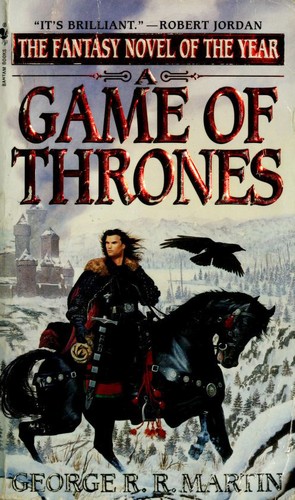
That said, Martin was personally involved in the production and has publicly offered high praise for playwright Duncan Macmillan, noting that the script honours the world completely. While Martin could technically choose a different path whenever he finishes his future prose, seeing the Lyanna theory embraced on stage by the Royal Shakespeare Company’s stage adaptation feels like as close to an official nod as fans are likely to get for a very long time. For anyone who has tracked this specific piece of Harrenhal trivia across decades of forum posts and book re-reads, seeing it take centre stage is a immensely satisfying moment.


