Escape Into Books
Your home for book news, reviews, and bookish fun. Follow along on Facebook.
Escape Into Books
Your home for book news, reviews, and bookish fun. Follow along on Facebook.


A comprehensive guide to reading the Harry Potter books in order.
If you are looking to read the Harry Potter books in order, the straightforward news is that publication sequence and chronological timeline are identical for the main story. Whether you are stepping into Hogwarts for the very first time or returning to the series after years away, navigating J.K. Rowling’s fantasy saga requires no complicated reading order tricks or jumping back and forth through prequels. This guide covers all eight official books, outlining what to expect from each entry, how the narrative evolves, and where regional title variations might cause confusion. I still vividly recall queuing outside my local bookshop at midnight for the release of Harry Potter and the Goblet of Fire, clutching my dog-eared paperback of the third book while waiting to find out how the story would expand.
The central story arc follows Harry from his eleventh birthday through to his final confrontation with Lord Voldemort as a young adult. Each of the seven core novels covers a single school year at Hogwarts School of Witchcraft and Wizardry, providing a clear, seasonal structure that mirrors Harry’s own journey into adulthood. As Harry matures, the narrative matures alongside him. What starts as a relatively contained wizarding mystery in 1997’s Harry Potter and the Philosopher’s Stone steadily develops into a deeply detailed fantasy saga.
From the fourth novel onward, the scope widens considerably, the physical page counts grow significantly larger, and the tone becomes noticeably darker as the threat of Voldemort’s return turns into open wizarding war. Beyond the core seven novels, the script for the stage play Harry Potter and the Cursed Child picks up the narrative years after the main series concludes, standing as the eighth entry in this complete reading guide.
When J.K. Rowling first published her debut novel in the UK in 1997, it was brought to readers under the title Harry Potter and the Philosopher’s Stone. The phrase drew directly on centuries of real-world alchemical legend surrounding the mythical stone capable of turning base metals into gold and granting immortality. It set the baseline for the entire wizarding world and introduced readers to eleven-year-old Harry as he discovers his magical heritage.
However, when the book was prepared for its American release, the publisher opted to change the title to Harry Potter and the Sorcerer’s Stone. The reasoning was straightforward, as there was a concern that young American readers might not associate the word “philosopher” with magic or alchemy. As a result, the rebranded edition hit shelves in the United States using the altered name, creating a minor point of confusion for international collectors and fans that persists to this day.
Despite the change on the front cover, both titles refer to the exact same first novel. The core narrative, character arcs, and mystery surrounding the hidden artifact at Hogwarts remain identical across both regional versions. Whether you pick up a copy that says Harry Potter and the Philosopher’s Stone or Harry Potter and the Sorcerer’s Stone, you are reading the exact same story that kicked off the seven-book series.
| Book | Author | First published | Reader rating | Best for |
|---|---|---|---|---|
| Harry Potter and the Philosopher’s Stone | J. K. Rowling | 1997 | 4.21 / 5 | First school year at Hogwarts |
| Harry Potter and the Chamber of Secrets | J. K. Rowling | 1998 | 4.18 / 5 | Second school year at Hogwarts |
| Harry Potter and the Prisoner of Azkaban | J. K. Rowling | 1999 | 4.24 / 5 | Third school year at Hogwarts |
| Harry Potter and the Goblet of Fire | J. K. Rowling | 2000 | 4.24 / 5 | Fourth school year at Hogwarts |
| Harry Potter and the Order of the Phoenix | J. K. Rowling | 2003 | 4.23 / 5 | Fifth school year at Hogwarts |
| Harry Potter and the Half-Blood Prince | J. K. Rowling | 2005 | 4.36 / 5 | Sixth school year at Hogwarts |
| Harry Potter and the Deathly Hallows | J. K. Rowling | 2007 | 4.26 / 5 | Seventh and final main story |
| Harry Potter and the Cursed Child | J.K. Rowling, Jack Thorne, John Tiffany | 2016 | — | Post-series sequel play script |
First published 1997Length 302 pagesReaders 4.21/5 from 1,018 Open Library ratings
Borrow or find an edition on Open Library
The book that started it all introduces us to eleven-year-old Harry Potter, an orphaned boy living a miserable life under the stairs with his neglectful aunt and uncle. His world changes completely when he discovers his true wizarding heritage and receives his invitation to attend Hogwarts School of Witchcraft and Wizardry. Clocking in at a manageable 302 pages or so, it sits comfortably as the shortest entry in the saga, making it an extraordinarily brisk and welcoming entry point into modern fantasy. I still remember the quiet delight of reading about Diagon Alley for the very first time, completely swept up in the sensory details of the cauldrons, wands, and owl shops.

As a classic boarding school mystery wrapped in magical trappings, the plot establishes the central conflict surrounding the hidden Philosopher’s Stone, an object of immense power concealed beneath the castle. Readers in North America will recognise this initial outing under a slightly altered title, as it was published across the Atlantic as Harry Potter and the Sorcerer’s Stone. Regardless of the regional naming conventions, the narrative engine remains identical as Harry, Ron, and Hermione navigate their first school year at Hogwarts while piecing together clues about who is trying to steal the artifact.
This opening instalment currently holds an impressive reader rating of 4.21 out of 5 from 1009 ratings on Open Library, proving how well its charm holds up decades after release. It is ideal for younger readers stepping into longer chapter books, as well as adults looking for a comforting, nostalgic re-read. While screen enthusiasts enjoy arguing over the rare adaptations that improve on the book, Rowling’s original prose possesses a distinct, whimsical warmth that stands entirely on its own.
First published 1998Length 339 pagesReaders 4.18/5 from 457 Open Library ratings
Borrow or find an edition on Open Library
In Harry Potter and the Chamber of Secrets, J.K. Rowling returns to Hogwarts for Harry’s second school year. Following a difficult summer spent away from his friends, Harry makes his way back to the castle, only to find the magic school gripped by an unsettling fresh crisis. A mysterious hidden chamber deep beneath the castle has been reopened, releasing an ancient threat that leaves several students found petrified in the corridors. As fear spreads throughout the school, Harry and his closest companions take it upon themselves to investigate the sinister danger lurking within Hogwarts before the headmaster is forced to close the gates for good.

At roughly 339 pages, this second entry maintains the lighter middle-grade adventure tone established in the debut while thoughtfully expanding the broader lore of the wizarding world. Readers learn more about the founding figures of the castle, the lingering shadow of dark magic in its history, and the prejudiced attitudes held by certain long-established families. It currently holds a reader rating of 4.18 out of 5 from 456 ratings on Open Library, proving how effectively its mix of schoolyard drama and gothic detective work continues to entertain fantasy fans.
This book particularly suits younger readers stepping up into slightly longer mysteries, alongside anyone working through the main sequence in chronological order. Before diving in, it is worth noting that while the central threat feels more immediate and atmospheric than in the first book, the narrative retains the comfortable pacing and approachable tone of early-series children’s fiction. It stands as a necessary bridge between Harry’s initial discovery of magic and the longer, darker entries that lie ahead.
First published 1999Length 416 pagesReaders 4.24/5 from 636 Open Library ratings
Borrow or find an edition on Open Library
The third entry in the series marks a pivotal turning point for the story. First published in 1999, Harry Potter and the Prisoner of Azkaban follows Harry through his third year at Hogwarts, framed by the terrifying breakout of Sirius Black from the wizarding prison of Azkaban. The novel sits at a comfortable length of roughly 416 pages and currently holds a reader rating of 4.24 out of 5 from 636 ratings on Open Library.
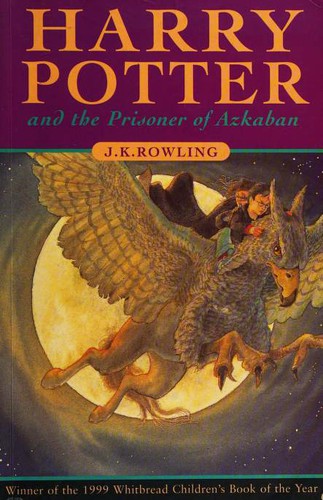
What makes this instalment stand out is how it fundamentally shifts the narrative focus. Rather than building toward another direct confrontation with Lord Voldemort, the plot deepens Harry’s understanding of his parents’ tragic past and the tight-knit circle of friends they had while attending school themselves. Through the arrival of new defence against the dark arts teacher Remus Lupin and the looming threat of the soul-sucking Dementors, the book shifts the series into a significantly darker, more emotionally nuanced territory.
It is an ideal read for those who enjoy tight mystery plotting, personal stakes, and rich lore expansion. Readers coming into this third novel should expect a noticeable growth in maturity from the core characters, setting the stage for the broader wizarding world conflict that follows in later years.
First published 2000Length 672 pagesReaders 4.24/5 from 348 Open Library ratings
Borrow or find an edition on Open Library
The fourth school year at Hogwarts marks the moment J.K. Rowling’s fantasy saga truly shifts gears. First published in 2000, Harry Potter and the Goblet of Fire represents a massive leap in scope and ambition, increasing significantly in length compared to the first three novels to stretch across roughly 672 pages. The plot is built around the deadly Triwizard Tournament, an ancient magical competition hosted at Hogwarts that brings visiting international schools together and unexpectedly thrusts fourteen-year-old Harry into a series of terrifying trials.
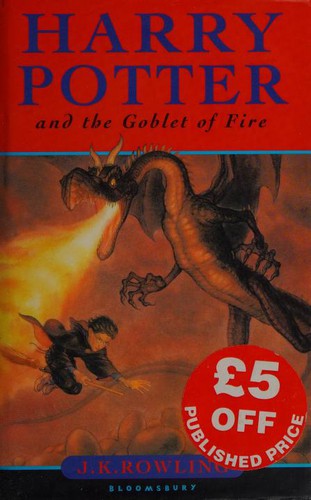
Beyond the spectacle of dragons, maze navigation, and international Quidditch, this instalment serves as the pivotal turning point for the overarching narrative. The story darkens dramatically as the boundaries of the magical world expand well beyond the castle walls. Everything changes with the physical return of Lord Voldemort at the climax, transforming the series overnight from a set of charmed schoolyard mysteries into an impending war story where real consequences and mortal peril take centre stage.
For readers following the chronological progression, this book is where the investment of time increases alongside the thematic weight. On Open Library, the novel holds a reader rating of 4.24 out of 5 from 346 ratings, reflecting its standing as a key chapter in the saga. It is required reading before moving into the later books, laying the crucial groundwork for the political divide, personal tragedy, and sprawling resistance movement that define the rest of the story.
First published 2003Length 870 pagesReaders 4.23/5 from 314 Open Library ratings
Borrow or find an edition on Open Library
The fifth book tracks Harry’s fifth year at Hogwarts under a heavy cloud of institutional denial, as the Ministry of Magic actively rejects the reality of Lord Voldemort’s resurrection. Standing as the longest novel in the main series at roughly 870 pages, Harry Potter and the Order of the Phoenix replaces the earlier whimsical school stories with thick political tension, media propaganda, and bureaucratic interference inside the castle walls.

I remember feeling almost exhausted by Harry’s unvarnished isolation during my first read, as his frustration with the adults keeping him in the dark drives much of the early narrative. Frustrated by the Ministry’s refusal to teach practical defensive spells, Harry and his peers secretly form Dumbledore’s Army to learn defence magic and prepare themselves for the coming conflict. This grassroots student rebellion gives the sprawling story its emotional heart, contrasting the warmth of teenage solidarity against the cold authoritarianism of government appointee Dolores Umbridge.
For readers who appreciate deeper world-building and character psychology, this entry holds up brilliantly, earning a 4.23 out of 5 from 314 ratings on Open Library. It demands patience due to its massive length and lingering teenage angst, but the payoff in the final third is immense. As the narrative shifts toward high-stakes confrontation, key figures like Albus Dumbledore face complex political crosscurrents, a dynamic that will be fascinating to re-examine as John Lithgow steps into the role for the upcoming television adaptation.
First published 2005Length 640 pagesReaders 4.36/5 from 211 Open Library ratings
Borrow or find an edition on Open Library
The sixth instalment of the series marks a definitive shift in the overarching narrative structure. Set during Harry’s sixth school year at Hogwarts, Harry Potter and the Half-Blood Prince runs to about 640 pages and carries a reader rating of 4.36 out of 5 from 211 ratings on Open Library. Rather than relying on the isolated mystery frameworks of the earlier years, J.K. Rowling turns her focus toward preparing Harry for the impending open war against Lord Voldemort and his Death Eaters.
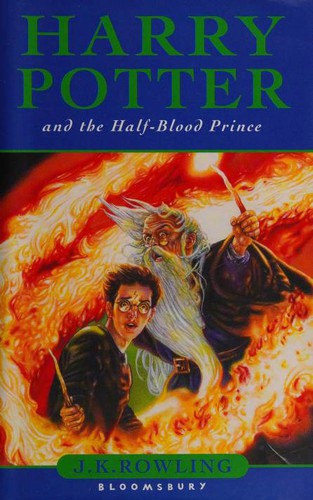
A substantial portion of the story focuses on exploring Voldemort’s past. Through private tutorial sessions with Albus Dumbledore, Harry examines pivotal memories inside the Pensieve that reveal how a brilliant young Tom Riddle transformed into the Dark Lord. It is during these lessons that the crucial concept of Horcruxes is introduced, detailing the dark magic behind Voldemort’s lingering immortality and setting out the precise, dangerous task required to dismantle his power.
The novel features a much darker tone than previous instalments as the broader wizarding war reaches directly inside Hogwarts itself. The castle is no longer the quiet sanctuary it was in earlier terms, and the constant threat of breach creates an uneasy, paranoid atmosphere among the staff and students. For anyone reading the sequence in order, this novel provides the essential lore and emotional stakes needed before the final conflict begins.
First published 2007Length 703 pagesReaders 4.26/5 from 413 Open Library ratings
Borrow or find an edition on Open Library
The seventh and final main story, Harry Potter and the Deathly Hallows, brings J.K. Rowling’s core sequence to its ultimate conclusion. First published in 2007, this final instalment abandons the familiar comfort of the Hogwarts Express and the structured school term that defined the previous six volumes. Instead of returning to the castle for their final year, Harry, Ron, and Hermione spend the majority of the narrative on the run, searching for Voldemort’s remaining Horcruxes across remote countryside campsites while dark forces consolidate control over the Ministry of Magic.

It is a tense, often desolate journey that tests the central trio’s endurance and friendship like never before. Away from the protection of Hogwarts, the stakes feel immediately personal and relentless. The narrative eventually draws every thread of the sprawling war back to the magical grounds for a dramatic final stand in the Battle of Hogwarts, where teachers, students, and allies assemble to determine the outcome of the war once and for all.
At roughly 703 pages, the book wraps up the chronological sequence of the main seven novels, providing longstanding answers about Severus Snape, the mysterious Deathly Hallows, and Harry’s ultimate confrontation with his enemy. Readers who have followed the overarching plot will find a darker, heavily atmospheric finish that earns its emotional gravity. It carries a reader rating of 4.26 out of 5 from 413 ratings on Open Library, standing as a complete resolution to the original saga.
First published 2016
Published in 2016, Harry Potter and the Cursed Child by J.K. Rowling, Jack Thorne, and John Tiffany is a post-series sequel play script that picks up years after the emotional climax of the main story. Rather than taking the form of a traditional novel, the book presents the complete rehearsal script of the original West End stage production. It introduces readers to an adult Harry Potter, now overworked at the Ministry of Magic, working alongside his long-standing friends while navigating the complex realities of parenthood. The narrative focuses heavily on a new generation of Hogwarts students, particularly Harry’s son Albus and Draco Malfoy’s son Scorpius, as they struggle under the long shadows cast by their family names.

Because of its distinct format and structure, it sits separately from the original seven-novel sequence rather than functioning as a direct eighth book in the series. Reading a script requires a slightly different mindset compared to prose fiction, as the storytelling relies on stage directions, direct dialogue, and rapid scene transitions to push the drama forward. It suits dedicated readers who want to revisit the wizarding world after finishing the core timeline, but anyone diving in should expect a narrative built for theatrical performance rather than the rich, expansive interior detail found in the main prose volumes.
Tracking the growth of the series means watching a middle-grade adventure steadily transform into a sprawling fantasy epic. When Harry Potter and the Philosopher’s Stone first arrived, it introduced an eleven-year-old boy discovering a hidden world of magic through a concise, tightly plotted mystery. The initial three entries, including Harry Potter and the Chamber of Secrets and Harry Potter and the Prisoner of Azkaban, maintained this shorter structure. They relied on whimsical discovery, lighthearted school rivalries and contained end-of-term resolutions that fitted neatly into traditional children’s fiction.
I remember feeling the physical weight shift in my hands when I picked up Harry Potter and the Goblet of Fire for the first time, realising the easy weekend read had vanished. That fourth instalment marked a massive turning point for the narrative. The page count expanded dramatically to accommodate sprawling subplots, political intrigue within the Ministry of Magic, and a far wider cast of global characters. As the narrative expanded to chart the return of Voldemort, the books required far more space to weave together Ministry corruption, ideological factions, and complex magical lore like Horcruxes and memory extraction.
Thematic tone shifted just as sharply alongside the physical expansion. What began as a series filled with flying broomsticks and feast halls gradually evolved into a mature story of open war, loss, and state-sanctioned prejudice. By the time the main arc reached Harry Potter and the Deathly Hallows, the familiar structure of a Hogwarts school year had fallen away entirely, replaced by a tense, atmospheric fugitive story. This evolution from cosy magical wonder to dark wartime drama is a major reason why the narrative continues to resonate with re-readers, and it presents an interesting pacing task for future screen projects like the HBO Harry Potter series as it maps out its multi-season run.
 Best Sci Fi Books: September 2026 and Where to Start

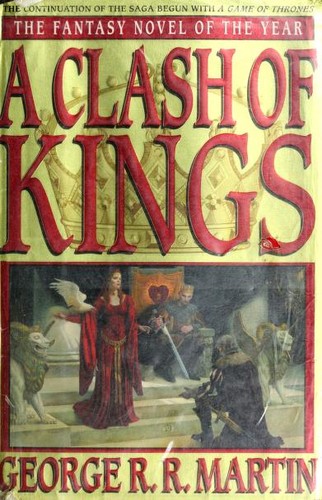
 Game of Thrones Books in Order, and Where Winds of Winter Stands

 Every Stephen King Book in Chronological Order
This page is maintained by Theo Marsh, who covers the big fantasy and science-fiction franchises for Escape Into Books.
Covers, author credits and reader ratings come from Open Library, which is free and openly licensed. A rating is only shown once enough people have left one.
Nothing here is generated from a book we could not verify. Where a title could not be confidently matched, we leave the space empty rather than guess.
We re-check this page every 90 days. The review date moves only when the content actually changes, because a fresh date on unchanged text helps nobody.
Last reviewed


