Escape Into Books
Your home for book news, reviews, and bookish fun. Follow along on Facebook.
Escape Into Books
Your home for book news, reviews, and bookish fun. Follow along on Facebook.


Discover how HBO's 'Harry Potter' series is on track to surpass the franchise's budget record.
If you have been keeping an eye on the production activity down at Warner Bros. Studios Leavesden, it will come as no surprise that HBO’s television adaptation of J.K. Rowling’s books is shaping up to be one of the most expensive screen ventures in fantasy history. Reports indicate that by the end of 2025, production on the opening season had already racked up approximately £147.4 million (roughly $197.1 million) in spending. Considering filming was only roughly halfway through at that point, the debut season is firmly on track to eclipse the budget record set by the original film series.
That cinematic record has stood since 2009, when Warner Bros. poured a reported $250 million into bringing Harry Potter and the Half-Blood Prince to the big screen. While HBO has not formally confirmed the final figure for season one, the current spend suggests the debut run will easily clear that landmark before post-production wraps up. If you ask me, looking at how television production costs have ballooned across the industry in recent years, this trajectory makes complete sense for a project attempting to re-engineer an entire world from the ground up.
Filming for the new series began in the summer of 2025 at Leavesden, the very studio complex where the original eight movies were shot. However, rather than simply tweaking existing assets, the joint production between HBO, Warner Bros. Television, Brontë Film & TV, and Heyday Films requires building completely new, long-term sets designed to last for years of continuous shooting. That foundational work always heavy-loads the budget of any first season.
The adaptation aims to track the original novels far more closely than the films could manage in two-hour blocks, with the expectation that the show will premiere in 2027. We already know who will be stepping into the iconic central roles, with Dominic McLaughlin cast as Harry Potter, Arabella Stanton as Hermione Granger, and Alastair Stout taking on Ron Weasley. Giving young performers the screen time needed to let the narrative breathe naturally demands long shooting schedules, which inevitably pushes up line items like crew payroll, set maintenance, and studio space hire.
To understand why a first season adapting Harry Potter and the Philosopher’s Stone might end up costing more than the film version of Harry Potter and the Half-Blood Prince, you have to look at the structural differences in how modern television is produced. Feature films compress their set-pieces into a tight timeframe, whereas a television series extends visual effects work and location shooting across many more hours of footage.
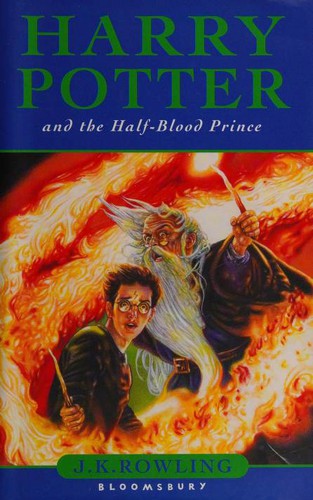
When The Half-Blood Prince reached its $250 million budget back in 2009, much of that expenditure went towards sophisticated digital fire effects, complex Quidditch sequences, and high-profile cast salaries for a franchise at its peak. The upcoming TV series is facing a different set of financial realities, including inflated talent fees, expensive high-definition visual effects pipelines, and practical build costs that have escalated across the UK film industry over the last decade.
We previously looked at how HBO’s Harry Potter TV series budget could reach $5.6 billion across its entire lifecycle if every book receives a dedicated season. A single season touching $250 million is simply the first milestone in that broader plan. While the official HBO’s Harry Potter series schedule remains unchanged as production continues, watching the financial scale of the project take shape gives us a clear idea of just how much weight the network is putting behind this reboot.
While the final figures will remain unconfirmed until corporate accounts are filed after release, one thing is clear: HBO is not cutting corners. Recreating the wizarding world for a new generation was never going to come cheap, but passing the franchise’s film spending record before the first episode even has an official release date sets a monumental precedent for fantasy television.


