Escape Into Books
Your home for book news, reviews, and bookish fun. Follow along on Facebook.
Escape Into Books
Your home for book news, reviews, and bookish fun. Follow along on Facebook.


Two former jailed writers discuss their experiences and advocate for imprisoned colleagues, emphasising the importance of global solidarity.
When state authorities attempt to silence creative voices, they rarely stop at confiscating manuscripts or removing books from shelves. For Iranian poet and academic Behnaz Amani and British-Eritrean poet Awet Fissehaye, speaking out led to public arrests, harsh interrogations, and time inside notoriously brutal prisons. Today, both writers live in exile, Amani in Germany and Fissehaye in the United Kingdom, where they continue to campaign for dozens of colleagues who remain imprisoned for exercising their freedom of expression.
Speaking during a virtual PEN America event moderated by Karin Deutsch Karlekar, director of Writers at Risk, the two authors shared the experiences that led to their imprisonment and outlined their ongoing advocacy work. Their efforts arrive at a troubling moment for global literary freedom. According to PEN America’s latest Freedom to Write Index, 401 writers were imprisoned across 44 countries in 2025. It marks the first time since the organisation began tracking the data seven years ago that the total number of jailed writers exceeded 400.
Iran currently ranks as the second highest jailer of writers globally, while Eritrea continues to detain some of the longest-imprisoned literary figures in the world.
For both Amani and Fissehaye, literary memory proved vital during their periods of detention. Fissehaye, who now serves as executive director of PEN Eritrea in Exile, was seized late at night in 2007 following a friend’s wedding ceremony. Sent to Adi Abeito prison, he spent 14 months in detention, subjected to torture and threats at gunpoint as officials attempted to force him to recant his ideas.
Deprived of physical books during his imprisonment, Fissehaye relied on memory to sustain himself. Recalling a woman singing outside during his limited daily exercise time, he found himself reciting William Wordsworth’s poem The Solitary Reaper to fellow prisoners. He also drew strength from classic literature, noting how the opening pages of Oscar Wilde’s The Picture of Dorian Gray framed the artist’s role in confronting oppressive systems.

“The Eritrean government’s, or any dictatorial government’s, enemy is not the person, not the individual,” Fissehaye told attendees during the panel. “It’s the voice of the individual. That’s why I want to keep my voice and advocate for my fellow writers.”
Amani’s trajectory similarly shifted through political awakening and academic work. A lecturer in Iran, her turning point came in 2009 after witnessing the public killing of student protestor Neda Agha Soltan on video. In her university classroom, Amani sought to go beyond standard syllabi to teach her students about human rights, eventually speaking out publicly in support of detained students.
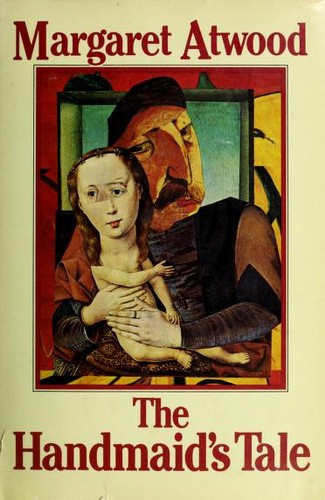
In 2022, Iranian authorities arrested Amani in public, transporting her to Qarchak Women’s Prison near Tehran. Confronted with hundreds of screenshots of her online activity and threatened with execution, she held onto a famous line from Margaret Atwood’s The Handmaid’s Tale: “Don’t let the bastards grind you down.” Though she was stripped of her academic post following her release, Amani noted that the principles taught in her classroom continue to influence her former students.
While Western literary culture frequently focuses on institutional battles over library access, similar to how PEN America has warned about the toll on authors in domestic censorship fights, state actions against writers internationally routinely involve physical violence, forced exile, and extended imprisonment without trial.
Much like literary figures defying state suppression in other restrictive regimes, exiled authors face the challenging task of keeping international attention focused on jailed colleagues who risk being forgotten.
During the panel, both authors urged international audiences to move past passive shock when reading about overseas political repression. They asked supporters to participate in active advocacy, specifically calling on the public to support petitions demanding proof of life for Eritrean writers held in long-term detention, and to circulate open letters from imprisoned Iranian activists such as writer Golrokh Iraee.
“Let’s keep fighting with all our might and power,” Amani urged during the event. “Let’s be the voice of the unheard. Let’s be the voice of the marginalized. Let’s be the voice of those forgotten.”
As state censorship and authoritarian oversight expand worldwide, organisations monitoring free expression and censorship stress that international solidarity remains one of the few effective tools available to protect writers facing state persecution.


