Escape Into Books
Your home for book news, reviews, and bookish fun. Follow along on Facebook.
Escape Into Books
Your home for book news, reviews, and bookish fun. Follow along on Facebook.


Discover the most frequently banned books, their backgrounds, and reasons for censorship.
Tracking the most banned books in American schools and public libraries is not as straightforward as looking up a single best-seller list. Over the past few years, attempts to remove or restrict literature across the United States have surged dramatically. However, there is no single canonical ranking of challenged literature. Instead, two primary organisations track these efforts using different criteria: PEN America monitors book removals specifically across school districts, whereas the American Library Association records publicly reported challenges made in both school and public libraries. Because of these distinct methodologies, a title listed as the primary target in classroom collections might look quite different from the one topping the public library charts in the exact same year.
Regardless of which dataset you examine, the arguments raised against these works tend to focus on a recurring set of themes. Campaigners and parents frequently cite explicit sexual content, profanity, and violence, alongside objections to racial themes and LGBTQIA+ representation. In other cases, books are challenged for perceived anti-police bias or for conflicting with traditional religious viewpoints and family structures. I keep a close eye on these challenge filings for my work, and I am always struck by how quickly a single local dispute can spill over into a national push to pull a text from shelves altogether.
This guide is designed for readers, educators, and library supporters who want a clear, fact-based breakdown of the current censorship landscape in the United States. Across eight key titles, we examine the books most frequently targeted for removal from American schools and libraries, explaining the context behind each work and outlining the exact reasons cited by those attempting to pull them from circulation.
To understand how books disappear from shelves, it helps to distinguish between a challenge and a ban. A book challenge is a formal, written attempt by an individual or group to remove or restrict materials based on their specific objections. It represents the initial attempt to censor a text, though it does not necessarily result in the title being pulled. A book ban occurs when a title is fully removed from school curricula, library shelves, or classroom access following an administrative directive or official review process.
How these figures are gathered depends entirely on who is keeping score. The American Library Association (ALA) tracks publicly reported challenges across public, school, and academic libraries, capturing attempts to restrict access. PEN America focuses specifically on school district bans, building an index of titles actually removed from classroom shelves and school library collections across the United States. Because their tracking methods, target institutions, and datasets differ, there is no single canonical master list or top 100 that applies everywhere.
I found myself tripping over the terminology when I first started looking into these data sets, as news reports frequently conflate a local challenge with a sweeping removal. Rankings naturally shift depending on the organisation and time period. PEN America records bans by the school year, whereas the ALA publishes annual lists based on reported challenges. As a result, a title listed as the most removed book in school districts in a given year might occupy a different position on the ALA’s broader list of public library challenges.
| Book | Author | First published | Best for |
|---|---|---|---|
| Gender Queer: A Memoir | Maia Kobabe | 2019 | Target of LGBTQIA+ school removal efforts |
| Looking for Alaska | John Green | 2005 | Most banned book on cumulative lists |
| A Clockwork Orange | Anthony Burgess | 1962 | Classic literary novel facing school bans |
| Melissa | Alex Gino | 2015 | Top challenged middle-grade novel |
| All Boys Aren’t Blue | George M. Johnson | 2020 | Memoir frequently challenged in high schools |
| Nineteen Minutes | Jodi Picoult | 2007 | Widespread school district bans |
| The Hate U Give | Angie Thomas | 2017 | Targeted over racial and social themes |
| Of Mice and Men | John Steinbeck | 1937 | Classic modern literature frequent challenge |
First published 2019
First published in 2019, Gender Queer: A Memoir by Maia Kobabe is a deeply felt graphic novel charting the author’s journey towards understanding asexual and nonbinary identity. It uses illustration and sparse text to articulate the quiet confusion, awkwardness, and ultimate relief of finding the right language to describe oneself. It is the book I hand to people when they ask how sequential art can convey internal emotional shifts that traditional prose sometimes struggles to capture. For readers navigating similar questions, or simply seeking to comprehend nonbinary experiences, Kobabe’s work offers an accessible, empathetic window.

The comic quickly became a primary target of LGBTQIA+ school removal efforts across the United States. It is frequently targeted in school districts for its graphic novel format depicting gender identity and sexual discovery, with objectors mainly challenging the work over accusations of sexually explicit content alongside broader objections to its LGBTQIA+ themes. Drawing on research from PEN America documentation, CBS News identified Gender Queer: A Memoir as the most banned book of the 2021–2022 school year, recording 41 separate instances of removal from school libraries and classrooms.
Before starting it, prospective readers should know that Kobabe does not shy away from the practical realities of growing up, bodily changes, and exploring intimacy. The comic panels portray personal moments including health appointments and romantic encounters alongside internal reflection. It is precisely this candid visual honesty that placed it at the centre of school board disputes, while simultaneously making it a meaningful point of reference for readers seeking authentic accounts of self-discovery.
First published 2005Length 288 pagesReaders 4.00/5 from 124 Open Library ratings
Borrow or find an edition on Open Library
First published in 2005, Looking for Alaska is John Green’s debut novel. Running at roughly 288 pages, the story follows Miles “Pudge” Halter as he leaves his quiet life at home to attend a boarding school in Alabama, searching for what he calls a “Great Perhaps”. There he meets Alaska Young, a clever, unpredictable, and deeply enigmatic student who draws him into her orbit. It is a coming-of-age story that balances sharp teenage banter with sudden grief, guilt, and existential questions. On Open Library, the novel holds a rating of 4 out of 5 from 124 ratings.
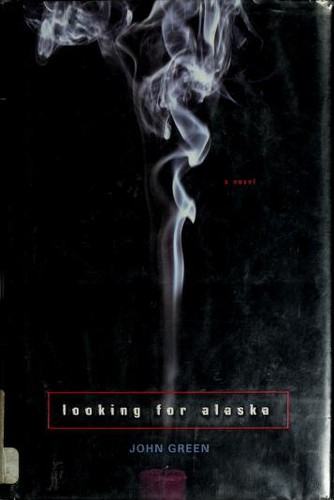
Despite its critical acclaim, the book sits as the single most banned title on PEN America’s 2021–2025 cumulative index, accumulating 147 bans across US school districts. School boards and parent groups consistently challenge the text over its sexually explicit scenes and profanity. Because of these persistent challenges, Green is regularly listed by PEN America as one of the most repeatedly banned authors in American schools.
The novel suits older teenage readers and adults looking for an honest portrayal of adolescent friendships and moral uncertainty. I read it shortly after publication and was struck by how well it captured the intense, insular nature of school life, though readers should know in advance that the story turns on a sudden tragedy and handles grief, drinking, and explicit content without sugarcoating.
First published 1962Length 192 pagesReaders 4.01/5 from 69 Open Library ratings
Borrow or find an edition on Open Library
First published in 1962, Anthony Burgess’s dystopian novel runs to about 192 pages and follows Alex, a gang leader in a bleak future who indulges in nightmarish acts of delinquency before undergoing psychological conditioning by the state. It is a tough, deeply philosophical exploration of free will, morality, and government control, written using Nadsat, an invented youth slang combining Russian and English. I bounced off it twice before it clicked, but once you find the rhythm of the prose, it becomes an extraordinarily immersive experience. On Open Library, it holds a reader rating of 4.01 out of 5 from 69 ratings.

While modern coverage of censorship often focuses on recent young adult releases, A Clockwork Orange demonstrates that historical classics remain subject to modern school board challenges alongside contemporary young adult titles. PEN America named it the most banned book of the 2024–2025 school year, with 23 recorded bans across American school districts. These recent removals stem from familiar objections, with the title challenged primarily for extreme depictions of violence, crime, and objectionable language.
For anyone adding it to their reading list, it is worth knowing that the novel is unsparing in its portrayal of brutal behaviour and state overreach. It remains a fixture on challenge lists precisely because its central moral dilemma, whether a forced goodness is preferable to chosen evil, continues to unnerve readers more than six decades after publication.
First published 2015Length 224 pages
Borrow or find an edition on Open Library
First published in 2015, Alex Gino’s middle-grade novel Melissa runs to about 224 pages and sits as one of the most prominent children’s titles in contemporary library debates. Previously published under the title George, the book topped the American Library Association’s 2024 Most Challenged Books list. It is a quiet, accessible story centred on a young transgender character, and it is usually the first title I point people towards when they ask how school libraries handle LGBTQIA+ themes for younger audiences.

Despite its target audience, Melissa has faced sustained pushback across the United States. Reports documented by the ALA show that the book has been challenged, banned, restricted, or hidden from public and school library shelves. The primary drivers behind these actions are its inclusion of LGBTQIA+ themes, sexual references, and the central storyline featuring a transgender child.
Objectors who seek to remove or restrict access to the novel frequently argue that its themes conflict with specific religious viewpoints and traditional family structures. Many also assert that the material is not age-appropriate for primary and middle-grade readers. Consequently, Gino’s work remains at the centre of ongoing discussions surrounding censorship, parental oversight, and representation in children’s literature.
First published in 2020, George M. Johnson’s All Boys Aren’t Blue runs to about 304 pages and is structured as a series of personal essays detailing what it means to grow up young, Black, and queer in America. Framing itself as a memoir-manifesto, it addresses subjects ranging from childhood bullying and structural racism to sexual consent, family solidarity, and self-expression. It sits squarely as a pivotal piece of non-fiction for high school readers, offering candid life lessons aimed at teenagers navigating their own identity.

The work featured prominently on the American Library Association’s 2024 list of the most challenged books nationwide, continuing a trend of intense opposition from parent groups and local boards. These challenges stem predominantly from objections to its LGBTQIA+ content and repeated claims that the text is sexually explicit. Because it handles sensitive moments of growing up with unvarnished honesty, this memoir-manifesto faces heavy restrictions in high school libraries across multiple states, where copies are frequently removed from open shelves or held behind parental consent requirements.
I handed my copy to a friend’s teenage son who found its chapter on personal boundaries far more practical than his formal school curriculum. While the subjects can be tough, Johnson balances painful recollections with immense warmth and familial love. Readers should be aware that the book includes frank discussions of sexual abuse, homophobia, and structural trauma, but its core message is one of endurance. It remains a vital work for older adolescents and adults alike, even as book bans cost authors and communities access to crucial marginalised perspectives.
First published 2007Length 579 pages
Borrow or find an edition on Open Library
Published in 2007, Nineteen Minutes by Jodi Picoult runs to about 579 pages as it examines the devastating fallout of a high school shooting in a small New Hampshire town. Picoult constructs the story around a central premise: it takes nineteen minutes for a school day to turn into a mass casualty event, but years to unpack the severe bullying, social isolation, and systemic failures that preceded it. It is a complex, emotionally heavy narrative that looks at both the shooter’s history and the traumatised community left behind.

The novel sits firmly in the crosshairs of widespread school district bans. PEN America identified Nineteen Minutes as the single most commonly banned title during the 2023–2024 school year. This trend was part of a wider escalation in library removals, where 19 individual titles were banned across 50 or more school districts in the United States. The objections raised against the book frequently centre on its explicit depictions of a school shooting, violence, and sexual content.
I picked this up shortly after publication, and while Picoult’s signature style of alternating perspectives makes for a compelling pace, the subject matter is undeniably intense. Readers approaching it today should be aware that the narrative does not shy away from visceral descriptions of violence and trauma, which remain the primary reason school boards elect to pull it from student shelves.
First published 2017Length 448 pagesReaders 4.35/5 from 132 Open Library ratings
Borrow or find an edition on Open Library
First published in 2017, The Hate U Give by Angie Thomas is a contemporary young adult novel running to about 448 pages. The story follows Starr Carter, a sixteen-year-old girl navigating the sharp contrast between her working-class neighbourhood and the wealthy suburban prep school she attends. Her life turns upside down when she witnesses the fatal shooting of her unarmed childhood friend by a police officer, forcing her to reckon with public scrutiny, community grief, and her own safety. It holds a rating of 4.35 out of 5 from 132 ratings on Open Library. I picked it up expecting a heavy political drama, but the warmth of Starr’s family life and her believable voice are what really grounded the story for me.

Because it sits directly at the intersection of contemporary racial and social themes, the novel has been a frequent lightning rod for controversy in school districts and public libraries. It maintained a high position on the American Library Association’s 2024 Most Challenged Books list, reflecting a sustained effort by objectors to pull the title from shelves and reading lists.
Formal challenges brought against the novel frequently cite its strong profanity, violent depictions, and prominent racial themes. Beyond the language and violence, objectors often claim that the novel promotes an anti-police message and contributes to the indoctrination of a social agenda. These arguments have made Thomas’s debut one of the most visible examples of modern school library challenges surrounding discussions of race and law enforcement in America.
First published 1937Length 119 pagesReaders 4.00/5 from 302 Open Library ratings
Borrow or find an edition on Open Library
First published in 1937, John Steinbeck’s novella tells the stark story of George Milton and Lennie Small, two migrant field workers navigating California during the Great Depression. At roughly 119 pages, it is a brief, muscular piece of writing that explores loneliness, friendship, and the fragile nature of the American Dream. I bounced off it when assigned it in school, but re-reading it as an adult reveals just how much narrative weight Steinbeck packs into a handful of scenes. On Open Library, the book holds a reader rating of 4 out of 5 from 302 ratings, reflecting its enduring place in the literary canon.

Despite its long-established status as classic modern literature, Of Mice and Men remains one of the most persistent historical targets on modern American Library Association challenge lists, including the 2024 roundup. While modern censorship efforts often focus heavily on contemporary young adult fiction, Steinbeck’s work demonstrates that older classroom staples continue to face active pushback from parents and school boards across the United States.
The objections raised against the novella span both language and content. Challenges across public libraries and schools frequently centre on offensive language and racial slurs used throughout the text. Objectors also cite the book’s violence and an overall depressing tone as primary reasons for demanding its removal from school curricula, arguing that the stark tragic ending and gritty themes are unsuitable for younger readers.
When a book is formally challenged, the complaint rarely lists just a single grievance. Instead, objections tend to stack up, blending concerns about age suitability with specific content warnings. Sexually explicit material, profanity, and allegations of improper age appropriateness are among the most frequent justifications cited by those attempting to remove books from school shelves. Yet when you examine the paperwork filed with school boards, a single title is often accused of several distinct infractions at once.
Titles featuring LGBTQIA+ themes or transgender characters face disproportionately high challenge rates compared to other literature. Books such as Melissa and All Boys Aren’t Blue are frequently targeted under the banner of sexual content, but the challenges almost always overlap with objections to their depiction of gender identity or conflict with specific religious viewpoints. As legal fights play out in the courts over a sweeping LGBTQ+ school book ban, these identity-driven challenges remain at the very centre of the wider movement.
Beyond gender and sexuality, political themes, violence, and racial topics remain major drivers of library challenges. Contemporary novels and established classics are regularly flagged for offensive language or perceived ideological messaging. The Hate U Give has drawn challenges over claims that it promotes an anti-police message and social indoctrination alongside its use of profanity and depictions of violence. Similarly, older titles such as Of Mice and Men continue to face calls for removal over vulgarity, violence, and racism. I spent an afternoon reading through challenge forms from a single district last year, and the sheer range of reasons slapped onto a single paperback was eye-opening.
There is no single official record for the most banned book of all time, as rankings vary by year, dataset, and organisation. I bounced off the data initially until I realised how much metrics diverge between groups. On PEN America’s cumulative list covering 2021 to 2025, Looking for Alaska by John Green holds the top spot with 147 bans, while other years see titles like A Clockwork Orange take the lead.
No single canonical top ten list exists because tracking methods differ, but recurring titles consistently top annual datasets. Frequently targeted works include Gender Queer: A Memoir, Looking for Alaska, A Clockwork Orange, Melissa, and All Boys Aren’t Blue. Other books repeatedly facing challenges or removals include Nineteen Minutes, The Hate U Give, and Of Mice and Men, alongside works by authors such as Ellen Hopkins and Toni Morrison.
There is no nationwide legal prohibition on owning or publishing specific books in the United States. Modern book bans refer to administrative decisions by local school boards, school districts, or public libraries to remove, restrict, or hide specific titles from their collections. These removals occur at an institutional level rather than through federal legislation, though state laws increasingly influence how local boards handle library challenges.
 Best Sci Fi Books: September 2026 and Where to Start

 Game of Thrones Books in Order, and Where Winds of Winter Stands

 Every Stephen King Book in Chronological Order
This page is maintained by Nadia Iqbal, who covers authors and publishing for Escape Into Books.
Covers, author credits and reader ratings come from Open Library, which is free and openly licensed. A rating is only shown once enough people have left one.
Nothing here is generated from a book we could not verify. Where a title could not be confidently matched, we leave the space empty rather than guess.
We re-check this page every 90 days. The review date moves only when the content actually changes, because a fresh date on unchanged text helps nobody.
Last reviewed


