Escape Into Books
Your home for book news, reviews, and bookish fun. Follow along on Facebook.
Escape Into Books
Your home for book news, reviews, and bookish fun. Follow along on Facebook.


All 80 book bans in Minnesota last year came from one school, highlighting localized censorship issues in public education.
All 80 books removed from public school library shelves in Minnesota last year originated from a single, small school on the state’s Iron Range. The striking concentration means that one local institution was responsible for more library book bans than every public school in Minnesota, Wisconsin, Iowa, North Dakota, and South Dakota combined.
The figure highlights an unexpected pattern in midwestern school censorship. While national discussions often focus on broad, state-mandated removals, Minnesota’s overall tally for the year was driven almost entirely by decisions made within one isolated corridor.
The data reveals that outside of this one Iron Range school, public school libraries across the state recorded no formal book removals over the measured period. When compared to neighboring states across the Upper Midwest, the concentration is even more pronounced: the single school’s total of 80 titles eclipsed the combined total of school districts across five entire states.
If you have been following the broader surge in literary challenges across North America, this statistic might come as a surprise. In many parts of the country, local school boards are enacting broad administrative sweeps. However, Minnesota’s regional figures suggest that individual district decisions can heavily skew state and national totals, masking what might otherwise be a relatively quiet landscape in surrounding areas.
The high volume of removals in one building comes despite statewide legislation designed to protect access to reading material. On May 18, 2024, a state law took effect in Minnesota explicitly barring public libraries from removing or restricting books solely because of the viewpoint, message, or ideas expressed within them.
The interplay between state non-discrimination mandates and local district discretion remains a legal focal point. While state laws set explicit baselines against viewpoint discrimination, local school boards frequently attempt to navigate these boundaries using revised library collection policies, age-rating systems, or parental consent requirements. Initiatives like the freedom to read initiative have repeatedly pointed out that local administrative tweaks often serve as the primary mechanism for pulling titles off shelves without triggering explicit legislative bans.
While the Iron Range school accounted for the entire tally of 80 bans in the latest annual figures, book challenges have surfaced in other Minnesota districts over recent months. The broader climate around school collections has seen several local boards re-evaluating what belongs on library shelves.
On November 25, 2024, St. Francis Area Schools adopted a updated library materials policy that led to the removal of several widely taught contemporary classics. Among the titles pulled from shelves in that district were The Handmaid’s Tale by Margaret Atwood, The Kite Runner by Khaled Hosseini, and The Perks of Being a Wallflower by Stephen Chbosky.
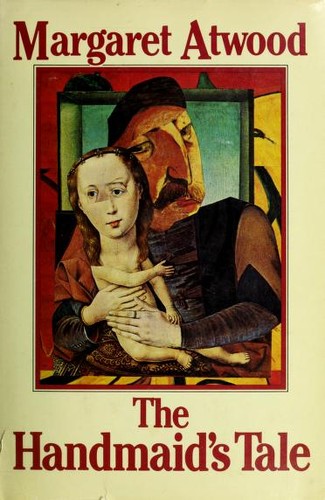
More recently, on March 6, 2025, school officials in Stillwater moved to restrict access to two donated titles following complaints from local parents. These separate cases illustrate that while one specific district pushed the official annual ban count to 80, administrative friction over library content remains an active issue across the state.
The fact that all 80 documented bans in Minnesota originated from one facility underscores how localized book challenge battles can be. A single active board, a dedicated group of petitioners, or a shift in district policy can drastically alter a state’s censorship metrics overnight.
This localized concentration mirrors patterns observed in other regions where statewide book ban proposals face pushback, shifting the battleground directly into individual school board meetings. When looking at national datasets, such as those listing the most banned books in classroom settings, it is easy to assume widespread, systemic enforcement. The Minnesota figures offer a reminder that a handful of local decisions can sometimes account for the vast majority of recorded removals.


