Escape Into Books
Your home for book news, reviews, and bookish fun. Follow along on Facebook.
Escape Into Books
Your home for book news, reviews, and bookish fun. Follow along on Facebook.


The third season of Apple TV's 'Silo' reveals a terrifying truth about humanity's downfall.
The third season of Apple TV’s hit adaptation of Silo has spent weeks carefully dropping clues, but the eighth episode finally pulled back the curtain on the central mystery of the series. For three seasons, both the inhabitants of Silo 18 and the audience watching from home were largely led to believe that a nuclear war had rendered the Earth’s surface an uninhabitable wasteland. The truth, as revealed in the dual-timeline narrative of the latest episode, is considerably more frightening.
The apocalyptic downfall of humanity was not triggered by nuclear warheads, but by microscopic, self-replicating nanotechnology designed to consume organic matter and reduce the planet to a pile of grey goo.
The long-awaited revelation arrived during the “before times” storyline, which traces the roots of the conspiracy 300 years in the past through investigative reporter Helen Drew (Jessica Henwick) and Congressman Daniel Keene (Ashley Zukerman). The reality of the catastrophe is laid bare by trillionaire Per Stenson, played by Colin Hanks, alongside Senator Rosalind Thurman (Laura Innes).
Stenson lays out the existential threat facing humanity in stark terms, explaining: “The threats we face, nuclear war, climate collapse, viral pandemic, asteroid strike, artificial intelligence, and some we haven’t thought of… but the one, the one that is most dangerous, is also the reason why I’m the richest man in history: nanotechnology.”
Because these nanobots are extraordinarily cheap to produce and remarkably easy to replicate, Stenson notes that their widespread proliferation was inevitable. Rather than a sudden exchange of missiles, the global collapse was driven by low-effort nanotech weapons, including Iranian nanoweapons that produced the lethal clouds seen in earlier flashbacks.
For readers familiar with Hugh Howey’s original book trilogy, comprising Wool, Shift, and Dust, this revelation will feel like a familiar milestone rather than a brand-new invention. Howey’s second novel, Shift, leans heavily into the nanotech origin story to explain why the underground structures were built in the first place. However, the television series on Apple TV deliberately prolonged the mystery, laying down red herrings such as dirty bomb references in the capital to make viewers comfortable assuming a traditional Cold War-style atomic fallout scenario.
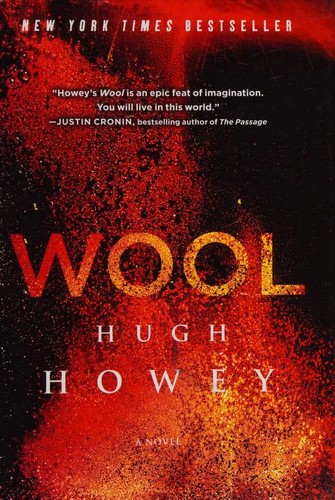
If you are looking for more complex world-building and high-concept dystopian universes to explore between episodes, our list of the best sci-fi books offers plenty of massive sagas to dive into next.
Shifted from fallout shelters to strict quarantine facilities, the entire design of the 50 silos takes on a far more terrifying meaning. They were not constructed merely to shield survivors from harsh weather or toxic atmosphere, but to isolate small populations under rigid containment protocols while a central control hub monitored for breaches. In the event of contamination, an entire silo could be scrubbed using the Safeguard Procedure to prevent nanobots from spreading into the adjacent bunkers.

This reality turns every broken rule across the current timeline into an existential hazard. Juliette Nichols (Rebecca Ferguson), having served as mayor before taking memory-wiping pills and surviving her round trip to Silo 17, has spent three seasons shattering containment protocols in her pursuit of the truth. While Juliette’s actions are heroic, any tear in a suit or unmonitored passage between structures could inadvertently introduce nanobots into Silo 18.
With Lukas Kyle (Avi Nash) and Patrick Kennedy (Rick Gomez) currently making their own journey between silos, and Lukas surviving a gunshot that pierced his radio harness, the threat of microscopic contamination is higher than ever. As the series moves toward its final stretch, the central conflict is no longer just a political struggle inside the walls, but an active race against microscopic extinction.


