Escape Into Books
Your home for book news, reviews, and bookish fun. Follow along on Facebook.
Escape Into Books
Your home for book news, reviews, and bookish fun. Follow along on Facebook.


Discover how Stephen King adaptations rank, from films to series, and find out which ones deserve a spot on your watchlist.
If you are looking for the ultimate guide to stephen king adaptations ranked by how successfully they translate prose to the screen, you have arrived at the right starting line. Since his debut novel Carrie arrived in 1974, Stephen King’s sprawling bibliography has spawned dozens of feature films and television series, creating a subgenre of cinema all its own. This guide is built for both dedicated Constant Readers and casual horror viewers who want to know which screen translations capture the soul of the source material and which ones truly deserve a place on your watchlist.
Critical reception often diverges sharply from page-by-page faithfulness, with several of the most iconic adaptations taking radical liberties with the original books. I still remember finishing the paperback of King’s isolated-hotel nightmare in one breathless overnight reading session, only to discover that the film version discarded half the emotional core yet somehow created a brilliant cinematic triumph of its own. What works on the page frequently needs a total structural rethink under camera lights, meaning the best films are often the ones bold enough to break away from the author’s precise blueprint.
That dialogue between page and screen has never really slowed down. Recent releases through 2025 and 2026 show that directors are just as eager as ever to re-examine the canon, tackling everything from famous mainline blockbusters to early Bachman-era stories like The Long Walk. Whether you are tracking down faithful page-to-screen dramas or celebrated deviations, this guide breaks down the essential screen projects that truly defined King’s legacy.
Stephen King adaptations have never been confined to a single medium. From tight theatrical thrillers to sprawling multi-night television events, screen translators have long wrestled with how best to capture his signature mix of intimate character detail and supernatural horror. Feature films offer sharp dramatic focus and high production values, making them ideal for claustrophobic setups. Yet single movies frequently struggle when tasked with compressing hundreds of pages of intricate lore into a standard two-hour runtime.
Expansive novels like It and ‘Salem’s Lot often require multi-part films or miniseries to cover their sprawling subplots, shifting timelines, and extensive ensemble casts. When a narrative tracks an entire community unraveling over decades, long-form television provides the room required to preserve the quiet, atmospheric moments that give King’s fiction its weight.
Recent television treatments such as The Institute (2025) and Carrie (2026) show a continued shift toward episodic streaming formats. By spreading the material across a full season, modern creators can approach these texts with a level of narrative patience that traditional cinema rarely affords, ensuring key character arcs and background threads remain intact.
| Book | Author | First published | Reader rating | Best for |
|---|---|---|---|---|
| The Shining | Stephen King | 1977 | 4.17 / 5 | Iconic atmospheric cinema |
| Misery | Stephen King | 1987 | 4.18 / 5 | Tense psychological thriller fans |
| The Green Mile | Stephen King | 1996 | 4.31 / 5 | Emotional prison drama |
| Carrie | Stephen King | 1974 | 4 / 5 | Coming-of-age telekinetic horror |
| It | Stephen King | 1986 | n/a | Epic ensemble horror |
| The Dead Zone | Stephen King | 1979 | 4.11 / 5 | Psychic political suspense |
| Pet Sematary | Stephen King | 1983 | 4.04 / 5 | Grief-driven supernatural horror |
| The Running Man | Stephen King | 1982 | 3.63 / 5 | Dystopian action fans |
First published 1977Length 506 pagesReaders 4.17/5 from 288 Open Library ratings
Borrow or find an edition on Open Library
First published in 1977, The Shining runs to about 506 pages and stands as one of Stephen King’s defining works of supernatural horror. Set within the snowbound Overlook Hotel, the novel focuses on isolation, psychological horror, and the heartbreaking downward spiral of a man battling alcoholism. It holds a rating of 4.17 out of 5 from 288 ratings on Open Library, building a slow, claustrophobic pressure as the hotel slowly asserts its grip on the family.

I remember sitting up past midnight in total silence, genuinely spooked as the topiary hedge animals quietly shifted position whenever Jack turned his back. The novel makes Jack Torrance a profoundly tragic figure who tries desperately to protect his family from the building’s evil, grounding the horror in genuine love and vulnerability before the spirits take hold.
Stanley Kubrick’s famous film adaptation diverged heavily from the book’s characterization of Jack Torrance and altered the hotel’s supernatural mechanics completely. Rather than portraying a father losing a tragic internal battle, Kubrick framed Jack’s descent into madness as almost inevitable from the outset. Despite King’s well-documented frustration with these changes, the film remains one of the most critically celebrated yet loosely adapted King screen transitions in cinema history.
First published 1987Length 382 pagesReaders 4.18/5 from 146 Open Library ratings
Borrow or find an edition on Open Library
Published in 1987, Misery remains one of Stephen King’s most tightly constructed thrillers. The narrative centers on captured novelist Paul Sheldon and his obsessive, self-proclaimed ‘number one fan’, Annie Wilkes, who rescues him from a brutal car crash only to hold him hostage in her isolated home. At roughly 382 pages, the novel strips away supernatural embellishments to deliver an agonizingly intimate look at captivity, control, and the perilous nature of creative ownership.
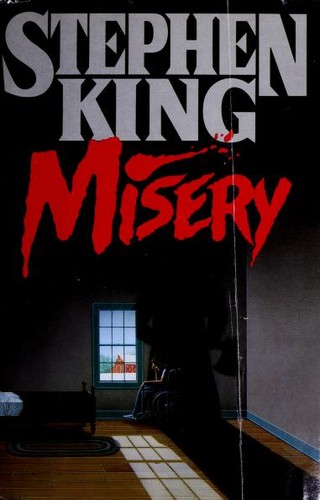
What makes the screen adaptation so enduring is how faithfully it translates King’s claustrophobic exploration of fandom and authorship into an Oscar-winning feature. Rather than relying on vast scope, the story derives its terrifying power from two characters locked in a lethal battle of wills. It holds a 4.18 out of 5 rating from 146 ratings on Open Library, proving its sustained popularity among readers.
This entry maintains exceptional fidelity to the psychological tension and core narrative of the 1987 source novel. It is essential reading for tense psychological thriller fans who prefer grounded, character-driven terror over traditional creature features.
First published 1996Length 465 pagesReaders 4.31/5 from 110 Open Library ratings
Borrow or find an edition on Open Library
Originally published as a six-part serialized novel in 1996, The Green Mile proved Stephen King could captivate readers month by month before Frank Darabont ever brought the story to the big screen. Set on a 1930s Southern death row block at Cold Mountain Penitentiary, this emotional prison drama shifts away from traditional creature feature horror to explore supernatural healing, quiet empathy, and morality under the looming shadow of the electric chair. Running at roughly 465 pages in its complete form, the book currently holds a reader rating of 4.31 out of 5 from 110 ratings on Open Library.

What sets the narrative apart is its focus on human dignity in terrible circumstances. The plot traces death row block guard Paul Edgecombe and his encounters with John Coffey, a towering inmate convicted of a horrific crime who possesses miraculous gifts. It is widely cited as one of the most faithful and emotionally resonant King page-to-screen transfers ever made, largely because the adaptation preserved the book’s unhurried pacing and deep compassion for its characters.
First published 1974Length 254 pagesReaders 4.00/5 from 170 Open Library ratings
Borrow or find an edition on Open Library
Published in 1974 as Stephen King’s debut novel, Carrie set the trajectory for modern horror publishing. Coming in at a lean 254 pages, the book tackles the intense pressures of high school humiliation, severe religious fanaticism, and latent telekinesis. Constructed through an epistolary framework of fake news clippings, court testimony, and scientific transcripts alongside traditional prose, it remains a remarkably sharp piece of coming-of-age horror. On Open Library, it holds a reader rating of 4 out of 5 from 170 ratings.
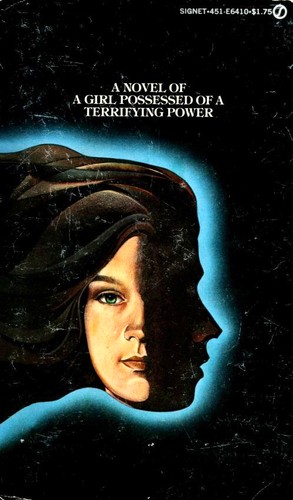
The screen history of the story established how filmmakers would approach King’s fiction for decades. Brian De Palma’s 1976 feature set the early benchmark for King horror adaptations, translating Carrie White’s tragic story into a cinematic study of tension and visual flair. Rather than relying purely on shock value, De Palma leaned into the emotional isolation of its central character before delivering the iconic, bloody climax at the school prom.
The story has proved endlessly adaptable across changing media formats, expanding into multiple screen iterations over the decades. A new television series adaptation premiered on Prime Video in October 2026, demonstrating that King’s original narrative about cruel social dynamics and explosive power continues to resonate with audiences half a century after its bookshop debut.
First published 1986
Adapting Stephen King’s massive 1986 novel It has always been a formidable undertaking, given how intricately the narrative weaves together two distinct timelines. The story follows the Losers’ Club, a band of outcast children in the town of Derry, Maine, who join forces to combat a shape-shifting entity that frequently manifests as Pennywise the Dancing Clown. King’s text is as much a sprawling exploration of childhood trauma and small-town malice as it is a monster story. I remember keeping my bedroom lamp switched on for a week after finishing the terrifying chapter where Ben Hanscom spots the creature standing on the frozen canal.
On screen, the narrative proved far too expansive for a single feature film. It was famously turned into a two-part television miniseries in 1990, before being successfully split into a two-part blockbuster cinematic adaptation decades later that tackled the childhood and adult storylines in separate installments. The mythology has since expanded further on television with the prequel series It: Welcome to Derry starting in 2025. For anyone dipping into the source material for the first time, this epic ensemble horror requires patience, but the sheer depth of its character work ensures Derry stays with you long after you put it down.
First published 1979Length 426 pagesReaders 4.11/5 from 46 Open Library ratings
Borrow or find an edition on Open Library
First published in 1979, The Dead Zone marks a significant pivot in Stephen King’s early bibliography. Rather than relying on the visceral dread of his preceding novels, this 426-page story grounds itself in psychic political suspense. The narrative follows Johnny Smith, an ordinary schoolteacher who awakens from a five-year coma possessing precognitive clairvoyance. A simple touch allows him to see a person’s past, present, or future, turning an already fractured life into a harrowing moral dilemma when he foresees the rise of a dangerous politician.

The novel demonstrated King’s early move beyond pure horror into suspense, sci-fi drama, and grounded human tragedy. That delicate balance carried over beautifully to David Cronenberg’s film version, which succeeds because it balances a tragic character study with the tension of political thrillers. Christopher Walken brings a quiet, aching isolation to Johnny, ensuring the narrative remains a tragic human story rather than just a high-concept plot. For those tracking its standing among readers, the book holds a 4.11 out of 5 from 46 ratings on Open Library, remaining one of King’s most emotionally resonant early works.
First published 1983Length 422 pagesReaders 4.04/5 from 179 Open Library ratings
Borrow or find an edition on Open Library
Published in 1983, Pet Sematary stands as one of Stephen King’s most harrowing achievements. Running to around 422 pages, the novel sits squarely in the territory of grief-driven supernatural horror, examining the agonizing weight of parental loss through an ancient burial ground capable of returning the dead to life, albeit deeply altered. It currently holds a reader rating of 4.04 out of 5 from 179 ratings on Open Library, reflecting its enduring reputation among readers who appreciate King at his most uncompromising.
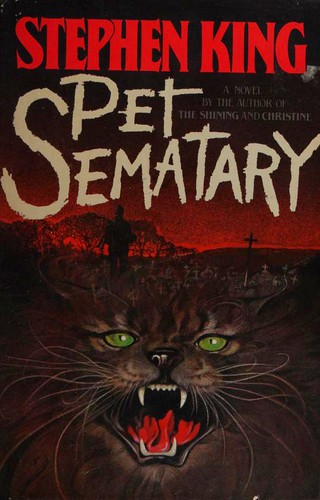
The narrative digs into taboo horror elements that push far past conventional monster tropes, treating the unthinkable prospect of losing a young child with raw, devastating honesty. When a grieving father refuses to accept a horrific household tragedy, his decision to cross into the woods behind the local pet cemetery sets off a nightmare of resurrection and regret. King adapted the screenplay himself for Mary Lambert’s dark 1989 feature film, preserving the novel’s bleak thematic core on screen. It is essential reading for those who want King’s most potent writing on grief, though readers should be prepared for an emotionally relentless story.
First published 1982Length 256 pagesReaders 3.63/5 from 41 Open Library ratings
Borrow or find an edition on Open Library
Originally published under King’s Richard Bachman pseudonym, The Running Man is a lean, relentless piece of dystopian fiction running at around 256 pages. Set in a bleak future where impoverished citizens voluntarily enter lethal game shows to earn money for their families, it follows Ben Richards as he attempts to survive thirty days on the run from elite government hitmen. Unlike the supernatural horrors King was best known for in the late seventies and early eighties, this is a grim, cynical thriller about corporate control, media exploitation, and desperate poverty.

For decades, the standard reference point for screen audiences was the 1987 film adaptation, which completely transformed the book into a bright, campy, stylized Arnold Schwarzenegger action vehicle. While entertaining on its own eighties terms, it jettisoned almost all of Bachman’s claustrophobic paranoia and bleak economic satire in favor of arena battles and catchphrases. Those looking for a closer reading of the source material had to wait until 2025, when a new feature film adaptation arrived in cinemas targeting a much tighter alignment with the original text. On Open Library, the novel holds a reader rating of 3.63 out of 5 from 41 ratings, making it a solid pick for dystopian action fans who want to see the darker, more cynical edge of King’s early writing career.
There is a persistent trap in evaluating film adaptations where fidelity to the source text is mistaken for intrinsic quality. A strict, page-to-screen conversion does not automatically guarantee a critical or cinematic success, largely because what works on the printed page often stalls when translated literally to camera. Stephen King’s novels are famously rich in internal monologue, sprawling side histories, and subjective character perspectives that require thoughtful translation rather than direct transcription.
I remember returning to the 1977 novel The Shining after rewatching the film and being struck all over again by how radically Stanley Kubrick altered Jack Torrance’s arc and the book’s explosive climax to suit a colder, visual medium. Where King crafted a tragic story of a man fighting his personal demons before losing to a haunted hotel, Kubrick discarded the emotional redemption entirely to build a lingering atmosphere of claustrophobic dread. Purists may chafe at those departures, but the resulting film stands as a masterclass in horror filmmaking precisely because it prioritized screen language over literal prose fidelity.
Ultimately, evaluating any screen version of King’s work requires weighing narrative execution on its own merits alongside fidelity to the original text. The strongest entries in his cinematic catalog succeed because directors treat the books as flexible blueprints rather than rigid scripts, taking the necessary freedom to reshape character motivations and structural endings for the screen.
The screen landscape for Stephen King adaptations has remained relentlessly busy over recent years, shifting between intimate character studies and large-scale studio projects. The 2024 roster brought new takes on novella material with an adaptation of The Life of Chuck alongside a fresh film version of ‘Salem’s Lot. While the former earned warm notices for leaning into King’s quieter, philosophical side, the long-delayed return to Jerusalem’s Lot proved far more divisive with audiences.
In 2025, adaptations expanded further across cinema screens, turning both short fiction and early catalog works into feature films. Osgood Perkins brought dark comedy and gore to The Monkey, while Francis Lawrence tackled The Long Walk, bringing one of King’s earliest-written novels (originally published under his Richard Bachman pseudonym) to cinemas in September 2025. That same year saw another cinematic spin on The Running Man, demonstrating a continued appetite for reworking Bachman dystopias for modern audiences.
Television expansions in 2025 and 2026 have continued to tap into King’s Derry lore and classic catalog titles. The prequel series It: Welcome to Derry expanded the mythology surrounding Pennywise and the town’s history, while The Institute brought the 2019 novel to episodic television. Most recently, a new series adaptation of King’s 1974 debut novel Carrie premiered on Prime Video in October 2026. This ongoing wave highlights how filmmakers regularly weigh adaptations better than the book against faithful page-to-screen transfers, keeping the author’s expansive catalog central to contemporary screen horror.
Stephen King has frequently praised Frank Darabont’s 1994 film The Shawshank Redemption and Rob Reiner’s 1986 film Stand by Me as two of the absolute finest screen adaptations of his work. While he famously expressed dissatisfaction with Stanley Kubrick’s 1980 take on The Shining due to how far it drifted from the emotional heart of his 1977 novel, King has consistently admired Darabont’s faithful translation of his 1982 novella Rita Hayworth and Shawshank Redemption. Darabont also adapted King’s 1996 serialized prison fantasy novel The Green Mile into a 1999 feature film that King championed for capturing the exact compassionate tone and detailed character work of the original text.
While critical consensus varies across outlets, the most acclaimed books in King’s bibliography consistently include his 1974 debut novel Carrie, 1975’s vampire tale ‘Salem’s Lot, 1977’s hotel horror The Shining, and 1986’s Derry-set epic It. His early run of psychological thrillers and horror novels, including 1979’s The Dead Zone, 1981’s Cujo, 1983’s Pet Sematary, and 1987’s Misery, remain foundational works of modern genre fiction. Readers looking for his broader work often point to his dystopian Bachman novels such as 1982’s The Running Man, alongside serialized dramas like 1996’s The Green Mile, which balance supernatural premises with deeply human stakes.
Frank Darabont’s film adaptation of The Green Mile and Rob Reiner’s 1990 film adaptation of Misery are widely regarded by readers as two of the most faithful page-to-screen transfers. Accuracy on screen does not always equal film quality, but both projects closely preserved the narrative structures, dialogue, and psychological tone of their source novels. In contrast, iconic films like Stanley Kubrick’s 1980 version of The Shining altered fundamental character motivations and plot outcomes from the 1977 book. Recent screen projects, such as the 2025 film adaptation of The Long Walk directed by Francis Lawrence, demonstrate how filmmakers must balance direct textual accuracy with visual pacing when adapting King’s early prose.
Stephen King is a registered Democrat and a vocal supporter of the Democratic Party. He has spent decades publicly discussing American politics, routinely using his social media platforms, interviews, and essays to express his political views, endorse specific Democratic candidates, and comment on state and national elections. His political commentary often focuses on tax policy, social justice, public education, and government funding for the arts, particularly within his home state of Maine. Beyond his public statements, subtle thematic elements of institutional critique and socio-economic tension frequently surface throughout his fiction, from his early Bachman pseudonym thrillers through to his modern political commentary.
This page is maintained by Theo Marsh, who covers the big fantasy and science-fiction franchises for Escape Into Books.
Covers, author credits and reader ratings come from Open Library, which is free and openly licensed. A rating is only shown once enough people have left one.
Nothing here is generated from a book we could not verify. Where a title could not be confidently matched, we leave the space empty rather than guess.
We re-check this page every 90 days. The review date moves only when the content actually changes, because a fresh date on unchanged text helps nobody.
Last reviewed