Escape Into Books
Your home for book news, reviews, and bookish fun. Follow along on Facebook.
Escape Into Books
Your home for book news, reviews, and bookish fun. Follow along on Facebook.


Discover how to read Stephen King books in order and experience his expansive literary universe.
If you are looking for the definitive way to read Stephen King books in order, the most important thing to understand is that Stephen King’s sprawling bibliography does not follow a single, strict in-universe timeline. Across more than fifty years of publishing, King has built an interconnected multiverse rather than a simple linear story, which makes publication order the cleanest and most rewarding way to experience his universe. This guide is designed for both total newcomers wanting an accessible entry point and seasoned readers looking to track how his lore expanded over the decades. When I first tried mapping out his fictional universe on my own shelf, I quickly realised that trying to force every novel into a rigid internal sequence breaks down almost immediately.
Instead, the real connective tissue comes through recurring geographical hubs like Castle Rock and Derry, along with books released under his Richard Bachman pseudonym that naturally slot straight into the main timeline. Serving as the central spine for all of it is The Dark Tower series, which anchors disparate standalone novels, crime thrillers, and epic fantasies into a single multiversal framework. From his 1974 debut Carrie through to his sprawling modern thrillers, following his publication sequence allows you to watch his shared world grow organically, catching every quiet nod, character crossover, and looming cosmic threat exactly as King introduced them.
Stephen King has authored over 60 novels across five decades without ever adhering to a strict master chronological timeline. Because there is no single in-universe reading order that neatly connects every story from Carrie through to his latest releases, tracking his work by release date provides the cleanest and most rewarding framework for readers.
Reading in publication order allows you to experience the natural evolution of King’s iconic fictional geography. Maine towns like Castle Rock and Derry do not simply exist as recurring backdrops; they age, change, and suffer catastrophic events over time. Following the release timeline ensures you pick up on subtle callbacks, shared local histories, and references to previous disasters in books like Cujo or It exactly as King originally laid them out.
This approach also accounts for works written under pseudonyms. Books published under the name Richard Bachman, such as The Running Man or Thinner, were released alongside King’s mainstream novels and carry essential lore links to his broader universe. Treating the Bachman titles as an organic part of the main publication timeline prevents skipped references and preserves the overarching context of King’s expanding literary web.
| Book | Author | First published | Reader rating | Best for |
|---|---|---|---|---|
| Carrie | Stephen King | 1974 | 3.99 / 5 | Newcomers wanting to start at the beginning |
| ‘Salem’s Lot | Stephen King | 1975 | 3.99 / 5 | Fans of classic small-town vampire horror |
| The Shining | Stephen King | 1977 | 4.17 / 5 | Readers seeking psychological and haunted-house horror |
| The Stand | Stephen King | 1978 | 4.32 / 5 | Fans of epic post-apocalyptic dark fantasy |
| The Dead Zone | Stephen King | 1979 | 4.11 / 5 | Psychic thriller and small-town political intrigue |
| Cujo | Stephen King | 1981 | 3.73 / 5 | Tense, claustrophobic creature horror enthusiasts |
| The Running Man | Richard Bachman | 1982 | — | Dystopian action and fast-paced thriller fans |
| The Dark Tower: The Gunslinger | Stephen King | 1982 | — | Fantasy readers ready for King’s magnum opus |
| Pet Sematary | Stephen King | 1983 | 4.03 / 5 | Those looking for deeply unsettling emotional horror |
| It | Stephen King | 1986 | — | Epic coming-of-age nostalgia mixed with creature horror |
| Needful Things | Stephen King | 1991 | 4.16 / 5 | Readers wanting the ultimate Castle Rock payoff |
| Insomnia | Stephen King | 1994 | 3.86 / 5 | Lore hunters wanting deep Dark Tower connections |
| 11/22/63 | Stephen King | 2011 | — | Time-travel, historical fiction, and suspense fans |
| Doctor Sleep | Stephen King | 2013 | 4.21 / 5 | Fans wanting direct sequels to classic King works |
First published 1974Length 255 pagesReaders 3.99/5 from 167 Open Library ratings
Borrow or find an edition on Open Library
Published in 1974, Carrie officially debuts King’s published fiction timeline with a high-school revenge story told through a mosaic of epistolary documents, including newspaper clippings, medical journal extracts, and official tribunal transcripts. At a tight 255 pages or so, it is a lean supernatural thriller that immediately established Maine as his primary regional setting and introduced early signature themes of small-town isolation, teenage alienation, and telekinesis.
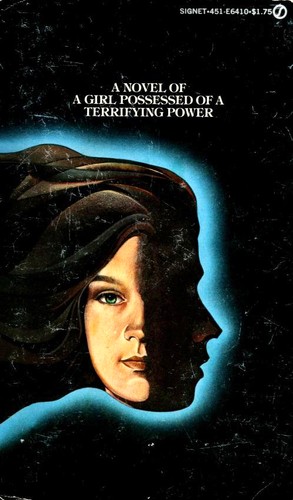
I still remember sitting down with my worn paperback copy on a rainy Sunday afternoon and being struck by how raw and urgent the narrative structure felt compared to his later, beefier epics. It holds a rating of 3.99 out of 5 from 167 ratings on Open Library, proving how well this debut continues to resonate with readers. Its uncomfortable themes around adolescent cruelty and trauma mean it frequently appears alongside the most banned books in American schools and public libraries, yet it remains a crucial piece of modern horror history.
For newcomers who want to experience King’s prose style evolving organically over time, starting right at the beginning is an ideal route. While it lacks the intricate multiversal webbing that his later entries develop, Carrie shows a young writer relying on pure narrative velocity, emotional vulnerability, and shock value before his shared fictional world truly took shape.
Published in 1975 and running to about 496 pages, Stephen King’s second published novel takes classic vampire tropes and transplants them directly into modern rural New England. The book introduces readers to Jerusalem’s Lot, establishing a foundational piece of shared-geography lore that helps frame many of King’s subsequent Maine-based tales. It holds a rating of 3.99 out of 5 from 96 ratings on Open Library, making it ideal for fans of classic small-town vampire horror.

Beyond its standalone atmospheric dread, ‘Salem’s Lot serves as a major early touchstone for one of King’s most persistent thematic obsessions: ancient evil quietly creeping into an isolated, close-knit community and infesting it from the inside out. The narrative focuses as much on the quiet decay of the town’s social fabric as it does on the supernatural monsters lurking in the shadows.
For readers looking to track connections across King’s wider multiverse, the novel holds extra significance through the character of Father Callahan. The unravelling priest introduced during this local tragedy goes on to become a pivotal character who later steps directly into the core Dark Tower sequence, making this early standalone novel a vital building block for the larger canon.
First published 1977Length 506 pagesReaders 4.17/5 from 282 Open Library ratings
Borrow or find an edition on Open Library
Published in 1977 and running to about 506 pages, The Shining shifts Stephen King from small-town supernatural threats to an intensely claustrophobic psychological nightmare. The story centres on the Torrance family, with Jack, Wendy, and young Danny taking up winter caretaking duties at the snowbound Overlook Hotel. It is here that King firmly establishes the concept of psychic powers known as the ‘shine’, an uncanny gift that makes Danny terribly vulnerable to the violent, accumulated history trapped within the building.

Widely considered an entry point for casual horror readers, the novel sits right at the top of the pile for anyone seeking psychological and haunted-house horror. Its enduring strength comes from its intense focus on addiction and isolation, tracking Jack’s personal deterioration alongside the supernatural forces pushing him over the edge. On Open Library, it holds a reader rating of 4.17 out of 5 from 282 ratings. While it operates brilliantly as a high-concept standalone novel, it also lays the essential foundation for King’s modern sequel, Doctor Sleep.
First published 1978Length 1153 pagesReaders 4.32/5 from 90 Open Library ratings
Borrow or find an edition on Open Library
If Carrie proved Stephen King could write horror and ‘Salem’s Lot showed he could build a terrifying small town, The Stand demonstrated that his imagination knew virtually no bounds. First published in 1978, this massive post-apocalyptic epic dramatically expands King’s universe following a weaponised strain of influenza that wipes out the vast majority of human life. The survivors are drawn by dreams into a cosmic battle between good and evil, split between the peaceful enclave gathering around Mother Abagail in Colorado and the sinister regime taking shape in Las Vegas under a dark, charismatic stranger.
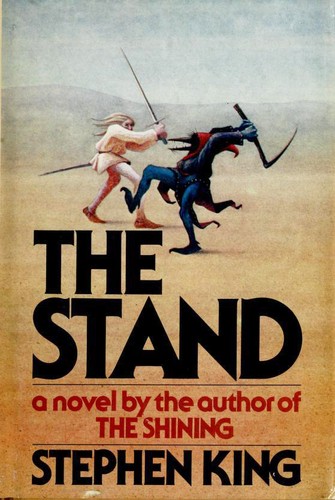
That stranger is Randall Flagg, and his arrival marks a monumental moment in King’s canon. The Stand formally introduces Flagg as the ultimate recurring antagonist who wanders across King’s wider multiversal legendarium under various aliases and guises. Rather than remaining a simple disaster story, the book shifts into an expansive mythic contest that acts as a foundational world-building text, directly anchoring the dark fantasy themes and high-stakes cosmology that later define Mid-World in the Dark Tower saga.
Clocking in at about 1153 pages in its restored form, it sits as a high-water mark for fans of epic post-apocalyptic dark fantasy. It holds a rating of 4.32 out of 5 from 90 ratings on Open Library, reflecting its enduring reputation as one of King’s absolute masterpieces. Anyone preparing to read his interconnected bibliography should treat this as essential reading before embarking on his grander multiverse books.
First published 1979Length 426 pagesReaders 4.11/5 from 46 Open Library ratings
Borrow or find an edition on Open Library
Coming in at roughly 426 pages, The Dead Zone marks a pivotal moment in Stephen King’s bibliography as the first novel to formally establish Castle Rock, Maine, as a recurring stage for his interconnected small-town lore. Moving away from pure gothic horror, this entry sits at the intersection of psychic thriller and political intrigue. It follows Johnny Smith, a schoolteacher who wakes from a four-year coma with precognitive abilities that trigger whenever he touches someone. When I first turned its pages, I remember being struck by how much heart Johnny has, making his dreadful foresight feel like a tragic burden rather than a superheroic gift.

The narrative ramps up as Johnny’s personal struggles collide with a tense political storyline involving Greg Stillson, a dangerously unstable politician rising through the ranks. Beyond the immediate threat Stillson poses, the book does essential legwork for the broader Maine mythology. It introduces local sheriff George Bannerman, who becomes a key figure in subsequent Castle Rock narratives, most notably in Cujo. For readers following King’s world-building in sequence, this is where the quiet rural town begins to feel like a living, breathing community with a shared history. On Open Library, it holds a strong reader rating of 4.11 out of 5 from 46 ratings, making it a hugely rewarding read for anyone who enjoys supernatural stakes grounded in realistic human drama.
First published 1981Length 352 pagesReaders 3.73/5 from 49 Open Library ratings
Borrow or find an edition on Open Library
Published in 1981, Cujo returns to Castle Rock for an intimate and harrowing story centred on a rabid St. Bernard that traps a mother and her young son inside a sweltering, broken-down car. Clocking in at around 352 pages, it stands as one of Stephen King’s most relentless novels. It strips away complex supernatural lore in favour of pure, claustrophobic creature horror, making it ideal for readers who prefer high-tension survival tales over expansive epics. On Open Library, the book holds a reader rating of 3.73 out of 5 from 49 ratings.
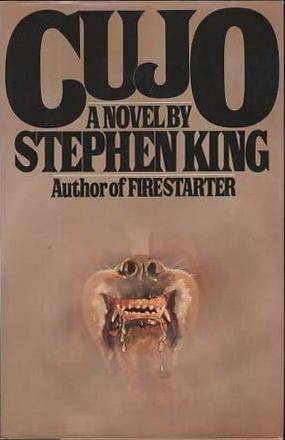
Despite its narrow focus, Cujo plays a significant role in weaving together King’s shared geography. The narrative refers directly back to the dramatic events of The Dead Zone, specifically the lingering trauma left by serial killer Frank Dodd in Castle Rock. By acknowledging those past tragedies, the novel helps solidify the town’s early continuity and establishes Maine as a living, evolving backdrop where horror leaves permanent scars.
For anyone mapping out the Castle Rock timeline, this book is an essential stepping stone. It provides crucial context for later retrospective titles set in the area, most notably Needful Things, where the cumulative history and dark legacy of Castle Rock come to a head. Reading Cujo in publication order allows the gradual unravelling of the town to feel far more cohesive and impactful.
First published 1982Length 256 pagesReaders 3.65/5 from 40 Open Library ratings
Borrow or find an edition on Open Library
First published under King’s Richard Bachman pseudonym, The Running Man was born out of an experiment to see whether his literary success was built on genuine talent or merely strong branding. Stripping away his famous name allowed King to release a leaner, meaner style of storytelling without the expectations that usually accompanied a Stephen King horror release. It presents a bleak dystopian future where a desperate contestant participates in a deadly televised game show, hunted across a decaying nation while the public watches for entertainment.

For readers who favour dystopian action and fast-paced thrillers over slow-burn supernatural horror, this stands out as one of the most relentlessly propulsive entries in King’s early career. The narrative moves at a furious clip, driven by sharp commentary on media saturation and economic disparity. There is virtually no bloat to be found, making it an ideal choice for anyone seeking a high-stakes, action-heavy sprint.
While some readers used to relegate the Bachman catalogue to a separate side project, The Running Man integrates directly into the primary publication timeline. Including it in your reading sequence proves that the Bachman titles belong squarely in the main chronological reading order, offering an essential window into King’s creative energy and stylistic experimentation during the early 1980s.
First published 1982Length 256 pagesReaders 4.03/5 from 67 Open Library ratings
Borrow or find an edition on Open Library
Published in 1982, The Dark Tower: The Gunslinger marks a decisive turning point in Stephen King’s writing. Before its arrival, King was primarily recognised for his grounded horror fiction set in the small towns of Maine. This novel fundamentally shifts his bibliography away from self-contained horror stories and towards a grand cosmic mythos. It introduces Roland Deschain of Gilead, the last of an ancient order, pursuing a mysterious figure across an endless, sun-baked desert.

The book establishes Mid-World, a strange, decaying land where reality itself feels frayed. Roland’s relentless quest to reach the Dark Tower sets the main spine of the entire Stephen King multiverse into motion. It provides the central pillar that eventually ties together disparate novels from across his body of work, turning separate stories into interconnected threads of a much larger fabric.
It suits fantasy readers ready to tackle King’s magnum opus, offering a dreamlike mix of epic fantasy and frontier drama. The narrative style is far sparser than his usual small-town sagas, giving this opening leg of the journey an ethereal, atmospheric tone. For those interested in how storytellers approach the adaptation today, particularly as Mike Flanagan teases an epic Western TV saga, returning to this original text is the best way to understand where the larger mythos began.
First published 1983Length 422 pagesReaders 4.03/5 from 174 Open Library ratings
Borrow or find an edition on Open Library
Published in 1983 and running to about 422 pages, Pet Sematary represents Stephen King’s peak 1980s horror output. The narrative follows a family relocating to Ludlow, Maine, who discover a makeshift animal graveyard in the woods and an ancient burial ground hidden beyond it. At its core, the book explores grief, trauma, and the terrifying lengths to which love can push someone, yielding one of King’s darkest endings. When I first read Pet Sematary, it was the quiet, oppressive sense of parental dread rather than the supernatural resurrection that stayed with me for weeks.
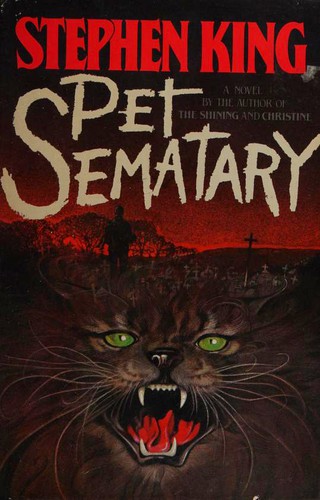
This book is tailor-made for those looking for deeply unsettling emotional horror that prioritises psychological weight over simple creature feature tropes. On Open Library, it holds a reader rating of 4.03 out of 5 from 174 ratings, underlining its position as one of his most celebrated works. While it functions brilliantly as a standalone story without requiring any prior knowledge of his universe, it quietly maintains the broader Maine regional geography by making passing references to Castle Rock and past local events.
First published 1986Length 1168 pagesReaders 4.09/5 from 492 Open Library ratings
Borrow or find an edition on Open Library
Published in 1986, It stands as a defining landmark in Stephen King’s sprawling bibliography, blending epic coming-of-age nostalgia with relentless creature horror. The novel firmly establishes Derry, Maine, as a primary hub of ancient cosmic evil opposite Castle Rock, cementing the fictional town as one of the key geographical pillars of King’s shared setting. At its centre, the story introduces the terrifying, shapeshifting entity Pennywise, an ancient threat that awakens periodically to feed on the town’s vulnerable inhabitants, and charts the fierce childhood bond of seven outcasts who call themselves the Losers’ Club.
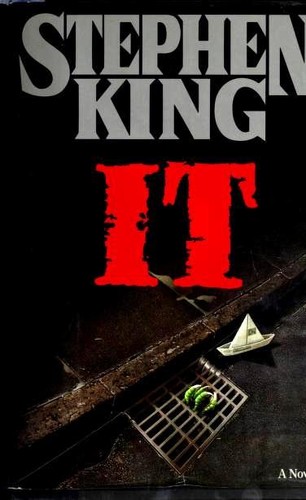
The narrative unfolds across two interconnected eras, tracking the Losers as young children confronting the entity in the late 1950s and again as adults compelled to return to Derry decades later when their old nightmare resumes. Beyond the immediate small-town horror, the book features explicit macroverse connections that bridge directly into the Dark Tower’s cosmic lore. By introducing broader metaphysical elements that extend far past ordinary horror, the story widens the scale of King’s universe and provides essential connective tissue for his larger multiverse.
First published 1991Length 698 pagesReaders 4.16/5 from 32 Open Library ratings
Borrow or find an edition on Open Library
Subtitled ‘The Last Castle Rock Story’, Needful Things serves as the grand culmination of characters, locations, and simmering rivalries that Stephen King had been steadily building in the Maine township since 1979. Clocking in at about 698 pages, this massive novel provides a deeply satisfying closure to the original Castle Rock cycle established across King’s early career, making it the ultimate payoff book for readers who have tracked the setting through previous entries like The Dead Zone and Cujo.
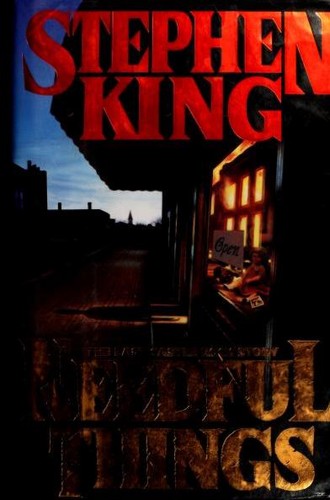
The plot centres on Leland Gaunt, a mysterious antique shopkeeper who arrives in town and opens a store named Needful Things. Gaunt offers every customer the exact object of their deepest desire for a shockingly low price, provided they agree to play a small, seemingly harmless prank on a neighbour. Through these orchestrated grievances, Gaunt systematically exploits personal jealousies and long-standing grudges, effectively driving the small town into a state of apocalyptic madness and violence from within.
For those navigating King’s bibliography in publication order, this is where the threads of Castle Rock weave together before the setting is effectively dismantled. On Open Library, the novel holds a reader rating of 4.16 out of 5 from 32 ratings, reflecting its standing as one of his most entertaining ensemble horrors. It suits anyone looking for a sprawling small-town tragedy where the true horror stems from human frailty expertly manipulated by a dark force.
First published 1994Length 719 pagesReaders 3.86/5 from 104 Open Library ratings
Borrow or find an edition on Open Library
Set in Derry, Maine, Insomnia begins as an intimate, small-town character study centred on an elderly widower named Ralph Roberts who is suffering from severe sleeplessness. As his condition worsens, Ralph begins seeing vivid aura planes around his neighbours and starts perceiving strange, cosmic entities operating just beyond the boundary of ordinary human perception. Running to roughly 719 pages, the novel gradually shifts its focus, weaving a grounded look at aging and grief directly into heavy metaphysical cosmology.
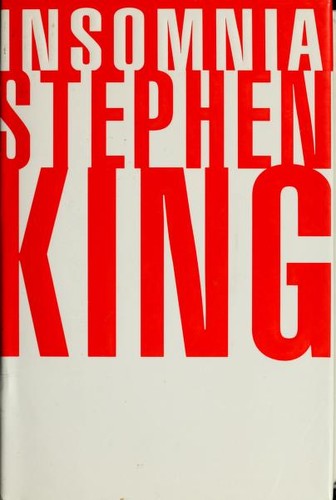
For lore hunters, Insomnia sits as a major structural bridge to King’s broader epic sequence. It introduces key multiversal elements that ripple directly into the grander mythology, most notably featuring the villainous Crimson King and establishing the significance of Patrick Danville, a character whose fate is bound to the ultimate end of the multiverse. The book holds a reader rating of 3.86 out of 5 from 104 ratings on Open Library, making it ideal for those who want to see how small-town Maine ties into King’s vast cosmic web.
First published 2011Length 849 pagesReaders 4.12/5 from 113 Open Library ratings
Borrow or find an edition on Open Library
Published in 2011, 11/22/63 follows a high school English teacher who discovers a portal in a local diner pantry leading directly back to 1958. His goal is simple on paper but monumental in execution: spend five years living in mid-century America to ultimately prevent the assassination of John F. Kennedy. I remember spending a cold weekend completely gripped by Jake’s quiet life in Jodie, Texas, totally forgetting for long stretches that the narrative was building towards a high-stakes historical target. It is a sprawling, meticulously researched epic aimed squarely at time-travel, historical fiction, and suspense fans.

What makes the novel stand out in King’s late-period bibliography is how brilliantly it demonstrates his modern literary range beyond classic horror while still paying homage to his legacy lore. Early in his journey south, the protagonist takes a memorable detour to Derry in 1958, arriving in the fallout shortly after the events of It. Seeing that traumatised town through the eyes of an outsider, complete with brief encounters with young characters from the earlier story, provides a wonderful spark of recognition for anyone following the threads of King’s interconnected Maine geography.
Because it functions primarily as an atmospheric historical drama and love story rather than a monster feature, the novel works remarkably well for readers who normally steer clear of King’s scarier work. It manages to balance the rigid mechanics of time travel with a genuine affection for the mid-century era, proving that while the past is obdurate and resists change, King’s ability to craft deeply human suspense remains unmatched.
First published 2013Length 560 pagesReaders 4.21/5 from 47 Open Library ratings
Borrow or find an edition on Open Library
Published in 2013, Doctor Sleep sits in a unique position within Stephen King’s bibliography, appealing directly to readers wanting explicit sequels to his iconic early works. Spanning roughly 560 pages, the story picks up decades after the tragic events at the Overlook Hotel in The Shining. It follows an adult Dan Torrance, who is struggling with addiction and the psychological weight of his past, as he attempts to protect a young girl with extraordinary abilities from the True Knot, a sinister group of psychic vampires who feed on children with the shining.

What makes the novel particularly fascinating is how it translates early career concepts into King’s modern, late-period thriller storytelling style. Rather than relying purely on atmospheric claustrophobia, the narrative adopts a broader, multi-perspective structure with a sharper focus on recovery, lingering trauma, and newfound purpose. It proves that even decades-old standalone books can evolve into direct ongoing series continuity, showing that King is willing to reopen classic worlds when he finds a fresh thematic angle.
The book holds a rating of 4.21 out of 5 from 47 ratings on Open Library, reflecting a strong reception among readers who welcomed a return to Dan’s story. It serves as a vital bridge between King’s seventies horror roots and his contemporary, character-driven thrillers, making it required reading for anyone following his extended character arcs.
While Stephen King does not write to a rigid master calendar, his fictional universe is bound together by recurring geography and cosmic focal points. The most famous of his earthly locations is Castle Rock, a fictional Maine town that hosts early classic horrors such as The Dead Zone, Cujo, and Needful Things. Over the course of these novels, King builds a shared municipal history, letting local characters, law enforcement officers, and past tragedies echo from one story into the next until the town’s arc culminates in the nineties.
Derry serves a distinctly different purpose, functioning as a darker backdrop steeped in cosmic horror. It acts as the staging ground for ancient evil in It, surreal metaphysical conflict in Insomnia, and a memorable historical pitstop in 11/22/63. Where Castle Rock feels like a classic small town plagued by bad luck and human weakness, Derry represents a fundamentally corrupt environment where supernatural forces exert a quiet, systemic influence over the local population.
Tying these earthly towns and standalone tales together is Mid-World, the nexus setting of the Dark Tower series. Serving as a multiversal hub, Mid-World establishes that King’s stories take place across parallel worlds and connected dimensions. This framework explains how completely disparate books, from epic post-apocalyptic tales like The Stand to intimate creature features, can comfortably coexist within a single overarching reality.
One of the biggest misconceptions about Stephen King’s work is that you must conquer his entire bibliography sequentially to appreciate the world-building. In truth, newcomers do not need to read every book in strict order to enjoy standalone masterworks like Pet Sematary or Misery. These stories operate on their own psychological and emotional terms, offering immediate, self-contained experiences that require zero prior knowledge of Maine lore or cosmic multiverse mechanics.
That said, certain dedicated series benefit immensely from a structured approach. The Dark Tower heptology, beginning with The Dark Tower: The Gunslinger, functions as a single continuous narrative arc and should be kept in relative order to preserve character progression. Similarly, King’s late-era crime-thriller sequence, starting with the Bill Hodges trilogy (Mr. Mercedes, Finders Keepers, and End of Watch) and expanding through The Outsider and If It Bleeds, relies on direct character continuity that rewards reading the titles as they developed.
For readers uninterested in full bibliography completion, skipping ahead directly to modern blockbusters like his time-travel epic 11/22/63 is a completely viable path. While a book like 11/22/63 includes subtle Easter eggs pointing toward Derry, it is fundamentally designed as an independent story. Readers can freely alternate between isolated thrillers and longer interconnected arcs without feeling lost in the larger mythos.
There is no single, strict in-universe chronological order that encompasses all of Stephen King’s fiction. Instead, readers follow the publication order, which begins with Carrie in 1974 and continues across his massive bibliography. While central hubs like Derry, Castle Rock, and Mid-World share explicit continuity, King’s standalone novels and pseudonymous Bachman releases are best read in release order to trace his evolving universe.
Critical consensus and long-time fans usually single out The Stand, The Shining, or It as Stephen King’s finest work. The Stand is praised for its post-apocalyptic scope, whereas The Shining is revered as a haunting psychological horror masterpiece. For readers seeking his shared Maine mythology, It serves as a central pillar, while time-travel epic 11/22/63 stands out among his later publications.
The Shining, It, and Pet Sematary rank among Stephen King’s most widely read and enduringly popular novels. While his 1974 debut Carrie launched his career, early bestsellers like The Stand and The Shining achieved massive sales and cultural reach through decades of continuous printings and film adaptations. Later blockbusters like Misery and 11/22/63 also maintain huge global reader bases.
Part of our full guide: Stephen King Adaptations in 2026: What Is Filming, What Was Cancelled and What Is Next
 Best Sci Fi Books: September 2026 and Where to Start

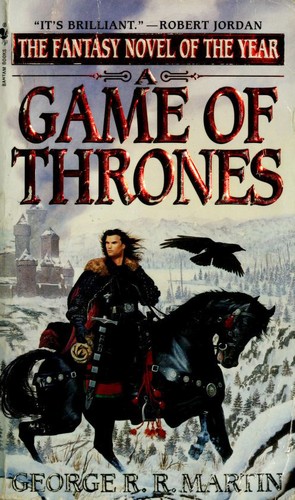
 Game of Thrones Books in Order, and Where Winds of Winter Stands

 The Most Banned Books in American Schools and Libraries
This page is maintained by Theo Marsh, who covers the big fantasy and science-fiction franchises for Escape Into Books.
Covers, author credits and reader ratings come from Open Library, which is free and openly licensed. A rating is only shown once enough people have left one.
Nothing here is generated from a book we could not verify. Where a title could not be confidently matched, we leave the space empty rather than guess.
We re-check this page every 90 days. The review date moves only when the content actually changes, because a fresh date on unchanged text helps nobody.
Last reviewed


