Escape Into Books
Your home for book news, reviews, and bookish fun. Follow along on Facebook.
Escape Into Books
Your home for book news, reviews, and bookish fun. Follow along on Facebook.


Stephen King reveals Lisey’s Story as his favourite novel, reflecting on its personal significance.
Ask any reader to pick their single favourite Stephen King novel and you will likely trigger a lengthy debate. Ask the author himself, and the answer tends to depend heavily on when you catch him. While recent discussions often point toward his 2006 novel Lisey’s Story as his personal crowning achievement, a look back across his decades-long career reveals that his relationship with his own bibliography is far more fluid than a single headline might suggest.
For an author who has published over 60 novels and hundreds of short stories, settling on a single favourite is an understandable challenge. Yet in recent years, when pressed directly on which of his works stands above the rest, King has consistently singled out Lisey’s Story as the piece of writing to which he feels most deeply attached.
The novel, which follows the widow of a famous novelist as she navigates both his memory and the surreal reality he left behind, holds a unique position in King’s body of work. It is less concerned with traditional monsters than with grief, memory, and intimacy.

When asked during a Q&A session about which of his novels was his absolute favourite, King gave a succinct answer:
“Lisey’s Story.”
He expanded on why the book carries such personal significance in a interview, explaining that it was the work he felt most connected to because
“it’s about the secret world that exists inside every long marriage.”
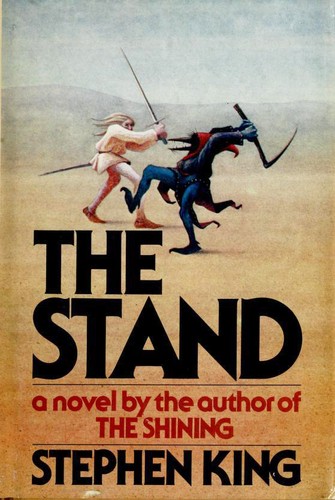
That personal resonance sets it apart from many of his grander, apocalyptic epics. Where novels like The Stand or It capture sweeping horrors and wide casts of characters, Lisey’s Story operates on a quiet, deeply interior frequency. It is a story inspired in part by King’s own life and his decades-long marriage to Tabitha King, making its place at the top of his personal list entirely logical.
Despite his recent focus on Lisey’s Story, King’s assessment of his own work has evolved over time. An author’s perspective on their own library naturally shifts as their life experiences and writing styles change, and King is no exception.
Going back to a 1987 interview, long before Lisey’s Story was penned, King pointed to his second published novel, ‘Salem’s Lot, as his top pick. Reflecting on the vampire tale that cemented his early reputation, he described it as
“my favorite story,”
adding with characteristic humour:
“I have a special cold spot in my heart for it!”

Over the years, various other titles have routinely surfaced when King speaks about the highlights of his bibliography. These frequently mentioned titles include:
Even Stephen King says his 1986 bestseller It is too scary for a sequel, yet the sprawling novel remains one of the titles he speaks of with immense pride when looking back at his mid-career peak.
What is striking about King’s choices is how rarely they align purely with commercial success or pop-culture footprint. While millions of readers might instantly point to The Shining or Carrie, King himself tends to favour books where the emotional core was particularly complex or challenging to build.
It is also a testament to his ongoing enthusiasm for storytelling. Rather than remaining static, his views on his own craft shift as he continues to produce new work and champion other creators in the genre. Whether he is praising modern voices, as seen when Arizona horror author Nat Cassidy was backed by Stephen King, or reflecting on his own classic texts, King remains an active and attentive observer of horror and fiction.
Whether you agree with his personal preference for Lisey’s Story or hold a softer spot for his earlier horror classics, King’s reflections offer a fascinating window into how a master storyteller views his own legacy. As the publishing world continues to track key autumn book releases and literary milestones, King’s expansive shelf of work remains an essential benchmark for the genre.


