Escape Into Books
Your home for book news, reviews, and bookish fun. Follow along on Facebook.
Escape Into Books
Your home for book news, reviews, and bookish fun. Follow along on Facebook.


Tim Curry, legendary actor known for The Rocky Horror Picture Show and It, has died at 80, leaving behind an unforgettable legacy.
Tim Curry, the quintessential actor who brought unmatched theatrical flare to villainy across stage and screen, has died at the age of 80. His longtime manager and friend, Marcia Hurwitz, confirmed that he passed away peacefully at his home in Toluca Lake, Los Angeles, on Tuesday, 25 August 2026. While no official cause of death was disclosed, Curry had used a wheelchair since suffering a major stroke in 2012, continuing to make public appearances and voice acting appearances in the years that followed.
For readers of genre fiction and cinema lovers alike, Curry leaves behind an incredible legacy of performances that fundamentally reshaped how we view pop-culture antagonists. Born on 19 April 1946 in Cheshire, he trained in English theatre before securing his breakthrough role as the charismatic, decadent Dr Frank-N-Furter in The Rocky Horror Show on stage, a performance he famously immortalised in the 1975 film adaptation The Rocky Horror Picture Show. Yet for horror aficionados and devotees of literary page-to-screen transfers, his definitive mark on popular culture arguably arrived fifteen years later when he took on a terrifying entity lurking beneath the sewer grates of Maine.
When director Tommy Lee Wallace set out to adapt Stephen King’s sprawling 1986 novel It into a two-part television miniseries in 1990, translating the terrifying trans-dimensional entity into a physical presence on screen was a daunting task. King’s prose describes Pennywise the Dancing Clown as an unsettling shape-shifting nightmare that feeds on fear. Curry’s casting was inspired, even if the actor himself initially hesitated due to the heavy prosthetic makeup the role demanded.
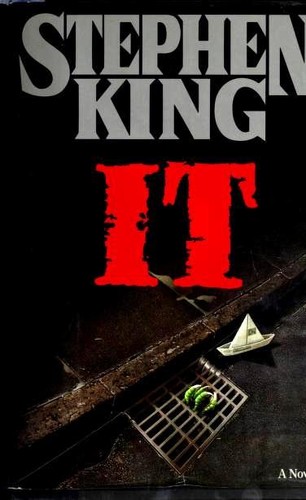
Curry delivered a performance that haunted an entire generation of viewers. What made his portrayal of Pennywise so extraordinarily unnerving was his background in physical theatre and comedy. He did not play the monster merely as a brooding threat; he played it with a sinister, mocking joviality. From the terrifying opening sequence in the storm drain talking to young Georgie Denbrough to his menacing presence in the library, Curry grounded King’s grand cosmic horror in something deeply human, cruel, and darkly funny.
His performance established a terrifying baseline for screen depictions of King’s terrifying fictional town. While subsequent iterations have taken their own approaches to the source material, Curry’s portrayal remains the foundational standard against which all screen horrors in Derry are measured. If you rewatch that 1990 miniseries today, it is Curry’s magnetism that still anchors every single scene he touches, elevating television horror at a time when the subgenre was rarely taken seriously by mainstream critics.
Beyond his defining work in horror and cult cinema, Curry possessed a rare ability to infuse every role with sharp intelligence and sly wit. He built a breathtaking gallery of screen characters across genres. He played the scheming Lord Darkness in Ridley Scott’s 1985 fantasy epic Legend, delivered pristine comedic timing as the suspicious hotel concierge in 1992’s Home Alone 2: Lost in New York, and commanded the screen as Wadsworth the butler in the ensemble comedy Clue.
His vocal work was equally prolific. Curry lent his unmistakable, rich baritone to scores of animated series, video games, and audio projects over several decades. He possessed the unique gift of taking roles that could easily have felt camp or absurd and treating them with absolute artistic discipline, making every line delivery feel crisp and intentional.
It is impossible to overstate how much Curry’s turn as Pennywise shaped the modern market for dark fantasy and screen terror. Today, as the wide landscape of Stephen King adaptations continues to expand across streaming platforms and cinemas worldwide, filmmakers are constantly building upon the foundations laid by that groundbreaking 1990 miniseries.
Modern projects exploring the lore of King’s horrific imagination, including HBO’s prequel series Welcome to Derry, owe a massive debt to Curry. He demonstrated that adapting high-concept horror required genuine dramatic weight and uninhibited commitment to character. With exploring Derry across multiple generations remaining a central fixture of horror media, Curry’s yellow-eyed smile remains the iconic image that started it all.
Curry was an artist who never talked down to his material or his audience. Whether playing a mad scientist in fishnets, a demonic lord of darkness, or a terrifying clown offering balloons in the dark, he committed completely to the craft. He transformed what could have been simple monster movies into unforgettable pieces of cultural history, leaving a legacy that will continue to thrill and terrify audiences for generations to come.


