Escape Into Books
Your home for book news, reviews, and bookish fun. Follow along on Facebook.
Escape Into Books
Your home for book news, reviews, and bookish fun. Follow along on Facebook.


Follow our step-by-step guide to read Tolkien's works in publication order and appreciate the evolution of Middle-earth.
If you are looking for the definitive way to read the tolkien books in order, the best place to start is right at the beginning of publication history. Navigating Arda for the first time can feel deceptively complicated because J.R.R. Tolkien published only two Middle-earth works during his lifetime: The Hobbit, or There and Back Again and the three volumes of The Lord of the Rings. Everything else, from ancient First Age legends to detailed geographical essays, came later through painstaking archival work.
Following Tolkien’s death, his son Christopher Tolkien, along with subsequent scholars and editors, gathered decades of draft materials, notes, and uncompleted prose to build standalone narrative reconstructions, mythic histories, and rich lore collections. I still remember the exact moment I transitioned from the grounded, domestic charm of the Shire into the elevated, biblical prose of the First Age tales, realizing just how vast this legendarium truly was. For new readers and seasoned fans alike, publication order remains the most natural way to experience the world growing in scale and tone. In fact, following publication order is explicitly recommended by The Tolkien Society as the most intuitive route through Middle-earth.
This evergreen guide breaks down the core journey across eight essential volumes, guiding you step by step through Tolkien’s published works alongside the most important posthumous additions that complete the grand history of Arda.
When deciding how to approach Middle-earth for the first time, readers generally choose between two distinct paths: following the date each book was released or following the internal timeline of the legendarium. Publication order begins with The Hobbit, or There and Back Again (1937) and The Lord of the Rings (1954–1955) before diving into the deeper lore. Starting with the narrative published during Tolkien’s lifetime allows you to experience the world in the exact manner that readers originally did, discovering the wider universe through the eyes of Bilbo and Frodo Baggins as a grand background to a personal journey.
Conversely, chronological order places First Age myths like The Silmarillion first. While tracing the creation of Arda and the ancient wars against Morgoth provides immediate context for the later eras, it can easily overwhelm new readers with dense genealogy, an archaic prose style, and hundreds of named figures across interconnected Elven houses. Attempting to digest heavy mythological histories before building an emotional connection with Hobbits often leads to reader fatigue long before reaching the Third Age.
For this reason, the Tolkien Society explicitly recommends publication order as the clearest way to appreciate how Middle-earth evolved. Starting with the accessible early novels before moving on to posthumous releases edited by Christopher Tolkien, such as Unfinished Tales of Númenor and Middle-earth or The Children of Húrin, ensures that the world expands naturally, transforming from an intimate narrative into a vast, sprawling mythology.
| Book | Author | First published | Reader rating | Best for |
|---|---|---|---|---|
| The Hobbit, or There and Back Again | J.R.R. Tolkien | 1937 | n/a | First-time readers and entry to Middle-earth |
| The Fellowship of the Ring | J.R.R. Tolkien | 1954 | 4.34 / 5 | Beginning the main Lord of the Rings epic |
| The Two Towers | J.R.R. Tolkien | 1954 | 4.35 / 5 | Continuing the fractured Middle-earth journey |
| The Return of the King | J.R.R. Tolkien | 1955 | 4.44 / 5 | Climax and deep appendical historical lore |
| The Silmarillion | J.R.R. Tolkien | 1977 | 3.97 / 5 | Readers seeking First Age mythic creation lore |
| Unfinished Tales of Númenor and Middle-earth | J.R.R. Tolkien | 1980 | n/a | Deeper essays on the Istari and Second Age |
| The Children of Húrin | J.R.R. Tolkien | 2007 | 4.03 / 5 | A complete standalone First Age tragedy |
| The Fall of Númenor | J.R.R. Tolkien | 2022 | n/a | Comprehensive chronological guide to the Second Age |
First published 1937
First published in 1937 as a standalone children’s fantasy novel set in Middle-earth, The Hobbit, or There and Back Again remains the absolute ideal starting point for anyone stepping into Tolkien’s world for the first time. The tone is lighter, warm, and delightfully conversational, following the respectable, quiet-loving homebody Bilbo Baggins as he is swept out of his comfortable hole at Bag End into a grand adventure alongside the wizard Gandalf and a company of thirteen dwarves. Reading it again recently, I was struck by how effortlessly Tolkien balances lighthearted fireside storytelling with genuine moments of high peril.
Beyond being a brilliant story in its own right, the book establishes the narrative groundwork for the grander mythic scope of The Lord of the Rings. It introduces crucial figures, locations, and lore that shape everything to come, including the tragic creature Gollum and Bilbo’s fateful discovery of the One Ring during their game of riddles in the dark. For readers looking to map out their journey through legendary fantasy universes, much like tackling the Game of Thrones books in order, starting right at the publication beginning gives you the truest sense of how the author’s world expanded over time.
Because it was originally written for a younger audience, readers coming straight from modern, gritty epic fantasy might be surprised by its gentle, fairy-tale pacing. However, that charm is precisely why it works so well. It introduces the vast geography and rich history of Middle-earth on an approachable, human scale before the stakes escalate into the apocalyptic war of the Third Age.
First published 1954Length 492 pagesReaders 4.34/5 from 398 Open Library ratings
Borrow or find an edition on Open Library
First published on July 29, 1954, The Fellowship of the Ring marks the moment J.R.R. Tolkien transformed Middle-earth from the lighter, episodic setting of a children’s story into a vast and deeply realized legendarium. Standing as the first volume of The Lord of the Rings, this book shifts the tone dramatically away from Bilbo’s cozy, fairy-tale quest toward an ancient, epic conflict involving dark lords, elven kingdoms, and centuries of hidden lore.

The story follows Frodo Baggins, Bilbo’s young cousin and heir, who inherits a mysterious gold ring that proves to be the supreme instrument of power forged by Sauron, the Dark Lord. To prevent Middle-earth from falling into total shadow, Frodo must leave the quiet safety of the Shire and embark on a perilous journey toward the fires of Mount Doom to destroy the artifact. Guided by the wizard Gandalf and joined by a diverse companion group of hobbits, men, an elf, and a dwarf, the narrative shifts from rural domesticity to high drama across grand landscapes.
At roughly 492 pages, the book serves as the formal opening to the main Lord of the Rings epic. It builds its world with incredible patience, taking time to explore regional songs, ancient histories, and atmospheric travel before accelerating into high stakes. On Open Library, it holds a rating of 4.34 out of 5 from 398 ratings, reflecting its place in modern fantasy history. Readers making the step up from The Hobbit should prepare for a richer, slower-paced narrative that demands attention but repays it with unmatched atmosphere.
First published 1954Length 432 pagesReaders 4.35/5 from 231 Open Library ratings
Borrow or find an edition on Open Library
First published in late 1954 as the second volume of The Lord of the Rings, The Two Towers picks up immediately after the shattering of the original company. Typically running to about 432 pages, this middle installment structurally shifts the story by splitting its narrative down two distinct paths. On one side, Aragorn, Legolas, and Gimli pursue the captured hobbits across Rohan, plunging straight into the gathering military storm. On the other, Frodo Baggins and Samwise Gamgee push onward alone into the barren wilderness, slowly carving out a path toward Mordor alongside their treacherous guide, Gollum.
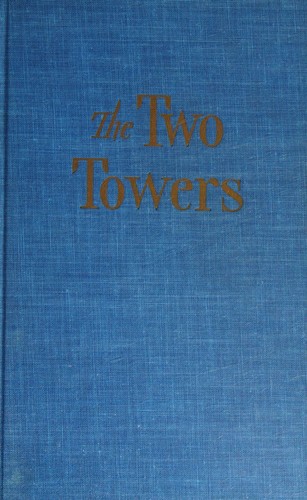
What The Two Towers does so brilliantly is broaden the scope of the world while sharpening its personal stakes. It introduces major Second and Third Age political conflict across Middle-earth, showing how ancient history directly shapes the current war against Saruman and Sauron. From the desperate defense of Hornburg to the quiet horror of the Dead Marshes, the book offers a far richer view of realm politics and grand geography. It currently holds a reader rating of 4.35 out of 5 from 231 ratings on Open Library, reflecting how deeply its darker, more fractured narrative lands with readers.
Before starting this volume, it helps to know that Tolkien structures the tale in large, continuous blocks rather than constantly weaving back and forth between the groups. You spend half the book following the war in Rohan before shifting completely to Frodo and Sam’s journey toward the Black Gate. It requires a slight adjustment in reading momentum, but it pays off by building an unbearable sense of isolation as the Ring draws closer to its destination.
First published 1955Length 495 pagesReaders 4.44/5 from 106 Open Library ratings
Borrow or find an edition on Open Library
First published on October 20, 1955 to complete the original trilogy structure, The Return of the King brings the narrative arc of Middle-earth to its dramatic resolution. Typically spanning about 495 pages, this final volume holds a reader rating of 4.44 out of 5 from 106 ratings on Open Library. It is a book of dual halves, balancing epic military confrontation with a deeply quiet, melancholic exploration of loss and the ending of an era.
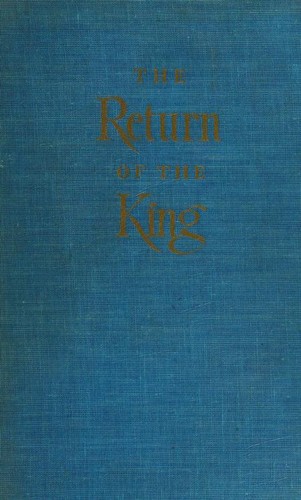
The text depicts the full horror and grandeur of the War of the Ring, following the siege of Minas Tirith, the desperate battle at the Black Gate, and the ultimate fate of Sauron’s power as Frodo and Sam approach Mount Doom. Tolkien does not conclude the narrative at the moment of victory; instead, he devotes considerable space to the painful process of rebuilding and the bittersweet departure of the Elves from Middle-earth.
For dedicated readers, this volume is equally vital for what sits after the story finishes. It contains extensive appendices detailing languages, timelines, and royal genealogies that stretch back thousands of years. These historical records provide essential background on the Third Age, the lineage of Numenorean kings, and the structure of Elvish scripts, serving as the perfect gateway to Tolkien’s wider mythic writings.
First published 1977Length 424 pagesReaders 3.97/5 from 118 Open Library ratings
Borrow or find an edition on Open Library
Published posthumously in 1977 after being edited by Christopher Tolkien, The Silmarillion is the foundational text for readers seeking First Age mythic creation lore. Running to about 424 pages, it abandons the cozy, intimate perspective of a hobbit sitting in Bag End in favor of high prose reminiscent of ancient mythologies. The work functions as a vast mythic history covering the creation of Arda and the tragic First Age of Middle-earth, charting the grand scale of the world long before Sauron forged his Ring.

The narrative focuses on the War of the Jewels, the tyranny of the original Dark Lord Morgoth, and the original elven heroic tales that echo through Tolkien’s later writings. I still remember sitting down with my copy for the first time and having to keep a thumb firmly wedged in the family trees at the back just to track the house of Finwë. It is a demanding read that feels less like a conventional novel and more like a chronicle, making it ideal for those who want to understand the true origins of Elrond, Galadriel, and the ancient ruins scattered across Eriador.
It holds a reader rating of 3.97 out of 5 from 118 ratings on Open Library, reflecting how its dense style can divide readers expecting another light-hearted adventure. It suits patient fans who want to absorb world-building in its purest form, laying down the moral and historical framework for everything that follows. While television producers periodically return to the author’s life and world, as with the development of a Channel 4 Tolkien drama, tackling this text directly remains the ultimate way to appreciate the sheer depth of his legendarium.
First published 1980Length 512 pages
Borrow or find an edition on Open Library
Published posthumously in 1980, Unfinished Tales of Númenor and Middle-earth is a 512-page collection of detailed narrative drafts and lore essays assembled by Christopher Tolkien. Unlike the smoothly compiled history found in The Silmarillion, this book presents raw, expanded texts left behind by J.R.R. Tolkien, accompanied by extensive editorial commentary that explains where manuscripts diverge or remain incomplete. It sits comfortably as an essential companion for readers who want deeper essays on the Istari and the intricate background of the Second Age.
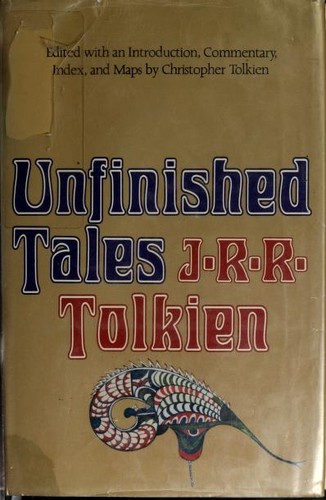
What makes this volume so compelling is how effectively it bridges the gap between the mythic, high-chronicle prose of The Silmarillion and the intimate narrative tone of The Lord of the Rings. Within its pages, you find grounded stories alongside technical treatises. The book provides crucial extra background on the Palantíri, the origin and nature of the Wizards, and the catastrophic destruction of Númenor. There are also fascinating side narratives, such as a detailed account of the quest for Erebor told from Gandalf’s perspective and the tragic history of Aldarion and Erendis.
Because the texts are explicitly unfinished and heavily annotated, this volume is not suited for someone fresh off reading The Hobbit. However, for those who have finished the core trilogy and tackled The Silmarillion, it is the logical next step before diving into broader draft histories. It rewards patience, offering invaluable context for the legendarium without losing the narrative depth that makes Middle-earth feel so remarkably real.
First published 2007Length 313 pagesReaders 4.03/5 from 37 Open Library ratings
Borrow or find an edition on Open Library
Published in 2007, The Children of Húrin stands as a standalone novel-length reconstruction edited by Christopher Tolkien from his father’s extensive manuscript drafts. While the tragic story of Túrin Turambar was originally summarized in The Silmarillion, this volume brings the full prose together into a single continuous narrative running at about 313 pages. It holds a reader rating of 4.03 out of 5 from 37 ratings on Open Library, reflecting its standing among readers looking for a detailed, sustained entry in the mythology of the First Age.
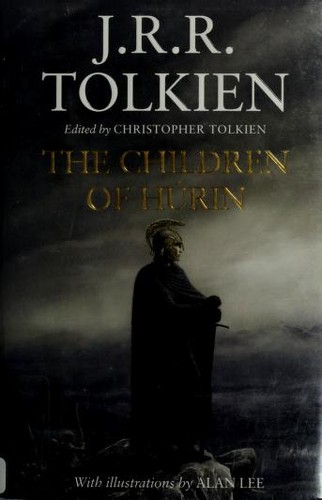
What sets this book apart within the wider legendarium is its relentless focus and grim tone. Set during the First Age, it offers a darker, self-contained narrative experience compared to the expansive quest structure of The Lord of the Rings. Rather than following a wide ensemble across vast distances, the plot zeroes in on the curse laid upon the house of Húrin, crafting a classical tragedy shaped by pride, shadow, and fateful miscalculations.
For readers moving through Tolkien’s published works, this standalone editorial reconstruction works brilliantly as a accessible entry point into Beleriand. It allows you to experience a complete First Age narrative without the interrupted academic framework found in draft collections, making it ideal for anyone who wants a fully realized, darker tale from Middle-earth’s elder days.
First published 2022Length 338 pages
Borrow or find an edition on Open Library
Edited by Brian Sibley and published in 2022, The Fall of Númenor acts as a comprehensive chronological guide to the Second Age of Middle-earth. Rather than presenting a single continuous narrative written by J.R.R. Tolkien as a finished novel, this volume assembles scattered texts from across Tolkien’s published and unpublished writings into a single coherent chronicle. Running to about 338 pages, it pulls together material previously spread across The Silmarillion, Unfinished Tales of Númenor and Middle-earth, the appendices to The Lord of the Rings, and the multi-volume The History of Middle-earth series.

The structural backbone of the book is provided by the Tale of Years timeline from Appendix B of The Return of the King. Using those entry points, Sibley places Tolkien’s various prose passages, historical summaries, and narrative fragments into exact chronological order. The central focus of the text rests on the pivotal events of the Second Age: the forging of the Rings of Power, the gradual rise and corruption of Sauron, the majestic height and tragic downfall of the island kingdom of Númenor, and the eventual Last Alliance of Elves and Men.
For readers who find navigating Tolkien’s fragmented posthumous legendarium daunting, this book serves a distinct purpose. It gathers disparate essays, legendary accounts, and historical timelines into one place, offering a unified path through thousands of years of lore without requiring you to cross-reference multiple heavy volumes on your shelf.
Once you step beyond the narrative prose of Arda, you enter the vast workshop of Tolkien’s papers. Between 1983 and 1996, Christopher Tolkien edited twelve volumes of draft history under the master title The History of Middle-earth, beginning with The Book of Lost Tales, Part One and concluding with The Peoples of Middle-earth. Reading through these thick volumes feels less like sitting down with a finished story and more like standing over an archivist’s shoulder as he unpicks decades of scribbled notes and changing names.
It is vital to understand what these twelve volumes actually represent. Rather than completed novels, they focus squarely on textual evolution, early drafts, and scholarly commentary. You see how the light of Valinor was conceived long before Hobbits ever walked the Shire, or how the plot of The Lord of the Rings slowly took shape through discarded chapters. For readers who want to explore how the legendarium grew, or perhaps hear Tolkien at last through his own working processes and recorded thoughts, this series is an unparalleled record of creative world-building.
The scholarly work did not stop in 1996, either. Recent additions like The Nature of Middle-earth (2021), edited by Carl F. Hostetter, compile complex late essays on geography, time, and metaphysics. It tackles granular details that Tolkien grappled with in his final years, from Elven aging rates to the exact physical dimensions of Middle-earth geography. These books are not designed for casual light reading, but for lore enthusiasts looking to trace every branch of Middle-earth back to its root, they are indispensable.
The cleanest way to read Tolkien is in publication order, starting with The Hobbit, or There and Back Again before moving to The Lord of the Rings. After completing the main narrative, proceed to The Adventures of Tom Bombadil and Other Verses from the Red Book, followed by the mythic background in The Silmarillion and Unfinished Tales of Númenor and Middle-earth. Deep dives into draft histories like the twelve-volume series The History of Middle-earth work best afterwards. Readers can then explore edited standalone texts such as The Children of Húrin, Beren and Lúthien, and The Fall of Gondolin, alongside recent Second Age and lore collections like The Fall of Númenor and The Nature of Middle-earth.
Critical consensus and fan opinion generally point to The Lord of the Rings, particularly its opening volume The Fellowship of the Ring, as Tolkien’s crowning accomplishment. First published across three volumes between July 1954 and October 1955, including The Two Towers and The Return of the King, the epic narrative expanded the cozy world introduced in 1937’s The Hobbit, or There and Back Again into a vast, detailed mythology. While The Silmarillion is deeply admired by lore scholars for its grand First Age scope, the narrative warmth, character development, and atmospheric world-building of the core trilogy ensure that The Lord of the Rings remains the definitive centerpiece of Middle-earth literature.
J.R.R. Tolkien wrote his early Middle-earth myths long before publishing his first novel, drafting First Age legends prior to releasing The Hobbit, or There and Back Again in 1937. He drafted the story that became The Lord of the Rings between 1937 and 1949, seeing its publication split into The Fellowship of the Ring, The Two Towers, and The Return of the King across 1954 and 1955. Throughout his life, Tolkien continually revised his mythology, but many texts were only compiled after his death by Christopher Tolkien into The Silmarillion in 1977, Unfinished Tales of Númenor and Middle-earth in 1980, and the twelve volumes of The History of Middle-earth from 1983 to 1996.
This page is maintained by Theo Marsh, who covers the big fantasy and science-fiction franchises for Escape Into Books.
Covers, author credits and reader ratings come from Open Library, which is free and openly licensed. A rating is only shown once enough people have left one.
Nothing here is generated from a book we could not verify. Where a title could not be confidently matched, we leave the space empty rather than guess.
We re-check this page every 90 days. The review date moves only when the content actually changes, because a fresh date on unchanged text helps nobody.
Last reviewed